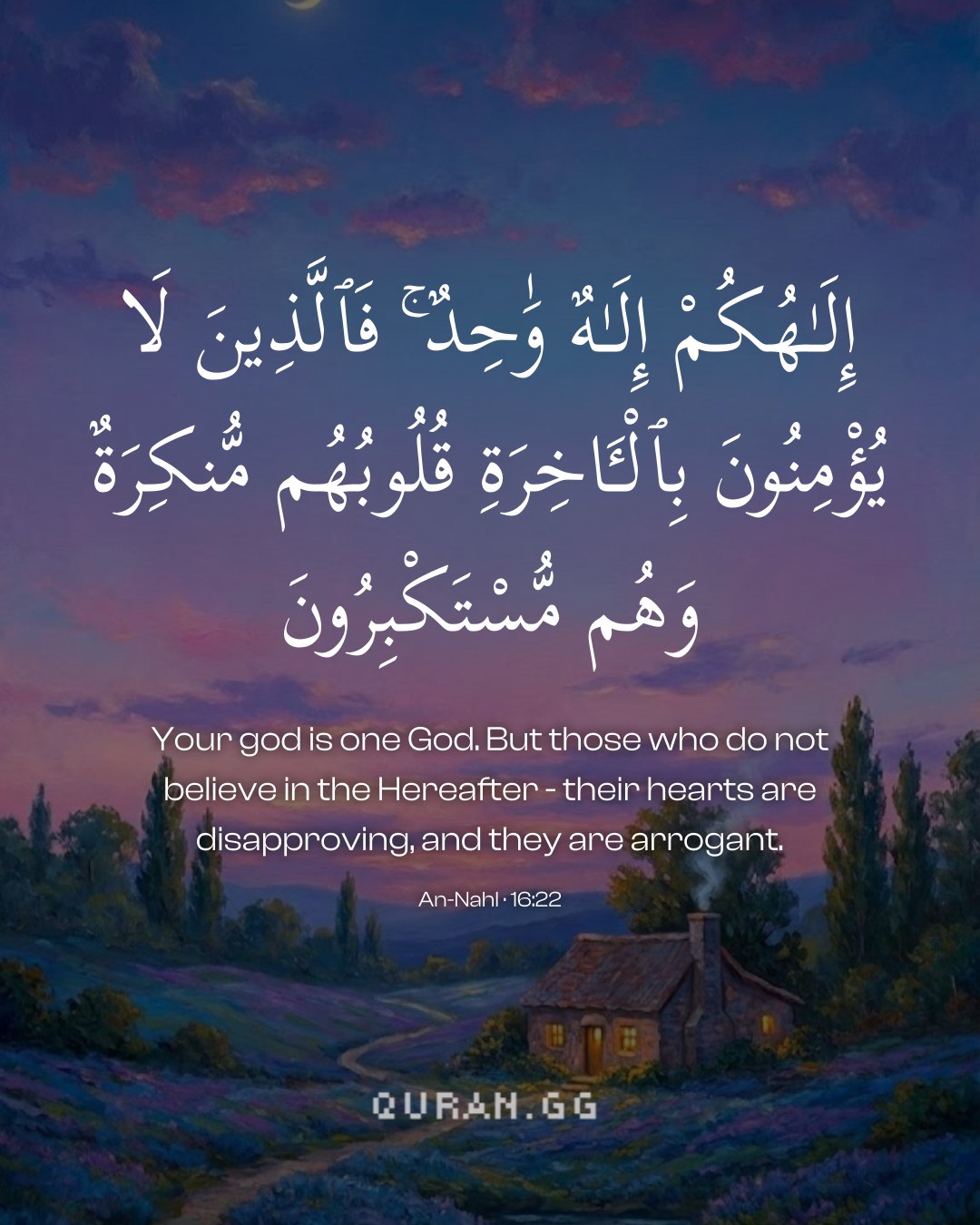
None is to be worshipped except Allah
Allah tells us that there is none to be worshipped besides Him, the One, the Unique, the Lone, the Self-Sufficient. He tells us that the hearts of the disbelievers deny that and are astonished by that:
أَجَعَلَ الاٌّلِهَةَ إِلَـهاً وَحِداً إِنَّ هَـذَا لَشَىْءٌ عُجَابٌ
("Has he made the gods (all) into One God! Verily, this is a curious thing!") (38:5).
وَإِذَا ذُكِرَ اللَّهُ وَحْدَهُ اشْمَأَزَّتْ قُلُوبُ الَّذِينَ لاَ يُؤْمِنُونَ بِالاٌّخِرَةِ وَإِذَا ذُكِرَ الَّذِينَ مِن دُونِهِ إِذَا هُمْ يَسْتَبْشِرُونَ
(And when Allah alone is mentioned, the hearts of those who do not believe in the Hereafter are filled with disgust, and when those besides Him are mentioned, behold, they rejoice!) (39:45).
وَهُم مُّسْتَكْبِرُونَ
(and they are proud) meaning they are too proud to worship Allah, and their hearts reject the idea of singling Him out, as Allah says:
إِنَّ الَّذِينَ يَسْتَكْبِرُونَ عَنْ عِبَادَتِى سَيَدْخُلُونَ جَهَنَّمَ دَخِرِينَ
(Verily! Those who scorn My worship they will surely enter Hell in humiliation!) 40:60 So here, Allah says;
لاَ جَرَمَ
(Certainly), meaning truly,
أَنَّ اللَّهَ يَعْلَمُ مَا يُسِرُّونَ وَمَا يُعْلِنُونَ
(Allah knows what they conceal and what they reveal.) meaning He will requite them for that in full.
إِنَّهُ لاَ يُحِبُّ الْمُسْتَكْبِرِينَ
(Truly, He does not like the proud.)
Commentary
Verses appearing immediately earlier described the many blessings of Allah Ta` ala in details, proved that He alone is their Creator and established that He is unique in this matter. Now, in the present verses, there comes an admonition against the failure of people to recognize that there is a fact behind the statement describing all these blessings - and that is Tauhid, the Oneness of Allah Ta’ ala, except whom there is none worthy of worship. Therefore, it was said: When it stands proved that Allah alone made the heavens and the earth, made the mountains and rivers, vegetation and animals, trees and plants with their fruits and flowers, how can that most sacred Being that is the Creator of all these things become, for no reason, like idols and icons which cannot create anything? Why would you not understand something so elementary?
Whatever things there are in the world, none of them has the power of creating (i.e. bringing non-existent things into existence). It stands proved therefore that this world is not its own creator. Only that being can be its creator who has the inherent power in Him to bring a thing into existence which does not already exist. Therefore the belief in one God is absolutely natural. There can be no rational explanation of the universe without accepting the existence of God who possesses the perfect capability to create. Whatever partner-gods the polytheists have concocted or whatever things the atheists have tried to establish as substitutes for God—none of them has its own inherent capability to create anything. This, in itself, is enough to prove that all gods concocted by people are absolutely imaginary, because it is absolutely baseless to claim that one who has no power of creativity in him/it, is the god of a universe which has been created. How can one who has no substantial existence, give existence to other things? The best that God can expect from His subjects is their gratefulness for His bounties. Though God’s bounties far outweigh human gratitude, being above all that, He accepts a very little gratitude for His very great blessings. However, this gratitude should be genuine and not simply a kind of formal recitation of praises.
Uthmani text of the Madinah mushaf (King Fahd Complex). Translation: Saheeh International. Tafsir via Quran.com.