Tafsir Ibn Kathir (abridged)
Discussion about what the previous Peoples did, and what was done to Them
قَدْ مَكَرَ الَّذِينَ مِنْ قَبْلِهِمْ
(Those before them indeed plotted,) Al-`Awfi reported that Ibn `Abbas said: "This refers to Namrud (Nimrod), who built the tower." Others said that it refers to Bukhtanassar (Nebuchadnezzar). The correct view is that this is said by way of example, to refute what was done by those who disbelieved in Allah and associated others in worship with Him. As Nuh said,
وَمَكَرُواْ مَكْراً كُبَّاراً
("And they have hatched a mighty scheme.") (71:22) meaning, they used all sorts of ploys to misguide their people, and tempted them to join them in their Shirk via all possible means. On the Day of Resurrection their followers will say to them:
بَلْ مَكْرُ الَّيْلِ وَالنَّهَارِ إِذْ تَأْمُرُونَنَآ أَن نَّكْفُرَ بِاللَّهِ وَنَجْعَلَ لَهُ أَندَاداً
("Nay, but it was your plotting by night and day, when you ordered us to disbelieve in Allah and set up rivals to Him!") (34:33)
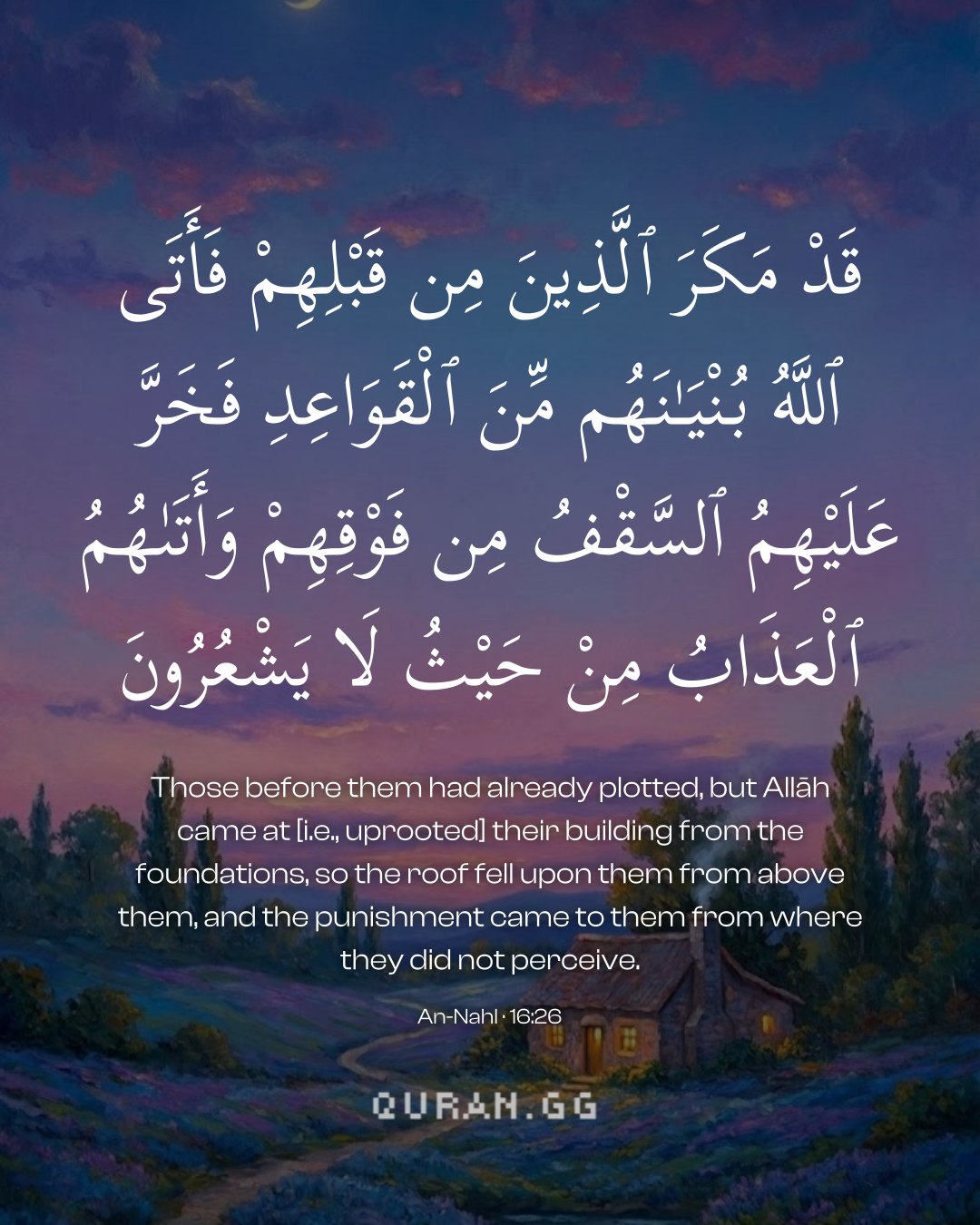
فَأَتَى اللَّهُ بُنْيَـنَهُمْ مِّنَ الْقَوَاعِدِ
(but Allah struck at the foundation of their building.) meaning, He uprooted it and brought their efforts to naught. This is like the Ayah:
كُلَّمَآ أَوْقَدُواْ نَاراً لِّلْحَرْبِ أَطْفَأَهَا اللَّهُ
(Every time they kindled the fire of war, Allah extinguished it.) 5:64 and
فَأَتَـهُمُ اللَّهُ مِنْ حَيْثُ لَمْ يَحْتَسِبُواْ وَقَذَفَ فِى قُلُوبِهِمُ الرُّعْبَ يُخْرِبُونَ بُيُوتَهُمْ بِأَيْدِيهِمْ وَأَيْدِى الْمُؤْمِنِينَ فَاعْتَبِرُواْ يأُوْلِى الاٌّبْصَـرِ
(But Allah's (torment) reached them from a place where they were not expecting it, and He cast terror into their hearts so that they destroyed their own dwellings with their own hands and the hands of the believers. So then take admonition, O you with eyes (to see).) 59:2 Allah says here:
فَأَتَى اللَّهُ بُنْيَـنَهُمْ مِّنَ الْقَوَاعِدِ فَخَرَّ عَلَيْهِمُ السَّقْفُ مِن فَوْقِهِمْ وَأَتَـهُمُ الْعَذَابُ مِنْ حَيْثُ لاَ يَشْعُرُونَثُمَّ يَوْمَ الْقِيَـمَةِ يُخْزِيهِمْ
(but Allah struck at the foundation of their building, and then the roof fell down upon them, from above them, and the torment overtook them from directions they did not perceive. Then, on the Day of Resurrection, He will disgrace them) 16:26-27 meaning, He will expose their scandalous deeds and what they used to hide in their hearts, and He will bring it out in the open. As He says,
يَوْمَ تُبْلَى السَّرَآئِرُ
(The Day when all the secrets will be (exposed and) examined. ) (86:9) They will be displayed and made known, as found in the Two Sahihs, where Ibn `Umar reported that the Messenger of Allah ﷺ said:
«يُنْصَبُ لِكُلِّ غَادِرٍ لِوَاءٌ يَوْمَ الْقِيَامَةِ عِنْدَ اسْتِهِ بِقَدْرِ غَدْرَتِهِ، فَيُقَالُ: هَذِهِ غَدْرَةُ فُلَانِ ابْنِ فُلَان»
(On the Day of Resurrection a banner will be set up by his backside for every deceitful person, (whose size is) in accordance with the amount of his deceit. It be said, "This is the one who deceived so-and-so, the son of so-and-so.") Thus, what they used to plot in secret will be made public. Allah will humiliate them before all of His creation, and the Lord will say to them, in rebuke and reprimand;
أَيْنَ شُرَكَآئِىَ الَّذِينَ كُنتُمْ تُشَـقُّونَ فِيهِمْ
(Where are My (so-called) partners, those over which you caused so much discord) meaning, you fought and made enemies for their sake, so where are they now to help and save you
هَلْ يَنصُرُونَكُمْ أَوْ يَنتَصِرُونَ
(Can they help you or (even) help themselves) 26:93
فَمَا لَهُ مِن قُوَّةٍ وَلاَ نَاصِرٍ
(Then will (man) have no power, nor any helper.) 86:10 When evidence and proof is established against them, and the Word (of Allah) is justified against them, and they will be unable to give any excuse, realizing that escape is impossible, then
قَالَ الَّذِينَ أُوتُواْ الْعِلْمَ
(Those who have been given the knowledge will say) who are the leaders in this world and the Hereafter and who know about the truth in this world and the Hereafter - will say,
إِنَّ الْخِزْىَ الْيَوْمَ وَالْسُّوءَ عَلَى الْكَـفِرِينَ
(Indeed it is a Day of disgrace and misery for the disbelievers.) meaning, today those who disbelieved in Allah and worshipped others who have no power either to benefit or to harm them are now surrounded by disgrace and punishment.