Tafsir Ibn Kathir (abridged)
Allah does not immediately punish for Disobedience
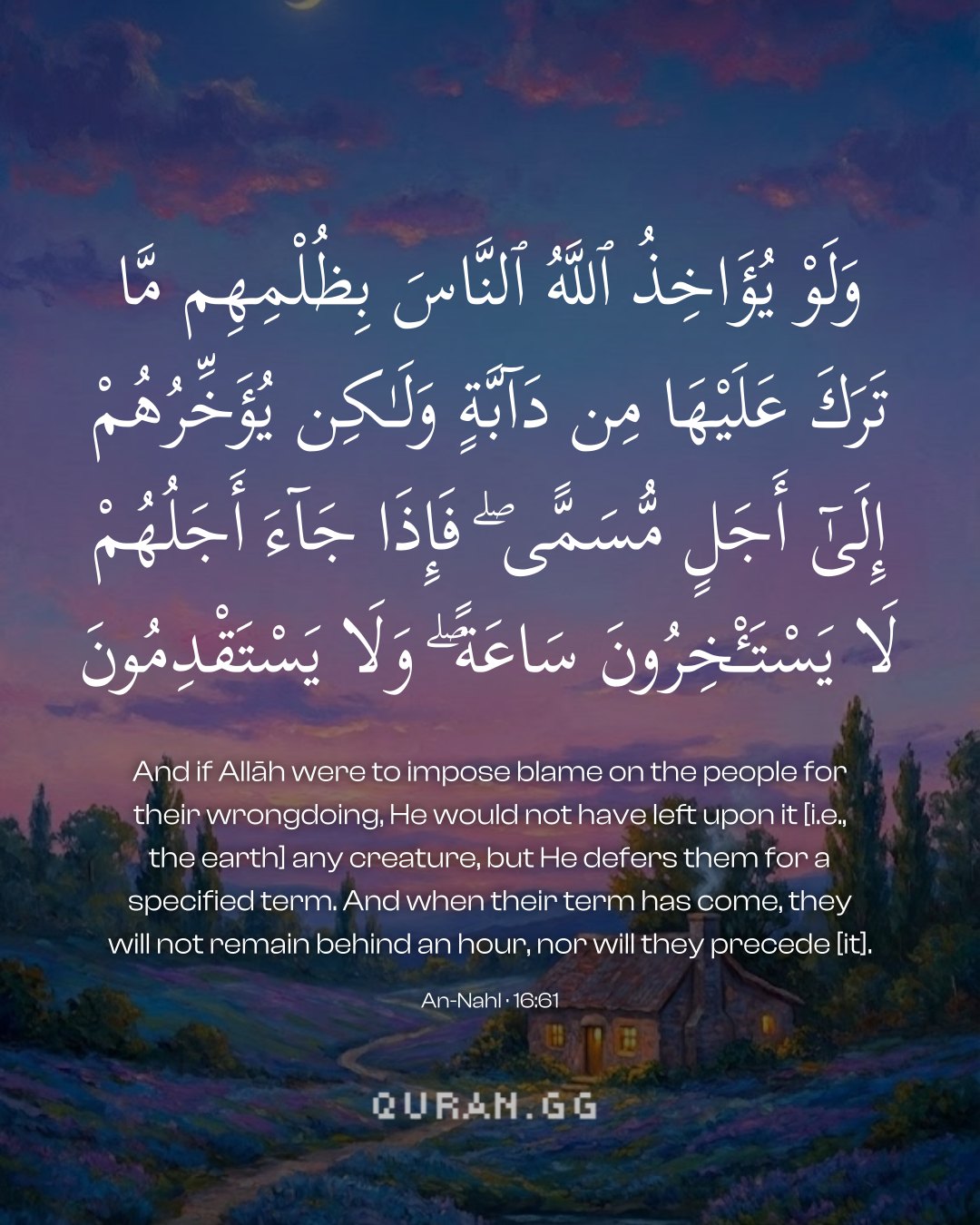
Allah tells us about His patience with His creatures, even though they do wrong. If He were to punish them for what they have done, there would be no living creature left on the face of the earth, i.e., He would have destroyed every animal on earth after destroying the sons of Adam. But the Lord - magnificent is His glory - is forbearing and He covers people's faults. He waits until the appointed time, i.e., He does not rush to punish them. If He did, then there would be no one left. Ibn Jarir reported that Abu Salamah said: "Abu Hurayrah heard a man saying, `The wrongdoer harms no one but himself.' He turned to him and said, `That is not true, by Allah! Even the buzzard dies in its nest because of the sins of the wrongdoer."'
They attribute to Allah what They Themselves dislike
وَيَجْعَلُونَ لِلَّهِ مَا يَكْرَهُونَ
(They assign to Allah that which they dislike (for themselves),) meaning, daughters, and partners, who are merely His servants, yet none of them would like to have someone sharing in his wealth.
وَتَصِفُ أَلْسِنَتُهُمُ الْكَذِبَ أَنَّ لَهُمُ الْحُسْنَى
(and their tongues assert the lie that the better things will be theirs.) This is a denunciation of their claims that better things will be theirs in this world, and in the Hereafter. Allah tells us about what some of them said, as in the Ayat:
وَلَئِنْ أَذَقْنَا الإِنْسَـنَ مِنَّا رَحْمَةً ثُمَّ نَزَعْنَاهَا مِنْهُ إِنَّهُ لَيَئُوسٌ كَفُورٌ - وَلَئِنْ أَذَقْنَاهُ نَعْمَآءَ بَعْدَ ضَرَّآءَ مَسَّتْهُ لَيَقُولَنَّ ذَهَبَ السَّيِّئَاتُ عَنِّي إِنَّهُ لَفَرِحٌ فَخُورٌ
(And if We give man a taste of mercy from Us, and then take it from him, verily! He is hopelessly, ungrateful. But if We let him taste of goodness after harm has touched him, he is sure to say: "Ills have departed from me." Surely, he is cheerful, and boastful (ungrateful to Allah).) (11:9-10)
وَلَئِنْ أَذَقْنَـهُ رَحْمَةً مِّنَّا مِن بَعْدِ ضَرَّآءَ مَسَّتْهُ لَيَقُولَنَّ هَـذَا لِى وَمَآ أَظُنُّ السَّاعَةَ قَآئِمَةً وَلَئِن رُّجِّعْتُ إِلَى رَبِّى إِنَّ لِى عِندَهُ لَلْحُسْنَى فَلَنُنَبِّئَنَّ الَّذِينَ كَفَرُواْ بِمَا عَمِلُواْ وَلَنُذِيقَنَّهُمْ مِّنْ عَذَابٍ غَلِيظٍ
(And if We give him a taste of mercy from Us, after some adversity has touched him, he is sure to say: "This is due to me; I do not think that the Hour will occur. But if I am brought back to my Lord, then , with Him, there will surely be the best for me." Then, We will certainly show the disbelievers what they have done, and We shall make them taste severe torment.) (41:50)
أَفَرَأَيْتَ الَّذِى كَفَرَ بِـَايَـتِنَا وَقَالَ لأوتَيَنَّ مَالاً وَوَلَداً
(Have you seen the one who disbelieved in Our Ayat and said: "I shall certainly be given wealth and children (if I came back to life).") (19:77) Allah tells us about one of the two men:
دَخَلَجَنَّتَهُ وَهُوَ ظَالِمٌ لِّنَفْسِهِ قَالَ مَآ أَظُنُّ أَن تَبِيدَ هَـذِهِ أَبَداًوَمَآ أَظُنُّ السَّاعَةَ قَائِمَةً وَلَئِن رُّدِدتُّ إِلَى رَبِّى لأَجِدَنَّ خَيْراً مِّنْهَا مُنْقَلَباً
(He went into his garden while wronging himself. He said: "I do not think that this will ever perish. And I do not think that the Hour will ever come, and if indeed I am brought back to my Lord, (on the Day of Resurrection), then surely, I shall find better than this when I return to Him.") (18:35-36) These people combined bad deeds with the false hopes of being rewarded with good for those bad deeds, which is impossible. Thus Allah refuted their false hopes, when He said:
لاَ جَرَمَ
(No doubt), meaning, truly it is inevitable that
أَنَّ لَهُمُ الْنَّارَ
(for them is the Fire), meaning, on the Day of Resurrection.
وَأَنَّهُمْ مُّفْرَطُونَ
(and they will be forsaken). Mujahid, Sa`id bin Jubayr, Qatadah and others said: "This means they will be forgotten and neglected there." This is like the Ayah:
فَالْيَوْمَ نَنسَـهُمْ كَمَا نَسُواْ لِقَآءَ يَوْمِهِمْ هَـذَا
(So today We forget them just as they forgot meeting on this day of theirs.) (7:51). It was also reported from Qatadah that,
مُّفْرَطُونَ
(they will be forsaken) means `they are hastened into the Fire.' There is no contradiction between the two, because they will be hastened into the Fire on the Day of Resurrection, then they will be forgotten there, i.e., left to dwell there for eternity.