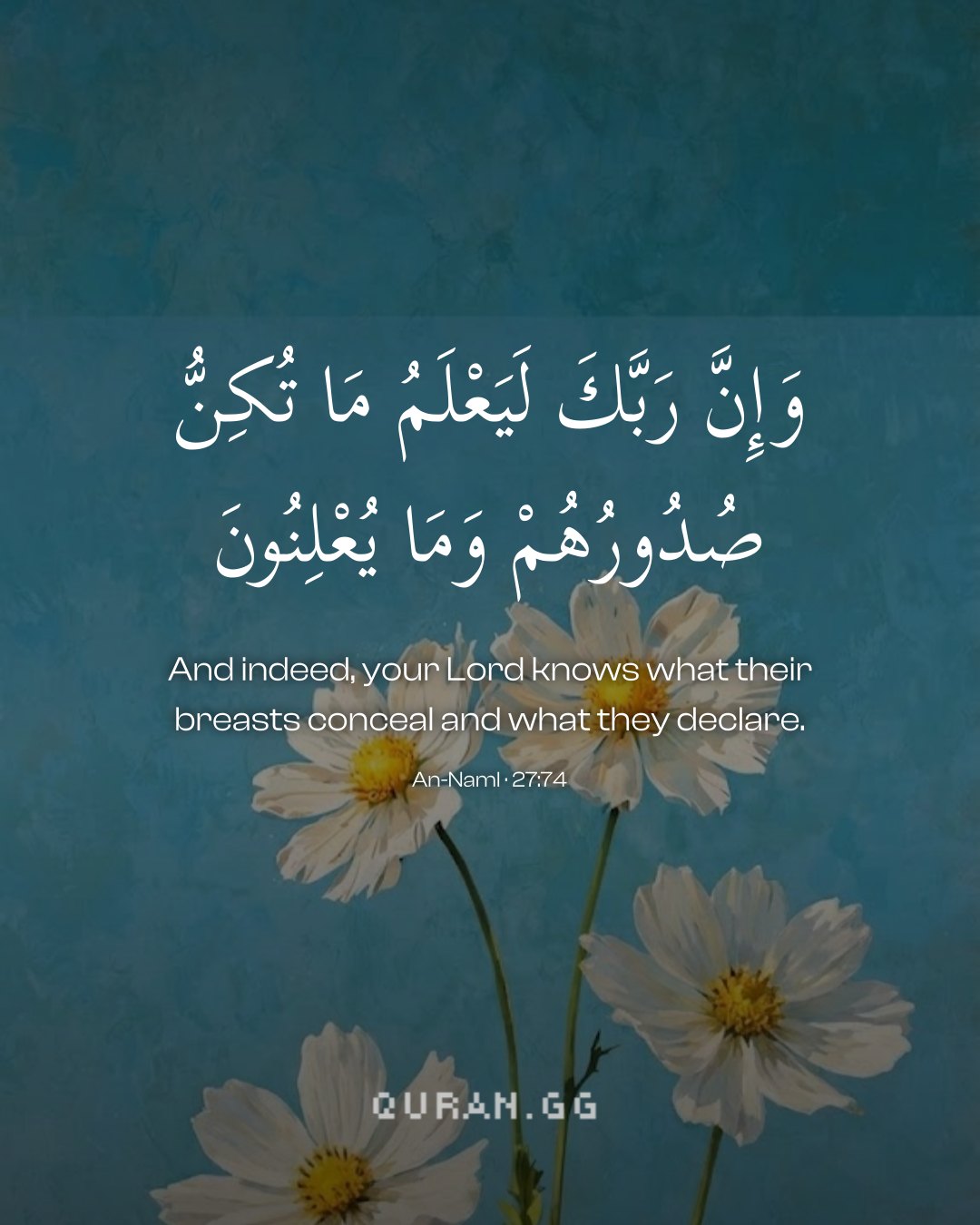
(Perhaps that which you wish to hasten on, may be close behind you.) Ibn `Abbas said, "That which you wish to hasten on has come close to you, or some of it has come close." This was also the view of Mujahid, Ad-Dahhak, `Ata Al-Khurasani, Qatadah and As-Suddi. This is also what is meant in the Ayat:
Rather, their knowledge failed in the matter of Hereafter. Rather, they are in doubt about it. Rather, they are blind to it. 27:66.
There are different recitations for the word اِدّٰرَکَ (iddaraka) and their meanings are also different. Those who are interested should refer to different commentaries for the details. It is enough to understand here that some commentators have taken it to mean "completion" and have explained the verse thus: "Their knowledge and understanding will be completed in the Hereafter", because then the truth about every thing shall be laid bare. But knowledge of truth at that time will be of no avail, because they had been contradicting the Hereafter in the world. But some other commentators have taken the word in the meaning of 'having failed' and 'hating been lost'. The sense in this case would be that their knowledge about the Hereafter was lost, and they could not understand what it was.
Tazkirul Quran
Maulana Wahiduddin KhanOn ayahs 69–74
The addressees of the prophets were not absolute and total deniers of the life Hereafter, but they denied that particular concept of the Hereafter, which was presented by the prophets. People were under the impression that the issue of the Hereafter was meant not for them but for others to ponder over. The prophets told them that the Hereafter was as serious a problem for them as it was for others. Yet they clung to the belief that their attachment to some saints or holy persons would redeem them in the Hereafter. The prophets told them, however, that in the Hereafter only God’s grace and not attachment to any saint or holy person would be of any avail. That is why they were mentally confused about the Hereafter. Hot-headed individuals would, of course, articulate their denial of the Hereafter. However, the common people’s position was that they did not deny the Hereafter altogether. But, since acceptance of the concept of the Hereafter resulted in the curtailment of their various liberties, their selfish side was not prepared to accept it. So, in reply, they used to talk as if they doubted it. Due to this mentality, they never gave serious consideration to the arguments in favour of the Hereafter. They remained blind and deaf to them. The fact is that the powers required to decide the fate of nations or races are vested solely in the All-Knowing God. In the present world, He enforces His decisions partially, but in the Hereafter, He will enforce His decisions fully in respect of all nations.
Uthmani text of the Madinah mushaf (King Fahd Complex). Translation: Saheeh International. Tafsir via Quran.com.