The Terrors of the Day of Resurrection, the Rewards for Good Deeds and the Punishments for Evil Deed
Allah tells us about the terrors of the Day when the Sur will be blown. The Sur, as described in the Hadith, is,
«قَرْنٌ يُنْفَخُ فِيه»
(a horn which is blown into.) According to the Hadith about the Sur (Trumpet), it is (the angel) Israfil who will blow into it by the command of Allah, may He be exalted. He will blow into it for the first time, for a long time. This will signal the end of the life of this world, and the Hour will come upon the most evil of people ever to live. Everyone who is in the heavens and on earth will be terrified,
إِلاَّ مَن شَآءَ اللَّهُ
(except him whom Allah wills.) these are the martyrs, for they are alive, with their Lord, and being provided for. Imam Muslim bin Al-Hajjaj recorded that `Abdullah bin `Amr, may Allah be pleased with him, said that a man came to him and said, "What is this Hadith that you are narrating, that the Hour will come upon such and such people" He said, "Subhan Allah or `La Ilaha Illallah (or something similar), I had decided that I would not narrate anything to anyone now. I had only said that after a little while, you will see a major event which will destroy the House the Ka`bah, and such and such will happen." Then he said, "The Messenger of Allah ﷺ said:
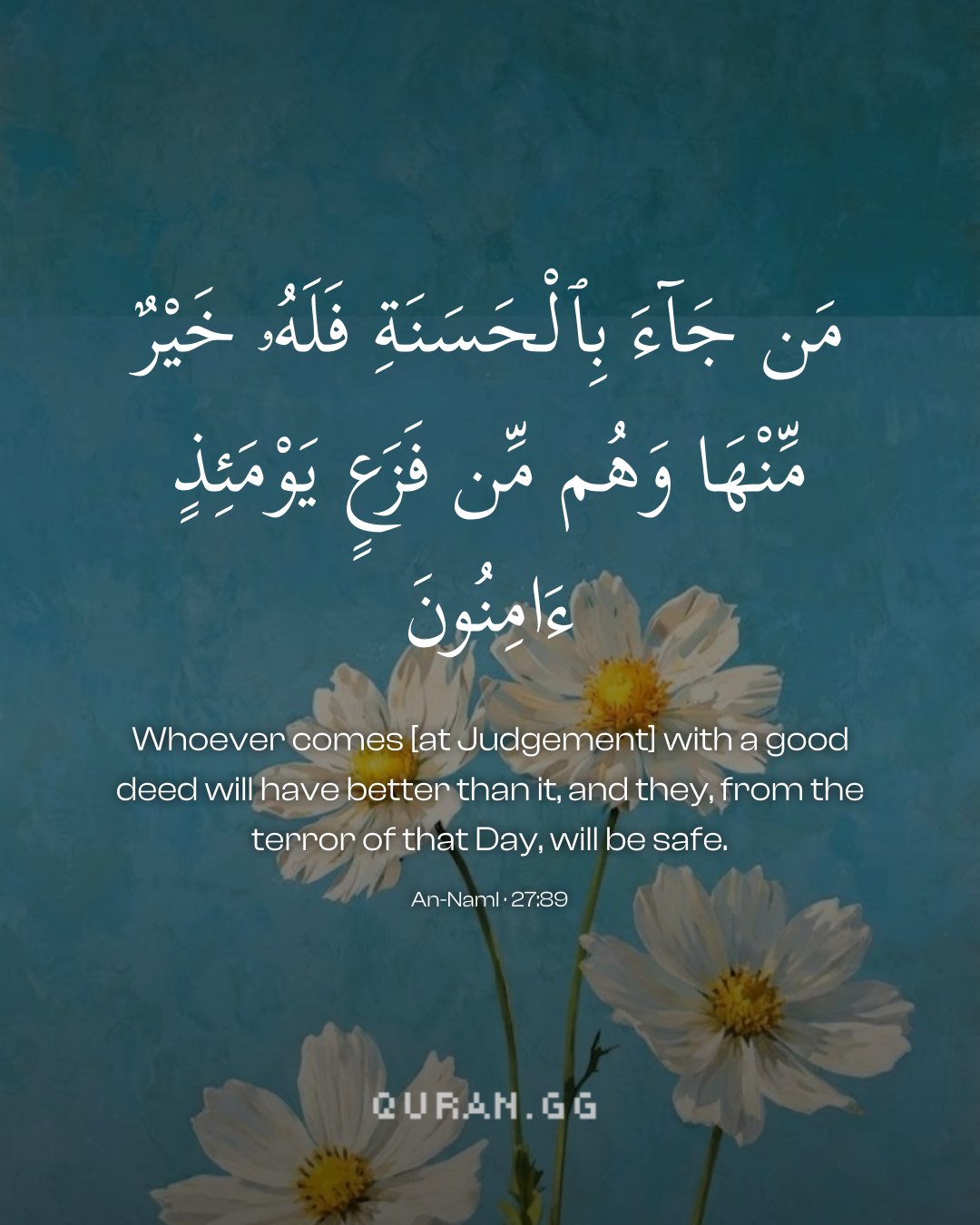
"Whoever will come with the good deed will have (a reward) better than that" - 27:89
This description relates to the situation that will take place after the Doomsday and the account taking. Here the word hasanah is purported for the kalimah of لا إله إلا اللہ محمد رسول اللہ (as explained by Ibrahim) or it is an expression of sincerity (as interpreted by Qatadah). Some have interpreted this to include complete submission. The sense is that every good deed will be recompensed by a reward better than the deed; but it should be remembered that a person's righteous acts could be considered as righteous only when he fulfills its first condition of having faith in Allah Ta` ala. Then he would get an award better than commensurable to his good deeds. It means that he would be graced with eternal bounties of the Paradise, and would escape from all troubles and torments for good. Some have interpreted that the word "better" means here that the reward of one good deed would be awarded from ten times to seven hundred times more. (Mazhari)
وَهُم مِّن فَزَعٍ يَوْمَئِذٍ آمِنُونَ
and such people will be immune on that day from any panic -27:89.
Word Faza' is purported here for any big calamity or perplexity. Thus the meaning of the sentence is that, while living in this world, every pious person is scared of his fate in the Hereafter, and as a matter of fact, he should be scared in the light of Qur'anic verse إِنَّ عَذَابَ رَبِّهِمْ غَيْرُ مَأْمُونٍ (70:28). The torment of Allah is not something to be forgotten and set aside. It is for this reason that even the prophets, the companions, and saints were always frightened and daunted. But after the account taking on Doomsday those who would bring the hasanah (the good deed contemplated in this verse) with them would be free from all fear and grief, and will live forever in complete tranquility. (Only Allah knows best)
Tazkirul Quran
Maulana Wahiduddin KhanOn ayahs 86–89
At the time when Almighty God takes the decision that the present history of the earth should be brought to an end, some extraordinary signs will appear to usher in the last phase. Among these signs will be the appearance of a communicator (dabbah). This will be the bell announcing the end of the examination period and not its beginning. Mass communications, particuarly the internet and multimedia, are probably what is meant by dabbah here. When all the people gather on the Day of Judgement, they will be divided into groups. The believers will be ranged on one side and those who denied the truth on the other. Then those who denied the truth will be asked what academic or rational arguments made them deny the Truth. At that time their silence will prove their denial was based on stubbornness and bias, though they advanced false arguments to show that they were right. At that time, it will be clear to them that over and above the verbal message of the preacher , even the alternation of day and night was non-verbally and tacitly conveying to them the words of Truth. Sleep during the night stood for death and waking up in the morning stood for resurrection. In spite of these extraordinary arrangements for the proclamation of the Truth, they were unable to discover it.
Uthmani text of the Madinah mushaf (King Fahd Complex). Translation: Saheeh International. Tafsir via Quran.com.