Tafsir Ibn Kathir (abridged)
Mentioning the Story of Musa and that it is a Lesson for Those Who fear Allah
Allah informs His Messenger Muhammad ﷺ about His Messenger Musa. He mentions that he sent Musa to Fir`awn and He aided him with miracles. Yet, even after this, Fir`awn continued in his disbelief and transgression until Allah seized him with a mighty and powerful punishment. Thus is the punishment of whoever opposes you (Muhammad ﷺ) and rejects that which you have been sent with. This is why Allah says at the end of the story,
إِنَّ فِى ذَلِكَ لَعِبْرَةً لِّمَن يَخْشَى
(In this is a Lesson for whoever fears.) Allah begins by saying,
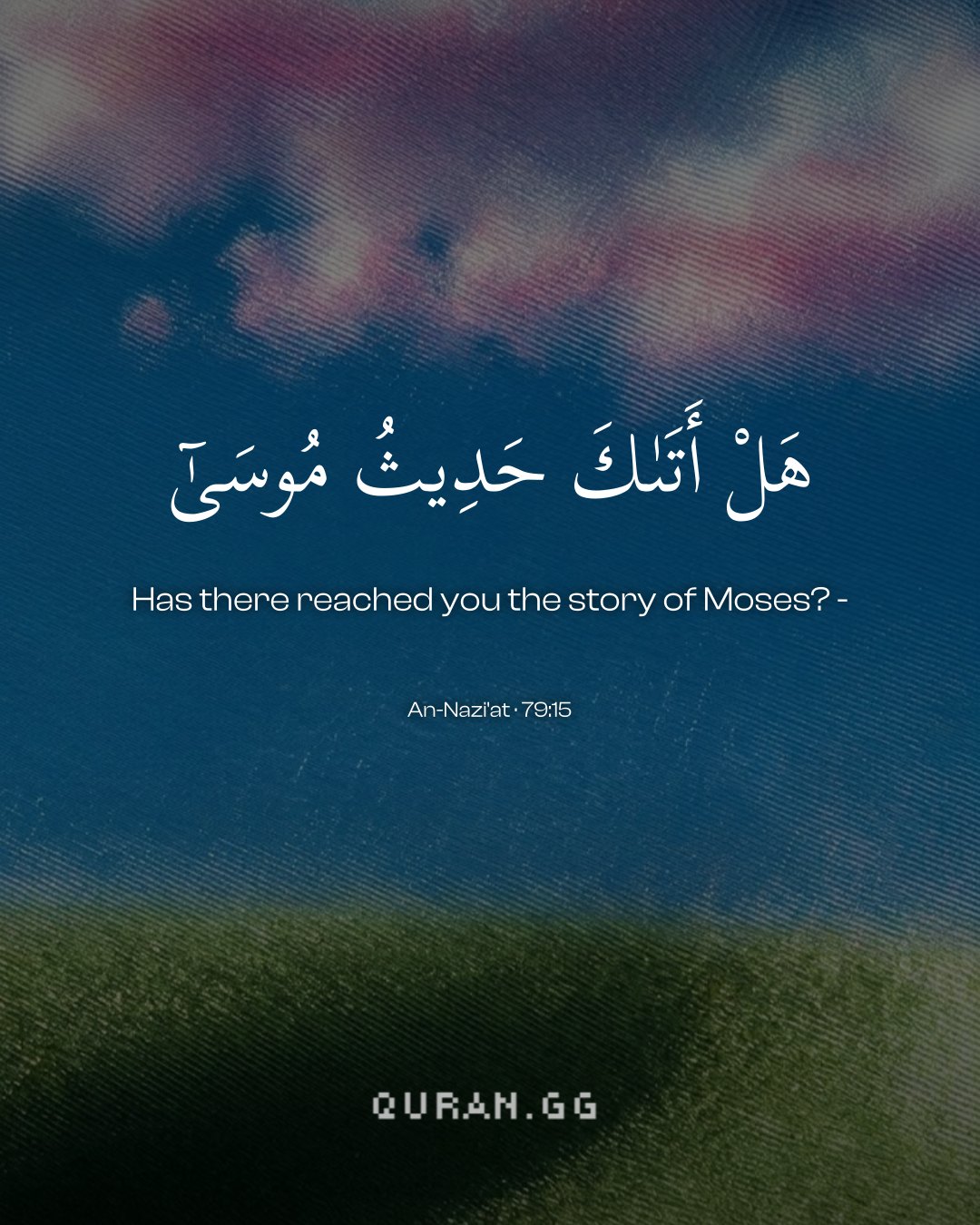
هَلْ أَتَاكَ حَدِيثُ مُوسَى
(Has there come to you the story of Musa) meaning, have you heard of his story
إِذْ نَادَاهُ رَبُّهُ
(When his Lord called him) meaning, He called out speaking to him.
بِالْوَادِ الْمُقَدَّسِ
(in the holy valley) meaning purified
طُوًى
(Tuwa) According to what is correct, it is the name of a valley, as preceded in Surah Ta Ha. So, He said to him:
اذْهَبْ إِلَى فِرْعَوْنَ إِنَّهُ طَغَى
(Go to Fir`awn; verily, he has transgressed all bounds.) meaning, he has become haughty, rebellious and arrogant.
فَقُلْ هَل لَّكَ إِلَى أَن تَزَكَّى
(And say to him: "Would you purify yourself") meaning, say to him, "Will you respond to the path and way that will purify you" This means, `will you submit (accept Islam) and be obedient'
وَأَهْدِيَكَ إِلَى رَبِّكَ
(And that I guide to your Lord,) meaning, `I will guide you to the worship of your Lord.'
فَتَخْشَى
(so that you fear) meaning, `so that your heart will become humble, obedient, and submissive to Him after it was hard, evil, and far away from goodness.'
فَأَرَاهُ الاٌّيَةَ الْكُبْرَى
(Then he showed him the great sign.) This means that Musa showed him -- along with this truthful call -- a strong evidence and a clear proof of the truthfulness of what he had come up with from Allah.
فَكَذَّبَ وَعَصَى
(But he denied and disobeyed.) meaning, he (Fir`awn) rejected the truth and opposed what Musa commanded him with of obedience. So what happened with him was that his heart disbelieved, and Musa (i.e., his call) could not internally or externally affect it. Along with this, his knowledge that what Musa had come to him with was the truth, did not necessitate his being a believer in it. This is because recognition is the knowledge of the heart, and faith is its action. And it (faith) is to comply with the truth and submit to it. Concerning Allah's statement,
ثُمَّ أَدْبَرَ يَسْعَى
(Then he turned back, striving.) meaning, in responding to the truth with falsehood. This was by his gathering the group of magicians in order to confront that which Musa had come up with of spectacular miracles.
فَحَشَرَ فَنَادَى
(So he gathered (his people) and called out) meaning, among his people.
فَقَالَ أَنَاْ رَبُّكُمُ الاٌّعْلَى
(Saying; I am your lord, most high.") Ibn `Abbas and Mujahid both said, "This is the word which Fir`awn said after he said,
مَا عَلِمْتُ لَكُمْ مِّنْ إِلَـهٍ غَيْرِى
(`I have not known of any other god for you all other than me) for the past forty years."' Allah then says,
فَأَخَذَهُ اللَّهُ نَكَالَ الاٌّخِرَةِ وَالاٍّوْلَى
(So Allah seized him with a punishing example for the Hereafter and the first (life). ) meaning, Allah avenged Himself against him with a severe vengeance, and He made an example and admonition of him for those rebellious people in the world who are like him.
وَيَوْمَ الْقِيَـمَةِ بِئْسَ الرِّفْدُ الْمَرْفُودُ
(And on the Day of Resurrection, evil indeed is the gift gifted i.e., the curse (in this world) pursued by another curse (in this world) pursued by another curse (in the Hereafter).) (11:99) This is as Allah says,
وَجَعَلْنَـهُمْ أَئِمَّةً يَدْعُونَ إِلَى النَّارِ وَيَوْمَ الْقِيـمَةِ لاَ يُنصَرُونَ
(And We made them leaders inviting to the Fire: and on the Day of Resurrection, they will not be helped.) (28:41) Allah said;
إِنَّ فِى ذَلِكَ لَعِبْرَةً لِّمَن يَخْشَى
(In this is a lesson for whoever fears.)