Tafsir Ibn Kathir (abridged)
The Order for Ample Remembrance After the Fear Prayer
Allah commands Dhikr after finishing the Fear prayer, in particular, even though such Dhikr is encouraged after finishing other types of prayer in general. In the case of Fear prayer, Dhikr is encouraged even more because the pillars of the prayer are diminished since they move about while performing it, etc., unlike other prayers. Allah said about the Sacred Months,
فَلاَ تَظْلِمُواْ فِيهِنَّ أَنفُسَكُمْ
(so wrong not yourselves therein), even though injustice is prohibited all year long. However, injustice is particularly outlawed during the Sacred Months due to their sanctity and honor. So Allah's statement,
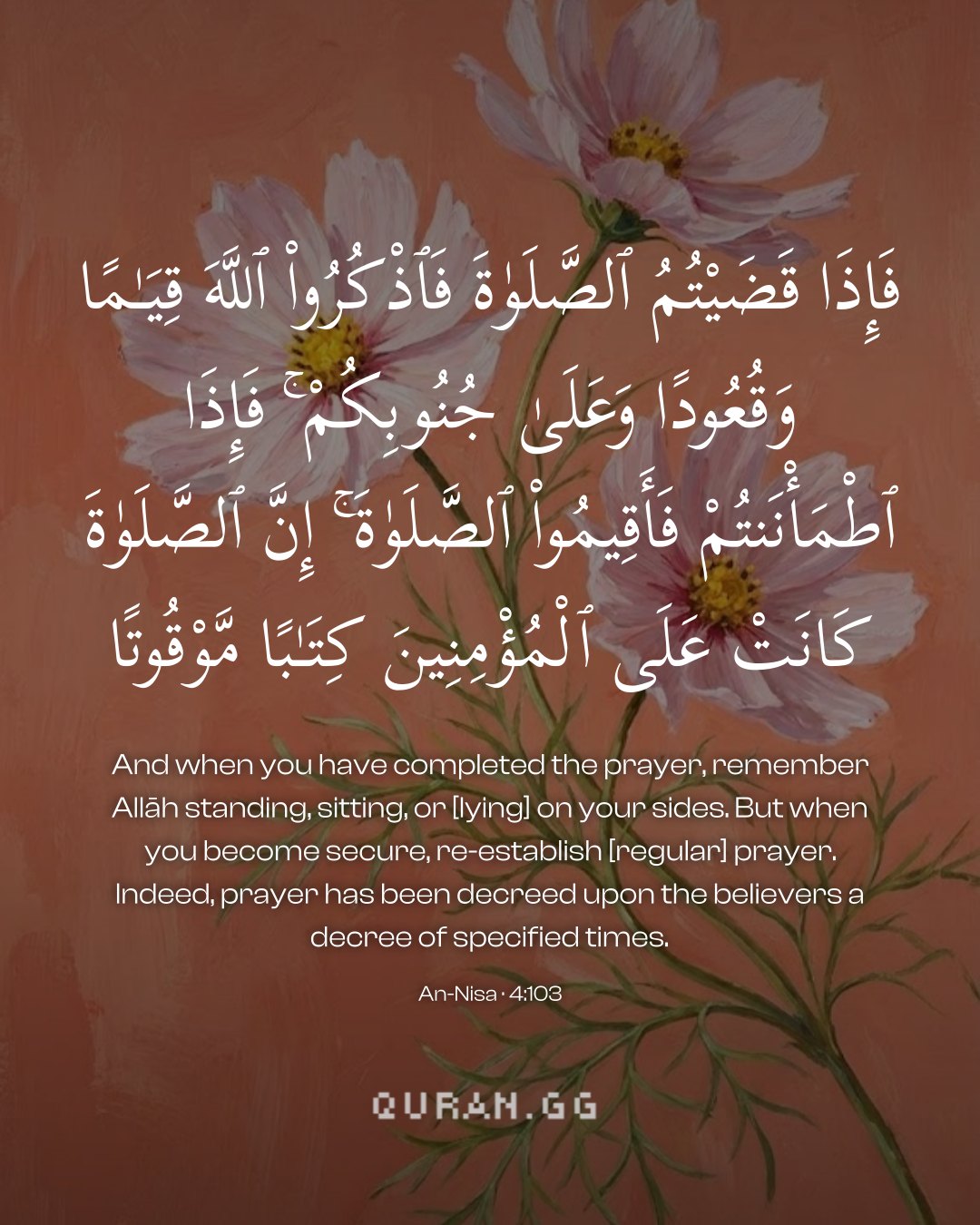
فَإِذَا قَضَيْتُمُ الصَّلَوةَ فَاذْكُرُواْ اللَّهَ قِيَـماً وَقُعُوداً وَعَلَى جُنُوبِكُمْ
(When you have finished Salah, remember Allah standing, sitting down, and on your sides,) means, in all conditions,
فَإِذَا اطْمَأْنَنتُمْ فَأَقِيمُواْ الصَّلَوةَ
(But when you are free from danger perform the Salah.) when you are safe, tranquil and fear subsides,
فَأَقِيمُواْ الصَّلَوةَ
(perform the Salah) by performing it as you were commanded; fulfilling its obligations, with humbleness, completing the bowing and prostration positions etc. Allah's statement,
إِنَّ الصَّلَوةَ كَانَتْ عَلَى الْمُؤْمِنِينَ كِتَـباً مَّوْقُوتاً
(Verily, the Salah is Kitaban on the believers at fixed hours.) means, enjoined, as Ibn `Abbas stated. Ibn `Abbas also said, "The prayer has a fixed time, just as the case with Hajj." Similar is reported from Mujahid, Salim bin `Abdullah, `Ali bin Al-Husayn, Muhammad bin `Ali, Al-Hasan, Muqatil. As-Suddi and `Atiyah Al-`Awfi.
The Encouragement to Pursue the Enemy Despite Injuries
Allah's statement,
وَلاَ تَهِنُواْ فِى ابْتِغَآءِ الْقَوْمِ
(And don't be weak in the pursuit of the enemy;) means, do not weaken your resolve in pursuit of your enemy. Rather, pursue them vigorously, fight them and be wary of them.
إِن تَكُونُواْ تَأْلَمُونَ فَإِنَّهُمْ يَأْلَمُونَ كَمَا تَأْلَمونَ
(if you are suffering then surely they are suffering as you are suffering,) meaning, just as you suffer from injuries and death, the same happens to the enemy. In another Ayah, Allah said,
إِن يَمْسَسْكُمْ قَرْحٌ فَقَدْ مَسَّ الْقَوْمَ قَرْحٌ مِّثْلُهُ
(If you suffer a harm, be sure a similar harm has struck the others). Allah then said,
وَتَرْجُونَ مِنَ اللَّهِ مَا لاَ يَرْجُونَ
(but you have a hope from Allah that for which they hope not;) meaning, you and they are equal regarding the injuries and pain that you suffer from. However, you hope for Allah's reward, victory and aid, just as He has promised you in His Book and by the words of his Messenger . Surely, Allah's promise is true. On the other hand, your enemies do not have hope for any of this. So, it is you, not they, who should be eager to fight so that you establish the Word of Allah and raise it high. i
وَكَانَ اللَّهُ عَلِيماً حَكِيماً
(And Allah is Ever All-Knowing, All-Wise.) means, He is most knowledgeable and wise in all what He decides, decrees, wills and acts on concerning various worldly and religious ordainments, and He is worthy of praise in all conditions.