Tafsir Ibn Kathir (abridged)
Characteristics of the Hypocrites and Their Destination
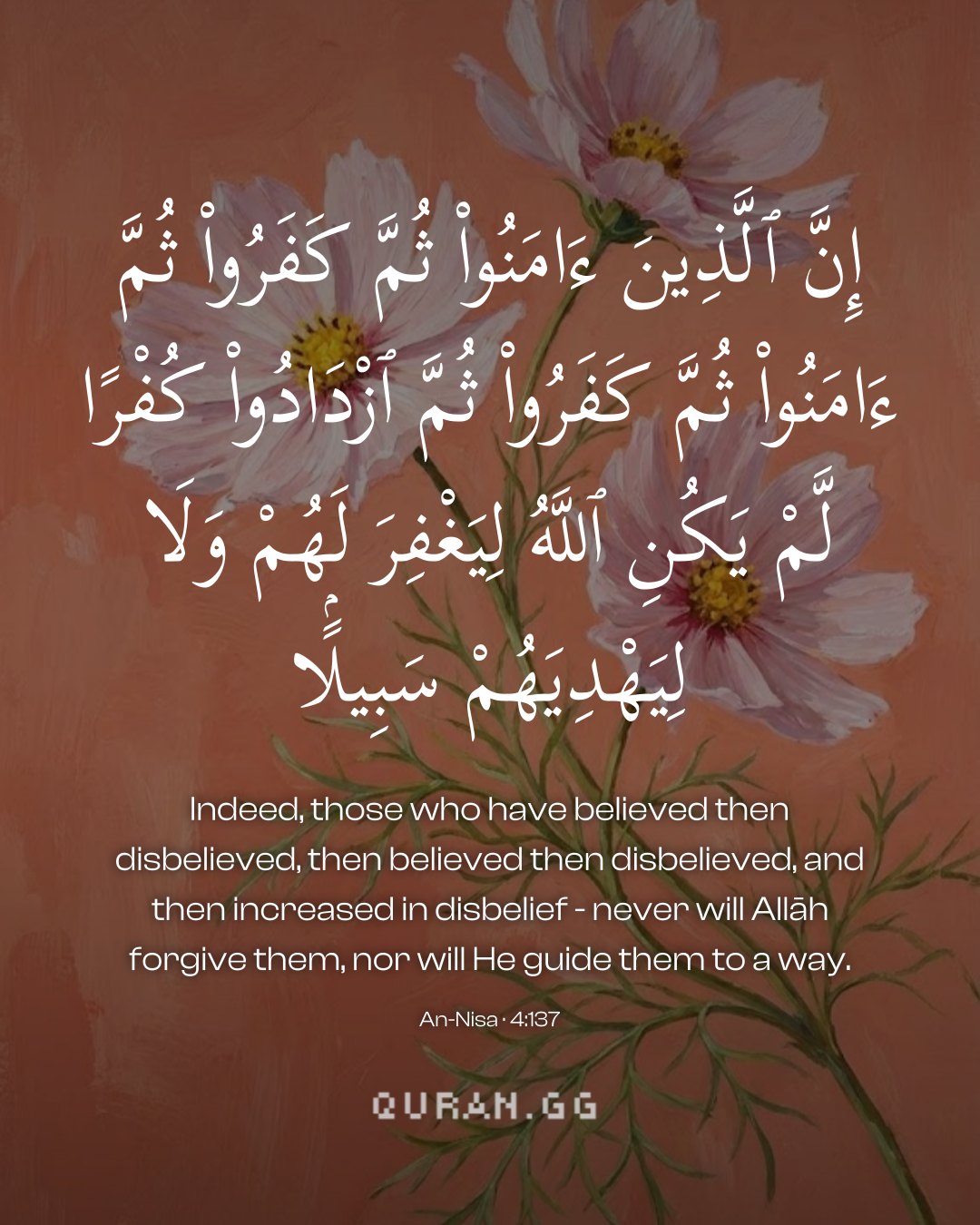
Allah states that whoever embraces the faith, reverts from it, embraces it again, reverts from it and remains on disbelief and increases in it until death, then he will never have a chance to gain accepted repentance after death. Nor will Allah forgive him, or deliver him from his plight to the path of correct guidance. This is why Allah said,
لَّمْ يَكُنْ اللَّهُ لِيَغْفِرَ لَهُمْ وَلاَ لِيَهْدِيَهُمْ سَبِيلاً
(Allah will not forgive them, nor guide them on the (right) way). Ibn Abi Hatim recorded that his father said that Ahmad bin `Abdah related that Hafs bin Jami' said that Samak said that `Ikrimah reported that Ibn `Abbas commented;
ثُمَّ ازْدَادُواْ كُفْراً
(and go on increasing in disbelief), "They remain on disbelief until they die." Mujahid said similarly. Allah then said,
بَشِّرِ الْمُنَـفِقِينَ بِأَنَّ لَهُمْ عَذَاباً أَلِيماً
(Give to the hypocrites the tidings that there is for them a painful torment.) Hence, the hypocrites have this characteristic, for they believe, then disbelieve, and this is why their hearts become sealed. Allah describes the hypocrites as taking the disbelievers as friends instead of the believers, meaning they are the disbelievers' supporters in reality, for they give them their loyalty and friendship in secret. They also say to disbelievers when they are alone with them, "We are with you, we only mock the believers by pretending to follow their religion." Allah said, while chastising them for being friends with the disbelievers,
أَيَبْتَغُونَ عِندَهُمُ الْعِزَّةَ
(do they seek honor, with them) Allah then states that honor, power and glory is for Him Alone without partners, and for those whom Allah grants such qualities to. Allah said,
مَن كَانَ يُرِيدُ الْعِزَّةَ فَلِلَّهِ الْعِزَّةُ جَمِيعاً
(Whosoever desires honor, then to Allah belong all honor), and,
وَلِلَّهِ الْعِزَّةُ وَلِرَسُولِهِ وَلِلْمُؤْمِنِينَ وَلَـكِنَّ الْمُنَـفِقِينَ لاَ يَعْلَمُونَ
(But honor belongs to Allah, and to His Messenger, and to the believers, but the hypocrites know not). The statement that honor is Allah's Alone, is meant to encourage the servants to adhere to their servitude to Allah and to be among His faithful servants who will gain victory in this life and when the Witnesses stand up to testify on the Day of Resurection. Allah's statement,
وَقَدْ نَزَّلَ عَلَيْكُمْ فِى الْكِتَـبِ أَنْ إِذَا سَمِعْتُمْ ءَايَـتِ اللَّهِ يُكَفَرُ بِهَا وَيُسْتَهْزَأُ بِهَا فَلاَ تَقْعُدُواْ مَعَهُمْ حَتَّى يَخُوضُواْ فِى حَدِيثٍ غَيْرِهِ إِنَّكُمْ إِذاً مِّثْلُهُمْ
(And it has already been revealed to you in the Book that when you hear the verses of Allah being denied and mocked at, then sit not with them, until they engage in talk other than that; certainly in that case you would be like them.) The Ayah means, if you still commit this prohibition after being aware of its prohibition, sitting with them where Allah's Ayat are rejected, mocked at and denied, and you sanction such conduct, then you have participated with them in what they are doing. So Allah said,
إِنَّكُمْ إِذاً مِّثْلُهُمْ
((But if you stayed with them) certainly in that case you would be like them.) concerning the burden they will earn. What has already been revealed in the Book -- as the Ayah says -- is the Ayah in Surat Al-An`am 6, which was revealed in Makkah,
وَإِذَا رَأَيْتَ الَّذِينَ يَخُوضُونَ فِى ءَايَـتِنَا فَأَعْرِضْ عَنْهُمْ
(And when you see those who engage in false conversation about Our verses (of the Qur'an) by mocking at them, stay away from them). Muqatil bin Hayyan said that this Ayah 4:140 abrogated the Ayah in Surat Al-An`am, referring to the part that says here,
إِنَّكُمْ إِذاً مِّثْلُهُمْ
((But if you stayed with them) certainly in that case you would be like them), and Allah's statement in Al-An`am,
وَمَا عَلَى الَّذِينَ يَتَّقُونَ مِنْ حِسَابِهِم مِّن شَىْءٍ وَلَـكِن ذِكْرَى لَعَلَّهُمْ يَتَّقُونَ
(Those who fear Allah, keep their duty to Him and avoid evil, are not responsible for them (the disbelievers) in any case, but (their duty) is to remind them, that they may have Taqwa). Allah's statement,
إِنَّ اللَّهَ جَامِعُ الْمُنَـفِقِينَ وَالْكَـفِرِينَ فِى جَهَنَّمَ جَمِيعاً
(Surely, Allah will collect the hypocrites and disbelievers all together in Hell.) means, just as the hypocrites participate in the Kufr of disbelievers, Allah will join them all together to reside in the Fire for eternity, dwelling in torment, punishment, enchained, restrained and in drinking boiling water.