The Prophets and Angels Are Never too Proud to Worship Allah
Ibn Abi Hatim recorded that Ibn `Abbas said that, `proud', means insolent. Qatadah said that,
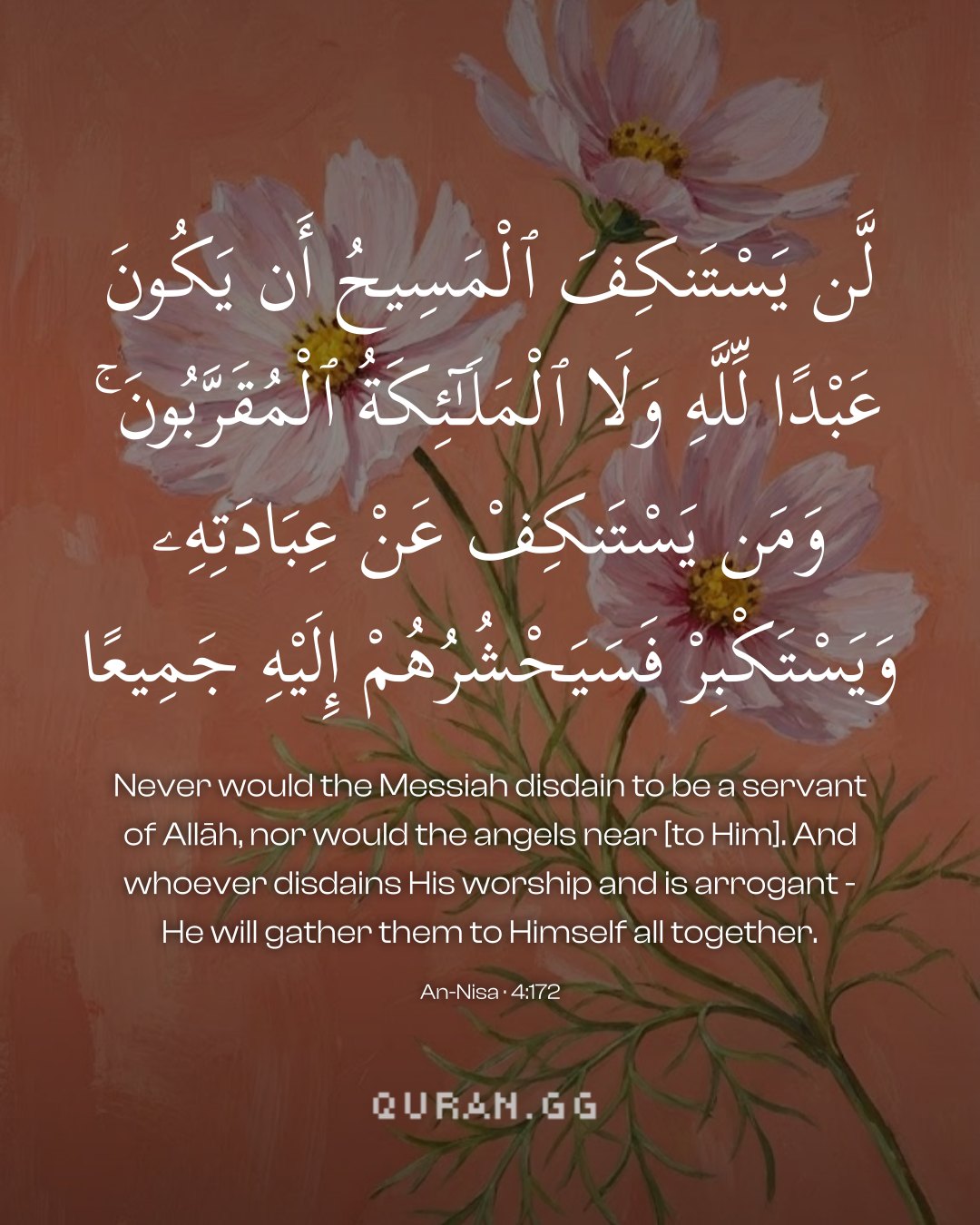
الْمَسِيحُ أَن يَكُونَ عَبْداً للَّهِ وَلاَ الْمَلَـئِكَةُ الْمُقَرَّبُونَ
(Al-Masih will never be too proud to be a servant of Allah nor the angels who are near (to Allah).) they will never be arrogant, Allah then said,
وَمَن يَسْتَنْكِفْ عَنْ عِبَادَتِهِ وَيَسْتَكْبِرْ فَسَيَحْشُرُهُمْ إِلَيهِ جَمِيعاً
(And whosoever rejects His worship and is proud, then He will gather them all together unto Himself.) on the Day of Resurrection. Then, Allah will judge between them with His just judgment that is never unjust or wrong.
فَأَمَّا الَّذِينَ ءَامَنُواْ وَعَمِلُواْ الصَّـلِحَـتِ فَيُوَفِّيهِمْ أُجُورَهُمْ وَيَزيدُهُمْ مِّن فَضْلِهِ
(So, as for those who believed and did deeds of righteousness, He will give their (due) rewards, and more out of His bounty.) Allah will award them their full rewards for their righteous actions and will give them more of His bounty, kindness, ample mercy and favor.
وَأَمَّا الَّذِينَ اسْتَنكَفُواْ وَاسْتَكْبَرُواْ
(But as for those who refused His worship and were proud, ) out of arrogance, they refused to obey and worship Him,
فَيُعَذِّبُهُمْ عَذَاباً أَلُيماً وَلاَ يَجِدُونَ لَهُمْ مِّن دُونِ اللَّهِ وَلِيّاً وَلاَ نَصِيراً
(He will punish them with a painful torment. And they will not find for themselves besides Allah any protector or helper.) In another Ayah, Allah said,
إِنَّ الَّذِينَ يَسْتَكْبِرُونَ عَنْ عِبَادَتِى سَيَدْخُلُونَ جَهَنَّمَ دَخِرِينَ
(Verily! Those who scorn My worship, they will surely enter Hell in humiliation,) degradation, disgrace and dishonor, for they were arrogant and rebellious.
From the affirmation of Allah's absolute purity and the refutation of assumed Godhood of Sayyidna 'Isa (علیہ السلام) earlier, the text now moves to further strengthen the argument by showing that Sayyidna 'Isa (علیہ السلام) would himself confess to being a servant of Allah and so will the angels (which includes Sayyidna Jibra'il (علیہ السلام) alleged to be a person of Trinity). Then, follows the warning for those who choose to retract in distaste and the good news for those who believe and are good in deeds for they will be rewarded for their belief and deeds with many more added graces from Allah.
Commentary
The Honour of being a servant of Allah
Maulana Shabbir Ahmad ` Usmani, in his comments on the opening statement of Verse 172: لَّن يَسْتَنكِفَ الْمَسِيحُ أَن يَكُونَ عَبْدًا لِّلَّـهِ (The Masih shall never spurn being a slave of Allah, nor shall the angels, the close ones), says that so it is because being a servant of Allah, being devoted to His worship and being obedient to His will and command, is an honour by itself and certainly a nobility of the highest class. Sayyidna Masih (علیہ السلام) and the close angels are the best testifiers to the worth and value of this blessing. How could they spurn an honour like that? Quite contrary to this, the worst disgrace and dishonour there can be imagined lies in worshipping someone other than Allah. This is what the Christians did when they took Sayyidna Masih (علیہ السلام) as the son of Allah and the object of their worship. Similar was the case with disbelievers who took angels as daughters of Allah and started worshipping them alongwith their idols. So, for them, there is punishment, and disgrace. (Notes in Tafsir Usmani)
It is a human weakness to see any outstanding aspect in anything and then hold exaggerated views about it. This is exceeding the limits in determining its actual position. This is called excess. All forms of polytheism and personality cults are the result of committing this excess. Exaggeration in religion means according an inflated status to things and personalities associated with the religion in question. The Quran enjoins us to keep everything in its proper place and to refrain from according a higher status to things and people than they actually deserve. Everything should be seen as it is, without the viewer indulging in excesses of any sort: for instance, calling a servant of God—created without a father—the son of God; or regarding someone to whom God has granted special honour and status as an extraordinary, infallible being. Similarly, if God enjoins one to abstain from the luxuries and glitter of the world, then taking this injunction on simple living to the extreme of renouncing the world is yet another form of excess. Another form of excess is taking an injunction regarding some aspect of life and exaggerating it so greatly as to develop a full-fledged religious philosophy on its basis. All such forms in which a religious injunction or precept is elevated from its real position and accorded an excessively high status will bring about an exaggeration in religion.
Uthmani text of the Madinah mushaf (King Fahd Complex). Translation: Saheeh International. Tafsir via Quran.com.