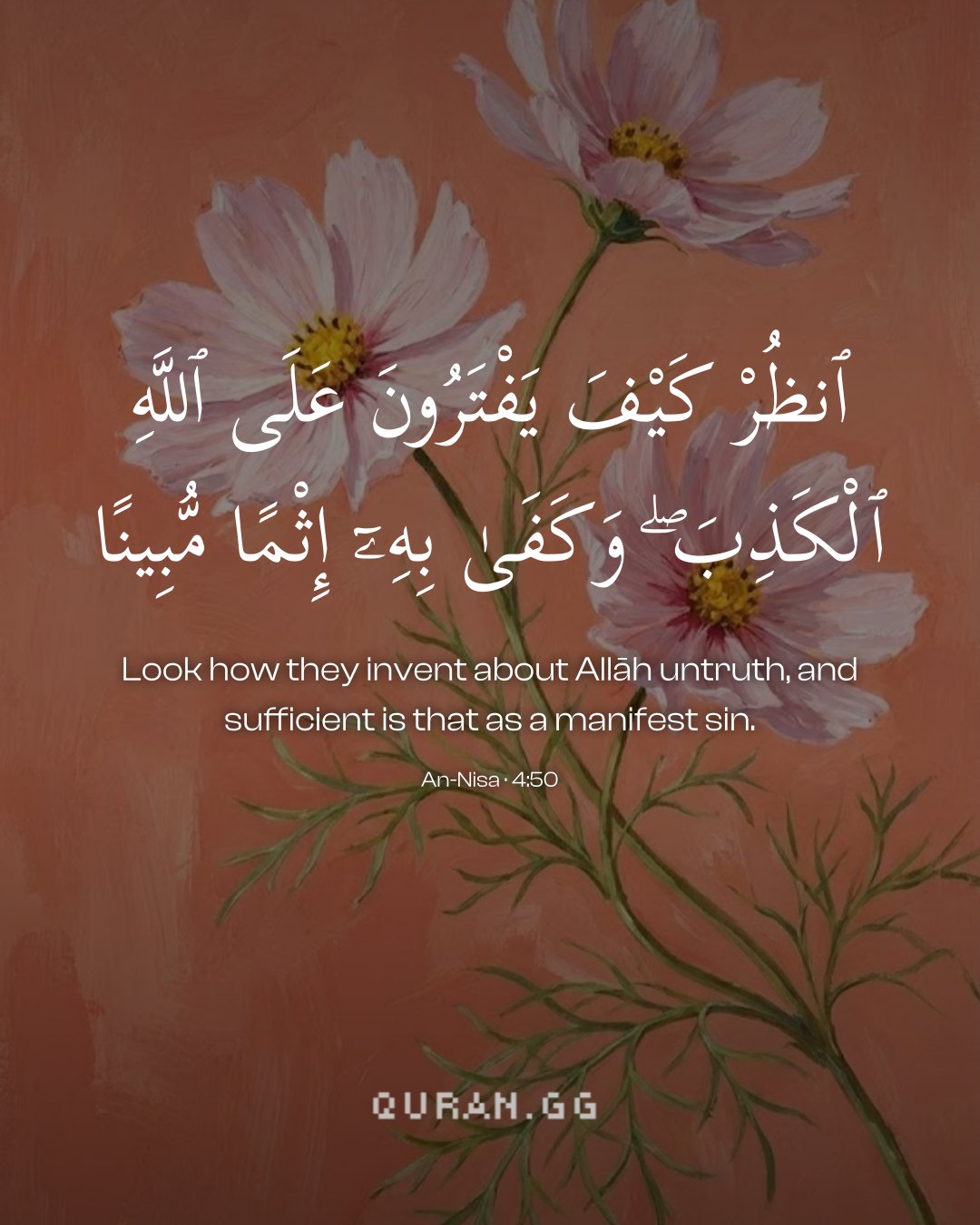
(Have you not seen those who claim sanctity for themselves) was revealed about the Jews and Christians when they said, `We are Allah's children and His loved ones."' Ibn Zayd also said, "This Ayah was revealed concerning their statement,
نَحْنُ أَبْنَاءُ اللَّهِ وَأَحِبَّاؤُهُ
(We are the children of Allah and His loved ones) and their statement,
Let us now turn to the word of Allah in: أَلَمْ تَرَ إِلَى الَّذِينَ يُزَكُّونَ أَنفُسَهُم (Have you not seen those who claim sanctity for themselves?) Since the Jews claimed sanctity for themselves, Allah Almighty censures them in this verse as a strange lot attributing sanctity to themselves and then having the audacity to tell others that this is so. Amazing indeed!
From here we learn that it is not permissible for anyone to claim and broadcast his or her sanctity, or that of others. This is forbidden on three counts:
1. The cause of self-praise is mostly pride and arrogance. So, in reality, what is forbidden is pride and arrogance.
The book of God is given to a community so that it may rectify the thinking and conduct of its people. But when the bearers of the Divine Book, like the Jews, suffer from decline, they begin to take misguidance in place of guidance from it. The commands of God become the subject of futile hair-splitting discussions; concocted philosophies are produced in the name of theology, and wrongdoers alter the divine book to justify the religious validity of their actions. They detach the words of God from their context and interpret them on the basis of their own assumptions. The Jews having received a portion of the Book means that they were able to read the words of the Book, but could not mould their actions according to those words, thereby defeating the real purpose of the Scriptures. They remained the bearers of the Book so far as its words were concerned, but in the matter of practice they adopted the ways of other worldly communities. Moreover, while the others practised worldliness in the name of worldliness, the Jews adopted the same worldly ways but had the audacity to try to justify their practices by misquoting the Divine Book.
Uthmani text of the Madinah mushaf (King Fahd Complex). Translation: Saheeh International. Tafsir via Quran.com.