Surah An-Nisa Ayah 75 (4:75) — Meaning & Tafsir | Quran.GG

Surah An-Nisa, Ayah 75

4:75 · Meaning and tafsir

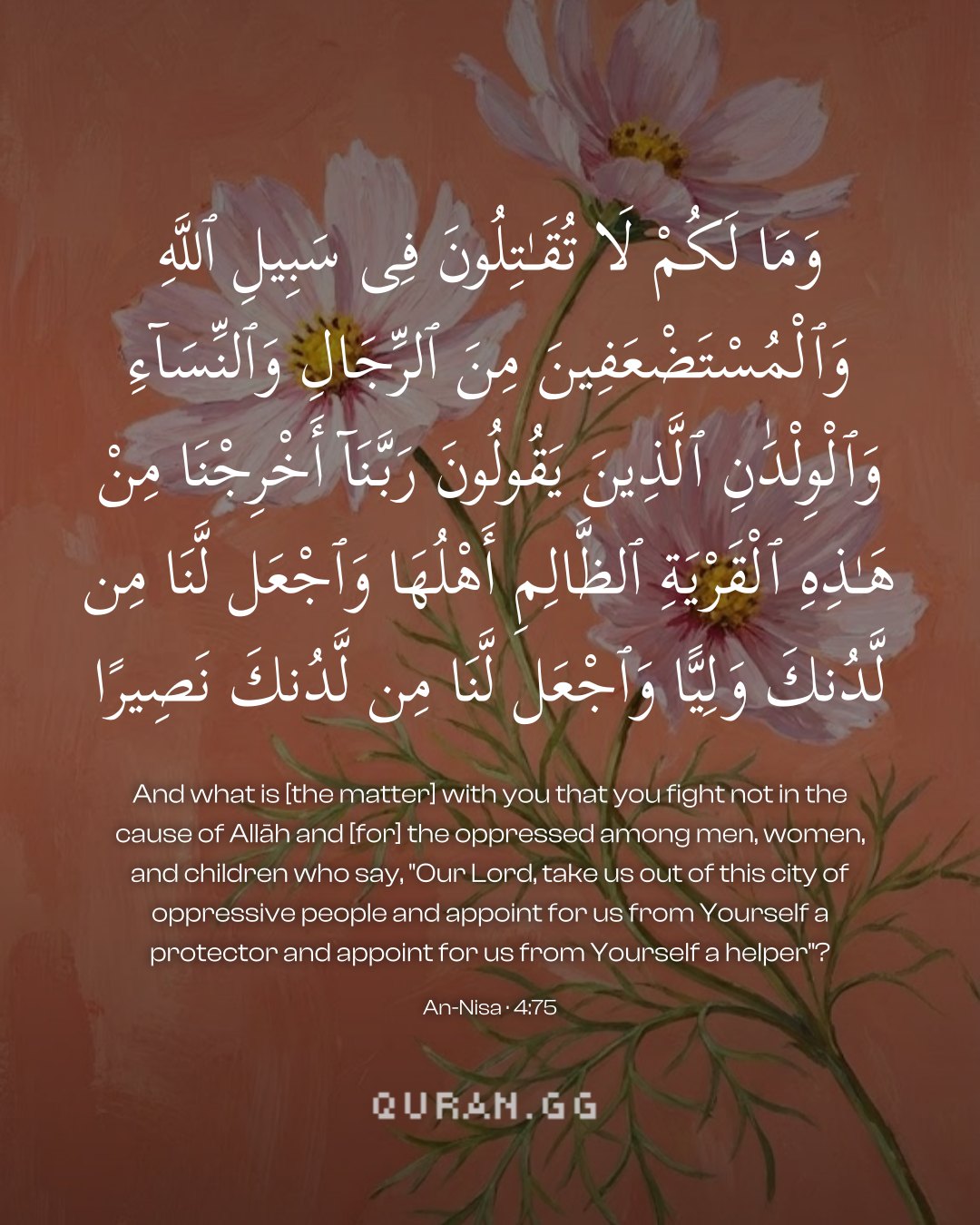
وَمَا لَكُمْ لَا تُقَـٰتِلُونَ فِى سَبِيلِ ٱللَّهِ وَٱلْمُسْتَضْعَفِينَ مِنَ ٱلرِّجَالِ وَٱلنِّسَآءِ وَٱلْوِلْدَٰنِ ٱلَّذِينَ يَقُولُونَ رَبَّنَآ أَخْرِجْنَا مِنْ هَـٰذِهِ ٱلْقَرْيَةِ ٱلظَّالِمِ أَهْلُهَا وَٱجْعَل لَّنَا مِن لَّدُنكَ وَلِيًّا وَٱجْعَل لَّنَا مِن لَّدُنكَ نَصِيرًا ٧٥

And what is [the matter] with you that you fight not in the cause of Allāh and [for] the oppressed among men, women, and children who say, "Our Lord, take us out of this city of oppressive people and appoint for us from Yourself a protector and appoint for us from Yourself a helper"?

Surah An-Nisa 4:75 in Arabic with its translation: “And what is [the matter] with you that you fight not in the cause of Allāh and [for] the oppressed among men,…”

Make something with this ayah

Turn it into a video for Stories, Reels or TikTok, recited by the reciter you pick, or an image on a background you choose. Free, in your browser.

Download this image

Tafsir Ibn Kathir (abridged)

Encouraging Jihad to Defend the Oppressed

Allah encouraged His believing servants to perform Jihad in His cause and to strive hard to save the oppressed Muslims in Makkah, men, women and children who were restless because of having to remain there. This is why Allah said,

الَّذِينَ يَقُولُونَ رَبَّنَآ أَخْرِجْنَا مِنْ هَـذِهِ الْقَرْيَةِ

(whose cry is: "Our Lord! Rescue us from this town), referring to Makkah. In a similar Ayah, Allah said,

وَكَأَيِّن مِّن قَرْيَةٍ هِىَ أَشَدُّ قُوَّةً مِّن قَرْيَتِكَ الَّتِى أَخْرَجَتْكَ

(And many a town, stronger than your town which has driven you out) Allah then describes this town,

الظَّـلِمِ أَهْلُهَا وَاجْعَلْ لَّنَا مِن لَّدُنْكَ وَلِيّاً وَاجْعَلْ لَّنَا مِن لَّدُنْكَ نَصِيراً

(whose people are oppressors; and raise for us from You one who will protect, and raise for us from You one who will help) meaning, send protectors and helpers for us. Al-Bukhari recorded that Ibn `Abbas said, "I and my mother were from the oppressed (in Makkah)." Allah then said,

الَّذِينَ ءَامَنُواْ يُقَـتِلُونَ فِى سَبِيلِ اللَّهِ وَالَّذِينَ كَفَرُواْ يُقَـتِلُونَ فِى سَبِيلِ الطَّـغُوتِ

(Those who believe, fight in the cause of Allah, and those who disbelieve, fight in the cause of the Taghut. ) Therefore, the believers fight in obedience to Allah and to gain His pleasure, while the disbelievers fight in obedience to Shaytan. Allah then encourages the believers to fight His enemies,

فَقَـتِلُواْ أَوْلِيَاءَ الشَّيْطَـنِ إِنَّ كَيْدَ الشَّيْطَـنِ كَانَ ضَعِيفاً

(So fight against the friends of Shaytan; ever feeble indeed is the plot of Shaytan).

أَلَمْ تَرَ إِلَى الَّذِينَ قِيلَ لَهُمْ كُفُّواْ أَيْدِيَكُمْ وَأَقِيمُواْ الصَّلَوةَ وَءَاتُواْ الزَّكَوةَ فَلَمَّا كُتِبَ عَلَيْهِمُ الْقِتَالُ إِذَا فَرِيقٌ مِّنْهُمْ يَخْشَوْنَ النَّاسَ كَخَشْيَةِ اللَّهِ أَوْ أَشَدَّ خَشْيَةً وَقَالُواْ رَبَّنَا لِمَ كَتَبْتَ عَلَيْنَا الْقِتَالَ لَوْلا أَخَّرْتَنَا إِلَى أَجَلٍ قَرِيبٍ قُلْ مَتَـعُ الدُّنْيَا قَلِيلٌ وَالاٌّخِرَةُ خَيْرٌ لِّمَنِ اتَّقَى وَلاَ تُظْلَمُونَ فَتِيلاً - أَيْنَمَا تَكُونُواْ يُدْرِككُّمُ الْمَوْتُ وَلَوْ كُنتُمْ فِى بُرُوجٍ مُّشَيَّدَةٍ وَإِن تُصِبْهُمْ حَسَنَةٌ يَقُولُواْ هَـذِهِ مِنْ عِندِ اللَّهِ وَإِن تُصِبْهُمْ سَيِّئَةٌ يَقُولُواْ هَـذِهِ مِنْ عِندِكَ قُلْ كُلٌّ مِّنْ عِندِ اللَّهِ فَمَا لِهَـؤُلاءِ الْقَوْمِ لاَ يَكَادُونَ يَفْقَهُونَ حَدِيثاً

Ma'arif al-Qur'an

Commentary

Answering the call of the oppressed

Left behind in Makkah were Muslims who were unable to migrate because of physical weakness and insufficiency of resources. Later on, the disbelievers themselves stopped them from going and started hurting and harassing them in all sorts of ways so that they turn away from their faith in Islam. The names of some of these are preserved in exegetic works, for example, Sayyidna Ibn ` Abbas ؓ and his mother, Sulyma ibn Hisham, Walid ibn Walid and Abu Jandal ibn Sahl, may Allah be pleased with them all (Qurtubi). These blessed people kept facing tyranny and torture because of their unflinching faith showing no signs that they would ever surrender their firm stand on Islam. However, they did continue praying to Allah Almighty for deliverance from this hard life which was finally accepted by Him when He commanded Muslims to wage Jihad against the disbelievers and rescue the oppressed from their coercion and persecution.

According to this verse, Muslims had requested Allah Almighty the favour of two things - that they be rescued from that town (meaning Makkah) and that they be blessed with some supporter and helper. The fact is that Allah Almighty granted both these prayers when He provided some of them with the opportunity to move out from there which was the fulfillment of their first wish. However, some of them remained staying right there until the Conquest of Makkah. At that time, the Holy Prophet ﷺ appointed Sayyidna ` Attab ibn Asid as their caretaker and who had the oppressed Muslims delivered from their oppressors. Thus, granted was their second wish as well. It will be noted that the Holy Qur'an, rather than give a straightforward command to fight in this verse, has elected to use the words: وَمَا لَكُمْ لَا تُقَاتِلُونَ فِي سَبِيلِ اللَّـهِ ): (What has happened to you that you do not fight in the way of Allah?). Here the hint given is that fighting and Jihad is a natural duty under such conditions,_ not doing which is certainly far from a reasonable man.

Tazkirul Quran

See note to 2:191.

Uthmani text of the Madinah mushaf (King Fahd Complex). Translation: Saheeh International. Tafsir via Quran.com.