Tafsir Ibn Kathir (abridged)
Disbelievers ask for Miracles, Allah's Response to Them
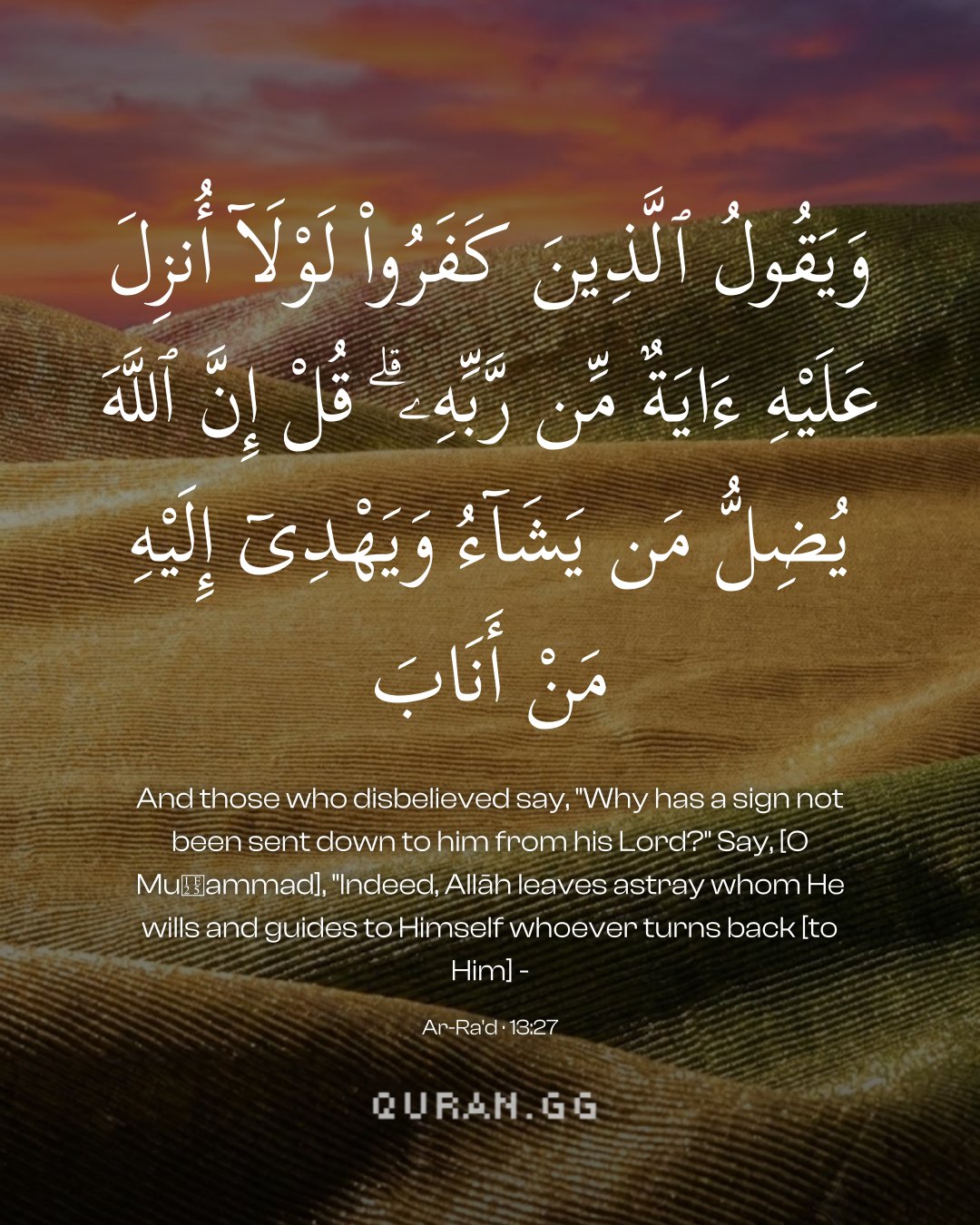
Allah says that the idolators said,
لَوْلاَ
(Why is not), meaning, there should be,
أُنزِلَ عَلَيْهِ ءَايَةٌ مِّن رَّبِّهِ
(a sign sent down to him from his Lord) The idolators also said,
فَلْيَأْتِنَا بِـَايَةٍ كَمَآ أُرْسِلَ الاٌّوَّلُونَ
(Let him then bring us an Ayah like the ones (Prophets) that were sent before (with signs)!) 21:5 We mentioned this subject several times before and stated that Allah is able to bring them what they wanted. There is a Hadith which mentions that the idolators asked the Prophet to turn Mount As-Safa into gold and, they also asked him for a spring to gush forth for them and to remove the mountains from around Makkah and replace them with green fields and gardens. Allah revealed to His Messenger : "If You wish, O Muhammad, I will give them what they asked for. However, if they disbelieve thereafter, I will punish them with a punishment that I did not punish any among the `Alamin (mankind and the Jinns). Or, if you wish, I will open for them the door to repentance and mercy." The Prophet said,
«بَلْ تَفْتَحُ لَهُمْ بَابَ التَّوبَةِ وَالرَّحْمَة»
(Rather, open for them the door to repentance and mercy.) This is why Allah said to His Messenger next,
قُلْ إِنَّ اللَّهَ يُضِلُّ مَن يَشَآءُ وَيَهْدِى إِلَيْهِ مَنْ أَنَابَ
(Say: "Verily, Allah sends astray whom He wills and guides unto Himself those who turn to Him in repentance.") Allah states that He brings misguidance or guidance whether the Messenger ﷺ was given a sign (a miracle) according to their asking or not. Verily, earning the misguidance or the guidance are not connected to the miracles or the lack of them. Allah said in other Ayat, f
وَمَا تُغْنِى الآيَـتُ وَالنُّذُرُ عَن قَوْمٍ لاَّ يُؤْمِنُونَ
(But neither Ayat nor warners benefit those who believe not.) 10:101
إِنَّ الَّذِينَ حَقَّتْ عَلَيْهِمْ كَلِمَةُ رَبِّكَ لاَ يُؤْمِنُونَ - وَلَوْ جَآءَتْهُمْ كُلُّ ءايَةٍ حَتَّى يَرَوُاْ الْعَذَابَ الاٌّلِيمَ
(Truly, those, against whom the Word of your Lord has been justified, will not believe. Even if every sign should come to them, until they see the painful torment.)10:96-97, and,
وَلَوْ أَنَّنَا نَزَّلْنَآ إِلَيْهِمُ الْمَلَـئِكَةَ وَكَلَّمَهُمُ الْمَوْتَى وَحَشَرْنَا عَلَيْهِمْ كُلَّ شَىْءٍ قُبُلاً مَّا كَانُواْ لِيُؤْمِنُواْ إِلاَّ أَن يَشَآءَ اللَّهُ وَلَـكِنَّ أَكْثَرَهُمْ يَجْهَلُونَ
(And even if We had sent down unto them angels, and the dead had spoken unto them, and We had gathered together all things before their very eyes, they would not have believed, unless Allah willed, but most of them behave ignorantly.) 6:111 Allah said here,
قُلْ إِنَّ اللَّهَ يُضِلُّ مَن يَشَآءُ وَيَهْدِى إِلَيْهِ مَنْ أَنَابَ
(Say: "Verily, Allah sends astray whom He wills and guides unto Himself those who turn to Him in repentance.") meaning, He guides to Him those who repent, turn to Him, beg Him, seek His help and humbly submit to Him.
The Believer's Heart finds Comfort in the Remembrance of Allah
Allah said,
الَّذِينَ ءَامَنُواْ وَتَطْمَئِنُّ قُلُوبُهُمْ بِذِكْرِ اللَّهِ
(Those who believed, and whose hearts find rest in the remembrance of Allah.) for their hearts find comfort on the side of Allah, become tranquil when He is remembered and pleased to have Him as their Protector and Supporter. So Allah said,
أَلاَ بِذِكْرِ اللَّهِ تَطْمَئِنُّ الْقُلُوبُ
(Verily, in the remembrance of Allah do hearts find rest.) and surely, He is worthy of it.
The Meaning of Tuba
Allah said,
الَّذِينَ آمَنُواْ وَعَمِلُواْ الصَّـلِحَاتِ طُوبَى لَهُمْ وَحُسْنُ مَـَابٍ
(Those who believed, and work righteousness, Tuba is for them and a beautiful place of (final) return.) `Ali bin Abi Talhah reported that Ibn `Abbas said that Tuba means, "Happiness and comfort or refreshment of the eye." `Ikrimah said that Tuba means, "How excellent is what they earned," while Ad-Dahhak said, "A joy for them." Furthermore, Ibrahim An-Nakh`i said that Tuba means, "Better for them," while Qatadah said that it is an Arabic word that means, `you have earned a good thing.' In another narration, Qatadah said that `Tuba for them' means, "It is excellent for them,"
وَحُسْنُ مَـَابٍ
(and a beautiful place of return.) and final destination. These meanings for Tuba are all synonymous and they do not contradict one another. Imam Ahmad recorded that Abu Sa'id Al-Khudri said that a man asked, "O Allah's Messenger! Tuba for those who saw you and believed in you!" The Prophet said,
«طُوبَى لِمَنْ رَآنِي وَآمَنَ بِي، وَطُوبَى ثُمَّ طُوبَى ثُمَّ طُوبَى لِمَنْ آمَنَ بِي وَلَمْ يَرَنِي»
(Tuba is for he who saw me and believed in me. Tuba, and another Tuba, and another Tuba for he who believed in me, but did not see me.) A man asked, "What is Tuba" The Prophet said,
«شَجَرَةٌ فِي الْجَنَّةِ مَسِيرَتُهَا مِائَةُ عَامٍ ثِيَابُ أَهْلِ الْجَنَّةِ تَخْرُجُ مِنْ أَكْمَامِهَا»
(A tree in Paradise whose width is a hundred years, and the clothes of the people of Paradise are taken from its bark.) Al-Bukhari and Muslim recorded that Sahl bin Sa`d said that the Messenger of Allah ﷺ said,
«إِنَّ فِي الْجَنَّةِ شَجَرَةً يَسِيرُ الرَّاكِبُ فِي ظِلِّهَا مِائَةَ عَامٍ لَا يَقْطَعُهَا»
(There is a tree in Paradise, if a rider travels in its shade for one hundred years, he would not be able to cross it.) An-Nu`man bin Abi `Ayyash Az-Zuraqi added, "Abu Sa`id Al-Khudri narrated to me that the Prophet said,
«إِنَّ فِي الْجَنَّةِ شَجَرَةً يَسِيرُ الرَّاكِبُ الْجَوَادَ الْمُضَمَّرَ السَّرِيعَ مِائَةَ عَامٍ مَا يَقْطَعُهَا»
(There is a tree in Paradise, if a rider travels in its shade on a fast, sleek horse for one hundred years, he would not be able to cross it.)" In his Sahih, Imam Muslim recorded that Abu Dharr narrated that the Messenger of Allah ﷺ said that Allah the Exalted and Most Honored said,
«يَا عِبَادِي لَوْ أَنَّ أَوَّلَكُمْ وَآخِرَكُمْ وَإِنْسَكُمْ وَجِنَّكُمْ قَامُوا فِي صَعِيدٍ وَاحِدٍ فَسَأَلُونِي فَأَعْطَيْتُ كُلَّ إِنْسَانٍ مَسْأَلَتَهُ مَا نَقَصَ ذَلِكَ مِنْ مُلْكِي شَيْئًا إِلَّا كَمَا يَنْقُصُ الْمِخْيَطُ إِذَا أُدْخِلَ فِي الْبَحْر»
(O My slaves! If the first and the last among you, mankind and Jinns among you, stood in one spot and asked Me and I gave each person what he asked, it will not decrease from My dominion, except what the needle decreases (or carries) when entered into the sea.) Khalid bin Ma`ddan said, "There is a tree in Paradise called Tuba, that has breasts that nurse the children of the people of Paradise. Verily, the miscarriage of a woman will be swimming in one of the rivers of Paradise until the Day of Resurrection commences, when he will be gathered with people while forty years of age." Ibn Abi Hatim collected this statement.
كَذَلِكَ أَرْسَلْنَاكَ فِى أُمَّةٍ قَدْ خَلَتْ مِن قَبْلِهَآ أُمَمٌ لِّتَتْلُوَ عَلَيْهِمُ الَّذِى أَوْحَيْنَآ إِلَيْكَ وَهُمْ يَكْفُرُونَ بِالرَّحْمَـنِ قُلْ هُوَ رَبِّى لا إِلَـهَ إِلاَّ هُوَ عَلَيْهِ تَوَكَّلْتُ وَإِلَيْهِ مَتَابِ