(And We shall turn their hearts and their eyes away, as they refused to believe therein for the first time, and We shall leave them in their trespass to wander blindly.) (6:110),
فَلَمَّا زَاغُواْ أَزَاغَ اللَّهُ قُلُوبَهُمْ
(So when they turned away, Allah turned their hearts away.) (61:5),
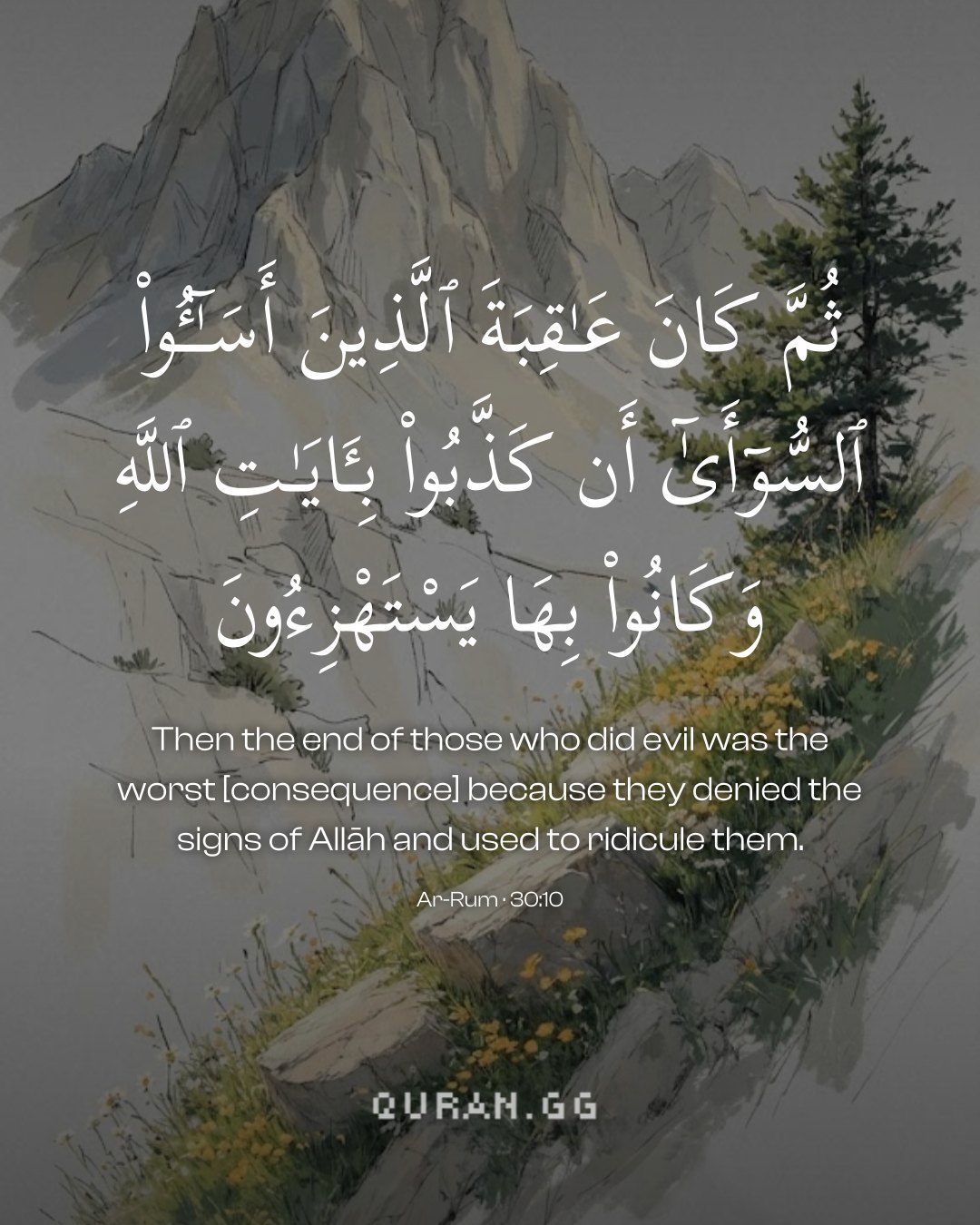
(Then evil was the end of those who did evil,) is that evil was their inevitable end, because they rejected the signs of Allah and made fun of them. This is the view of Ibn Jarir, which he recorded from Ibn `Abbas and Qatadah. Ibn Abi Hatim also recorded it from them and from Ad-Dahhak bin Muzahim. This is the apparent meaning -- and Allah knows best -- of the phrase:
وَكَانُواْ بِهَا يَسْتَهْزِئُونَ
(and made a mockery of them.)
Ma'arif al-Qur'an
Mufti Muhammad ShafiOn ayahs 9–14
أَوَلَمْ يَسِيرُوا فِي الْأَرْضِ (Have they not travelled on earth - 30:9). It means that the Makkans live in a land where there is neither any cultivation and industry nor any tall and beautiful buildings, but for the sake of trade they do travel to Syria and Yemen. So, have they not seen, during the course of their trips, what was the fate of the earlier people, whom Allah Ta’ ala had endowed with skills to make use of the land? For instance, they had the skill to draw underground water by excavating the earth for irrigating fields and gardens, and dig out concealed precious minerals, such as gold and silver, and make use of them to their benefit. For their advanced skills and way of living, they were regarded as civilized nations. But they got engrossed so much in material life, transitory luxuries and comforts that they forgot Allah Ta’ ala and the Hereafter. Then, Allah Ta’ ala sent prophets and books to remind them of their duties, but they did not pay any heed. Ultimately, they were overtaken by Allah's wrath even in this world. The ruins of their desolate cities still stand witness to their destruction. At the end of the verse it is suggested to ponder whether they were subjected to any oppression from Allah Ta’ ala, or they subjected themselves to their own cruelty by accumulating causes of the divine punishment.
Tazkirul Quran
Maulana Wahiduddin KhanOn ayahs 10–17
Constant remembrance (through prayer, etc.) and deep contemplation lead a man towards finding God. It is by profound thought that a man finds God. In the present world, God has scattered His signs everywhere—in the human environment, in the surrounding universe and also in the teachings of the Prophet. Those who give serious consideration to these signs of God will find God. Argument in favour of God is God’s representative on earth. If rightful argument is presented to a man and he ignores it, it is as if he has ignored God Himself. For such people there is nothing before God except eternal deprivation.
Uthmani text of the Madinah mushaf (King Fahd Complex). Translation: Saheeh International. Tafsir via Quran.com.