Allah glorified Himself and states that He is far above what the lying wrongdoers say about Him;
Allah says:
سُبْحَـنَ رَبِّكَ رَبِّ الْعِزَّةِ
(Glorified be your Lord, the Lord of Al-`Izzah!) meaning, the Owner of might and power Whom none can resist.
عَمَّا يَصِفُونَ
((He is free) from what they attribute unto Him!) means, from what these lying fabricators say.
وَسَلَـمٌ عَلَى الْمُرْسَلِينَ
(And Salam be on the Messengers!) means, may the peace of Allah be upon them in this world and in the Hereafter, because what they say about their Lord is sound, correct and true.
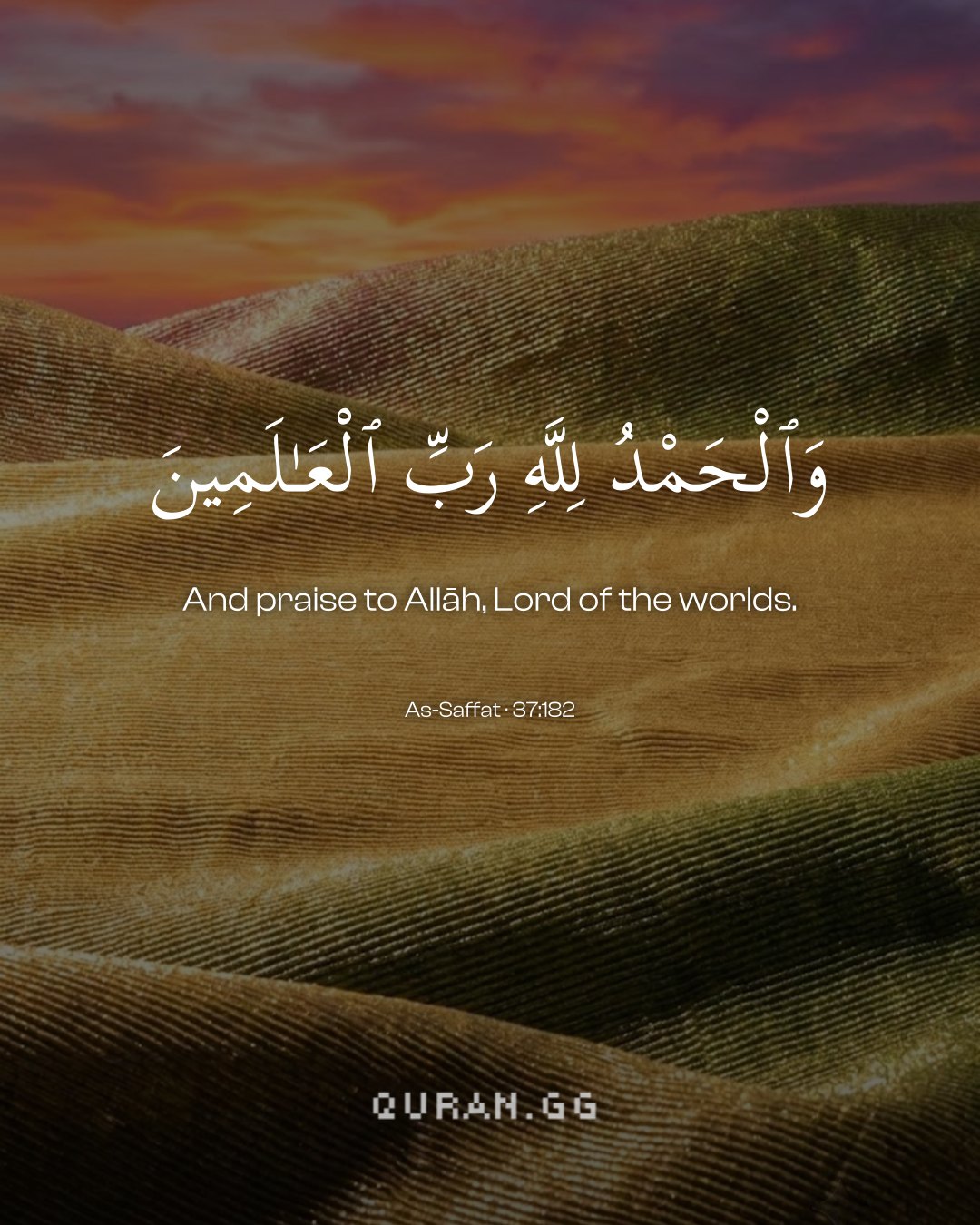
وَالْحَمْدُ للَّهِ رَبِّ الْعَـلَمِينَ
(And all the praises and thanks be to Allah, Lord of all that exists.) means, praise be to Him at the beginning and end of all things. Because Tasbih (glorification) implies a declaration of being free from all shortcomings, the two ideas appear together here and in many places in the Qur'an. Allah says:
Surah As-Saffat has been concluded on these verses, and the truth of the matter is that it would take volumes to explain this beautiful finale. In sum, Allah Ta’ ala has compressed all subjects of this Surah in these three verses. The Surah began with a description of tauhid, the theme of the Oneness of Allah, the essence of which was that Allah Ta’ ala is free from everything the Mushriks attribute to Him. Accordingly, the first verse serves as an indicator of this very detailed subject. After that, described in the Surah there were events relating to the noble prophets. Accordingly, a hint towards these has been made in the second verse. After that, it was very openly and explicitly that the beliefs, doubts and objections of disbelievers were refuted, both in terms of report and reason and, along with that, it was also declared that supremacy will ultimately be the lot of the people of truth - and whoever listens to these statements with good sense and insight is bound to end up praising Allah Ta’ ala. Accordingly, it is on this note of praise for Allah that the Surah has been concluded.
The prophets used to warn their community about the consequences of denying God’s Message. But people did not attach any importance to their words and instead ridiculed them because their prophet did not seem important enough to invoke God’s punishment on their rejection of his call. However, in spite of their ridicule, God’s punishment was not meted out to them immediately, because before that can happen, the dawah work should have been brought to completion. That is why the prophets have been exhorted by God to exercise patience and avoid confrontation until the period of respite given to the people has been brought to an end at God’s instance.
Uthmani text of the Madinah mushaf (King Fahd Complex). Translation: Saheeh International. Tafsir via Quran.com.