In the Name of Allah, the Most Gracious, the Most Merciful.
The Meaning of opening the Breast
Allah says,
أَلَمْ نَشْرَحْ لَكَ صَدْرَكَ
(Have We not opened your breast for you) meaning, `have We not opened your chest for you.' This means, `We illuminated it, and We made it spacious, vast and wide.' This is as Allah says,
(And whomsoever Allah wills to guide, He opens his breast to Islam.) (6:125) And just as Allah expanded his chest, He also made His Law vast, wide, accommodating and easy, containing no difficulty, hardship or burden.
The Command for Teachers and Preachers to Remember Allah During Spare Hours
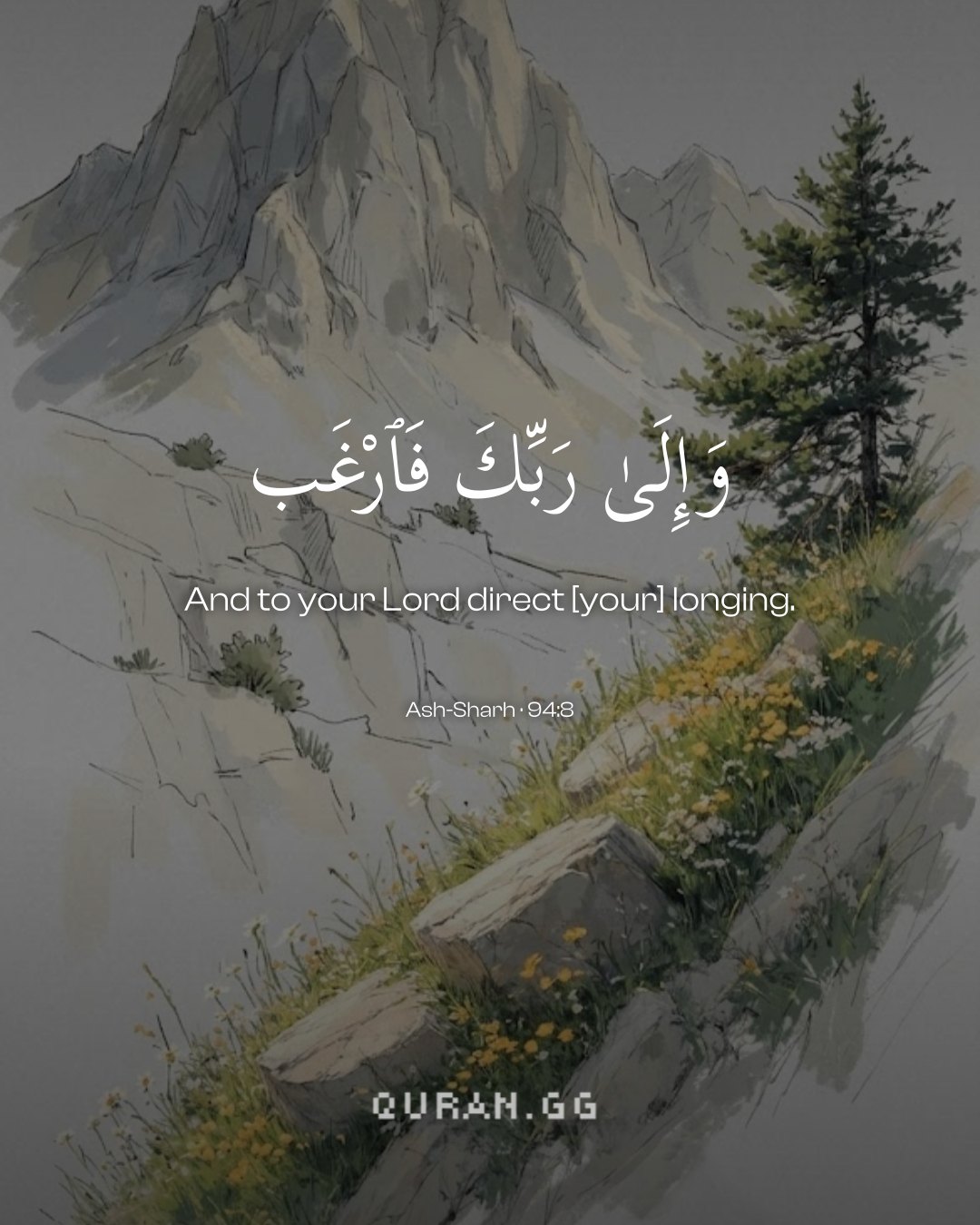
فَإِذَا فَرَغْتَ فَانصَبْ وَإِلَىٰ رَبِّكَ فَارْغَب (So when you are free [ from collective services ], exert yourself [ in worship ], and towards your Lord turn with eagerness....94:8). The Holy Prophet ﷺ is commanded in these verses that when he has finished his day's work of teaching and training his followers and other temporal affairs, he should turn to Allah as ever with all his heart, that is, prayers, remembrance of Allah, supplication and seeking Allah's pardon. This is the interpretation assigned to this verse by most commentators. Some scholars have interpreted it differently, but the foregoing interpretation appears to be the closest. The sum total of this interpretation is as follows: The Holy Prophet ﷺ exerted himself greatly to spread the word of Allah and reform human beings. Exerting himself to human reform was his greatest form of 'worship' but it was 'indirect worship' through planning and executing the plan of human reform. The verse purports to say that the indirect worship is not sufficient. So, when he is free from collective services to humanity, he should devote time to turn to Him by carrying out 'direct worship' by turning to Allah in prayer for the success of his efforts, because this 'direct worship' is what man is created for. Probably, that is why the 'indirect worship' has been mentioned as something that may be finished and one may be free from, because that is based on need, and a believer can free himself from it, but the 'direct worship' of Allah is such that he cannot free himself from it. He has to spend his entire life and expend all his energy in it.
The Prophet Muhammad went tirelessly in the quest of knowledge about reality and Truth. God blessed him with this knowledge, which opened his heart to the deep realisation of Truth (ma‘rifah). Then he started preaching the oneness of God in Makkah, where he had to face stiff opposition, but it was thanks to this opposition, that he became known throughout the country. This is God’s law in the present world. Hence, a man has to face difficult conditions (‘usr) in the beginning, but if he perseveres with patience, this ‘usr or hardship becomes a stepping stone to new and easy circumstances (yusr). Therefore, a man should always look towards God and continue to struggle according to his capacity.
Uthmani text of the Madinah mushaf (King Fahd Complex). Translation: Saheeh International. Tafsir via Quran.com.