Tafsir Ibn Kathir (abridged)
The Qur'an was mentioned in the Previous Scriptures
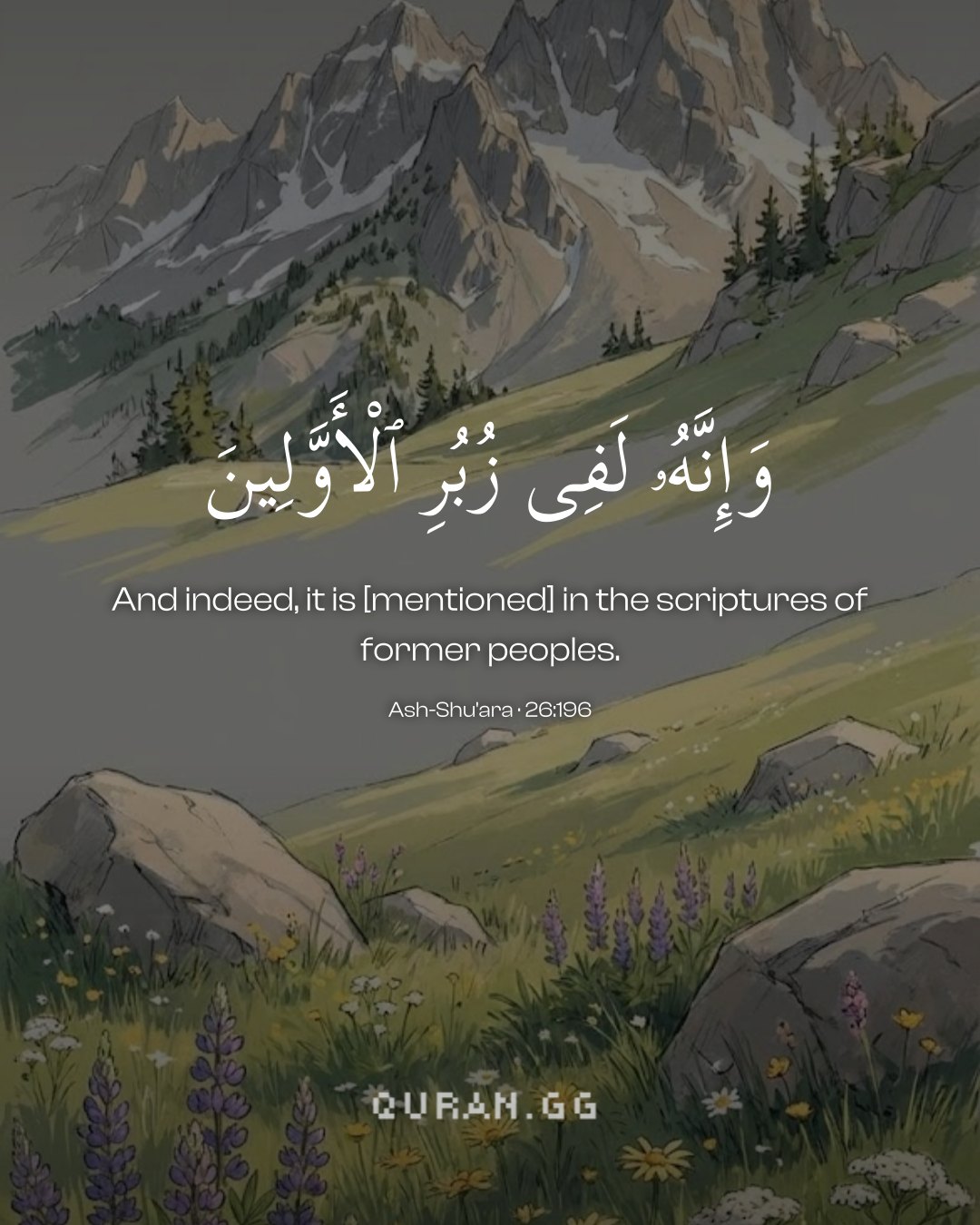
Allah says: this Qur'an was mentioned and referred to in the previous Scriptures that were left behind by their Prophets who foretold it in ancient times and more recently. Allah took a covenant from them that they would follow it, and the last of them stood and addressed his people with the good news of Ahmad:
وَإِذْ قَالَ عِيسَى ابْنُ مَرْيَمَ يبَنِى إِسْرَءِيلَ إِنِّى رَسُولُ اللَّهِ إِلَيْكُم مُّصَدِّقاً لِّمَا بَيْنَ يَدَىَّ مِنَ التَّوْرَاةِ وَمُبَشِّراً بِرَسُولٍ يَأْتِى مِن بَعْدِى اسْمُهُ أَحْمَدُ
(And (remember) when `Isa, son of Maryam, said: "O Children of Israel! I am the Messenger of Allah unto you, confirming the Tawrah before me, and giving glad tidings of a Messenger to come after me, whose name shall be Ahmad.) (61:6) Zubur here refers to Books; Zubur is the plural of Az-Zabur, which is also the name used to refer to the Book given to Dawud. Allah says:
وَكُلُّ شَىْءٍ فَعَلُوهُ فِى الزُّبُرِ
(And everything they have done is noted in the Az-Zubur.) (54:52), meaning, it is recorded against them in the books of the angels. Then Allah says:
أَوَلَمْيَكُن لَّهُمْ ءَايَةً أَن يَعْلَمَهُ عُلَمَاءُ بَنِى إِسْرَءِيلَ
(Is it not a sign to them that the learned scholars of the Children of Israel knew it) meaning, is it not sufficient witness to the truth for them that the scholars of the Children of Israel found this Qur'an mentioned in the Scriptures which they study The meaning is: the fair-minded among them admitted that the attributes of Muhammad ﷺ and his mission and his Ummah were mentioned in their Books, as was stated by those among them who believed, such as `Abdullah bin Salam, Salman Al-Farisi and others who met the Prophet . Allah said:
الَّذِينَ يَتَّبِعُونَ الرَّسُولَ النَّبِىَّ الأُمِّىَّ
(Those who follow the Messenger, the Prophet who can neither read nor write ...) (7:157)
The Intense Disbelief of Quraysh
Then Allah tells us how intense the disbelief of Quraysh was, and how stubbornly they resisted the Qur'an. If this Book with all its eloquence had been revealed to a non-Arab who did not know one word of Arabic, they still would not have believed in him. Allah says:
وَلَوْ نَزَّلْنَـهُ عَلَى بَعْضِ الاٌّعْجَمِينَ
فَقَرَأَهُ عَلَيْهِم مَّا كَانُوا بِهِ مُؤْمِنِينَ-
(And if We had revealed it unto any of the non-Arabs, And he had recited it unto them, they would not have believed in it.) And Allah says:
وَلَوْ فَتَحْنَا عَلَيْهِم بَاباً مِّنَ السَّمَاءِ فَظَلُّواْ فِيهِ يَعْرُجُونَ لَقَالُواْ إِنَّمَا سُكِّرَتْ أَبْصَـرُنَا
(And even if We opened to them a gate from the heaven and they were to keep on ascending thereto. They would surely say: "Our eyes have been dazzled...") (15:14-15)
وَلَوْ أَنَّنَا نَزَّلْنَآ إِلَيْهِمُ الْمَلَـئِكَةَ وَكَلَّمَهُمُ الْمَوْتَى
(And even if We had sent down unto them angels, and the dead had spoken unto them...) (6:111)
إِنَّ الَّذِينَ حَقَّتْ عَلَيْهِمْ كَلِمَةُ رَبِّكَ لاَ يُؤْمِنُونَ
(Truly, those, against whom the Word of your Lord has been justified, will not believe.) (10:96)
كَذَلِكَ سَلَكْنَاهُ فِي قُلُوبِ الْمُجْرِمِينَ - لاَ يُؤْمِنُونَ بِهِ حَتَّى يَرَوُاْ الْعَذَابَ الاٌّلِيمَ - فَيَأْتِيَهُم بَغْتَةً وَهُمْ لاَ يَشْعُرُونَ - فَيَقُولُواْ هَلْ نَحْنُ مُنظَرُونَ - أَفَبِعَذَابِنَا يَسْتَعْجِلُونَ - أَفَرَأَيْتَ إِن مَّتَّعْنَـهُمْ سِنِينَ - ثُمَّ جَآءَهُم مَّا كَانُواْ يُوعَدُونَ - مَآ أَغْنَى عَنْهُمْ مَّا كَانُواْ يُمَتَّعُونَ - وَمَآ أَهْلَكْنَا مِن قَرْيَةٍ إِلاَّ لَهَا مُنذِرُونَ