Allah tells us what He commanded His servant, son of `Imran and Messenger Musa, peace be upon him, who spoke with Him, to do, when He called him from the right side of the mountain, and conversed with him, and chose him, sent him, and commanded him to go to Fir`awn and his people. Allah says:
(And when your Lord called Musa: "Go to the people who are wrongdoers. The people of Fir`awn. Will they not have Taqwa" He said: "My Lord! Verily, I fear that they will deny me, And my breast straitens, and my tongue expresses not well. So send for Harun. And they have a charge of crime against me, and I fear they will kill me.") So, Musa asked Allah to remove these difficulties for him, as he said in Surah Ta Ha:
That you must send the children of Isra'i1 with us". (26:17)
Bani Isra'il were the residents of Syria. They wanted to go back to their land but the Pharaoh would not let them. This way four hundred years had passed and they were living in his bondage like slaves. At that time they were six hundred and thirty thousand in number. Sayyidna Musa (علیہ السلام) when presented the message of Truth to the Pharaoh, he also asked him to stop all the cruelties he had perpetrated over Bani Isra'il and to let them go to their homeland. (Qurtubi)
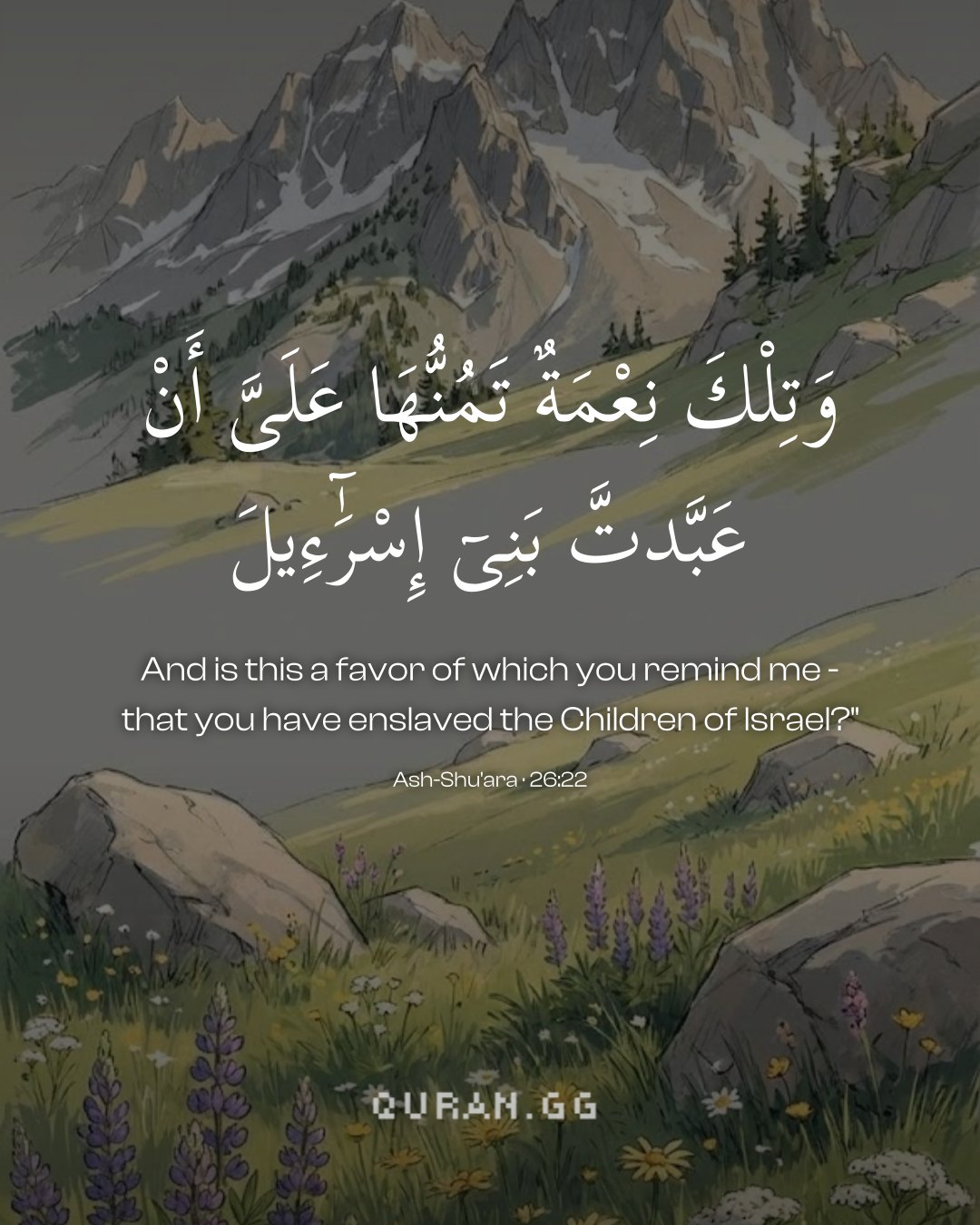
Moses called for the acceptance of Monotheism in Pharaoh’s presence and showed him the miracles of his rod and the shining bright hand. Then, in order to belittle Moses’s importance, Pharaoh reminded him of two facts about his earlier life—one, that Moses had been brought up in Pharaoh’s house in his childhood and the other that he was responsible for the killing of a Copt. In reply, Moses said that his (Moses’s) being brought up in Pharaoh’s palace had occurred due to his own (Pharaoh’s) oppressive action. Since the latter had ordered the killing of the Children of Israel’s offspring, Moses’s mother put him in a basket and floated it down the river. It was Pharaoh’s wife—the queen—who then retrieved Moses from the river and brought him up in her palace. As for the killing of the Copt, Moses said that he had not done it purposely. He had been defending his Israelite brother from the violent aggression of the Copt when the latter died accidentally. After this incident, Moses left Egypt and went to Madyan where he lived for many years. Perhaps it was necessary for Moses’s training to leave the artificial atmosphere of the city and to spend a few years in the free atmosphere of a village. When he was on his way back from Madyan to Egypt, Almighty God conferred prophethood upon him.
Uthmani text of the Madinah mushaf (King Fahd Complex). Translation: Saheeh International. Tafsir via Quran.com.