Ibrahim said, "I will not worship any but the One Who does these things:
الَّذِى خَلَقَنِى فَهُوَ يَهْدِينِ
(Who has created me, and it is He Who guides me.) He is the Creator Who has decreed certain things to which He guides His creation, so each person follows the path which is decreed for him. Allah is the One Who guides whomsoever He wills and leaves astray whomsoever He wills.
وَالَّذِى هُوَ يُطْعِمُنِى وَيَسْقِينِ
(And it is He Who feeds me and gives me to drink.) He is my Creator Who provides for me from that which He has made available in the heavens and on earth. He drives the clouds and causes water to fall with which He revives the earth and brings forth its fruits as provision for mankind. He sends down the water fresh and sweet so that many of those whom He has created, animals and men alike, may drink from it.
The reasoning for this he gave إِنَّ مَعِيَ رَبِّي سَيَهْدِينِ (62) "Indeed with me is my Lord. He will guide me." Such are the moments for the test of faith, when Sayyidna Musa (علیہ السلام) was not terror stricken at all, as if he was seeing for himself the way out. Almost the same thing happened with Holy Prophet ﷺ at the time of migration while hiding in the cave of Thaur. The enemy had reached right at the opening of the cave in his pursuit. In fact they were so close that they could have seen him if they had looked down towards their toes. Sayyidna Abu Bakr ؓ got alarmed a little, but Holy Prophet ﷺ said exactly the same thing لَا تَحْزَنْ إِنَّ اللَّـهَ مَعَنَا ` Do not grieve, Allah is surely with us' (9:40). It is worth noting in the two incidents that while Sayyidna Musa (علیہ السلام) said to his Ummah in order to console them مَعِيَ رَبِّي ` With me is my Lord', Holy Prophet ﷺ said toSayyidna Abu Bakr ؓ in reply ` Allah is with us (two) '. It is a special privilege of the Ummah of Muhammad ﷺ that his followers are also honoured by the company of Allah when they are with their Rasul.
Tazkirul Quran
Maulana Wahiduddin KhanOn ayahs 82–88
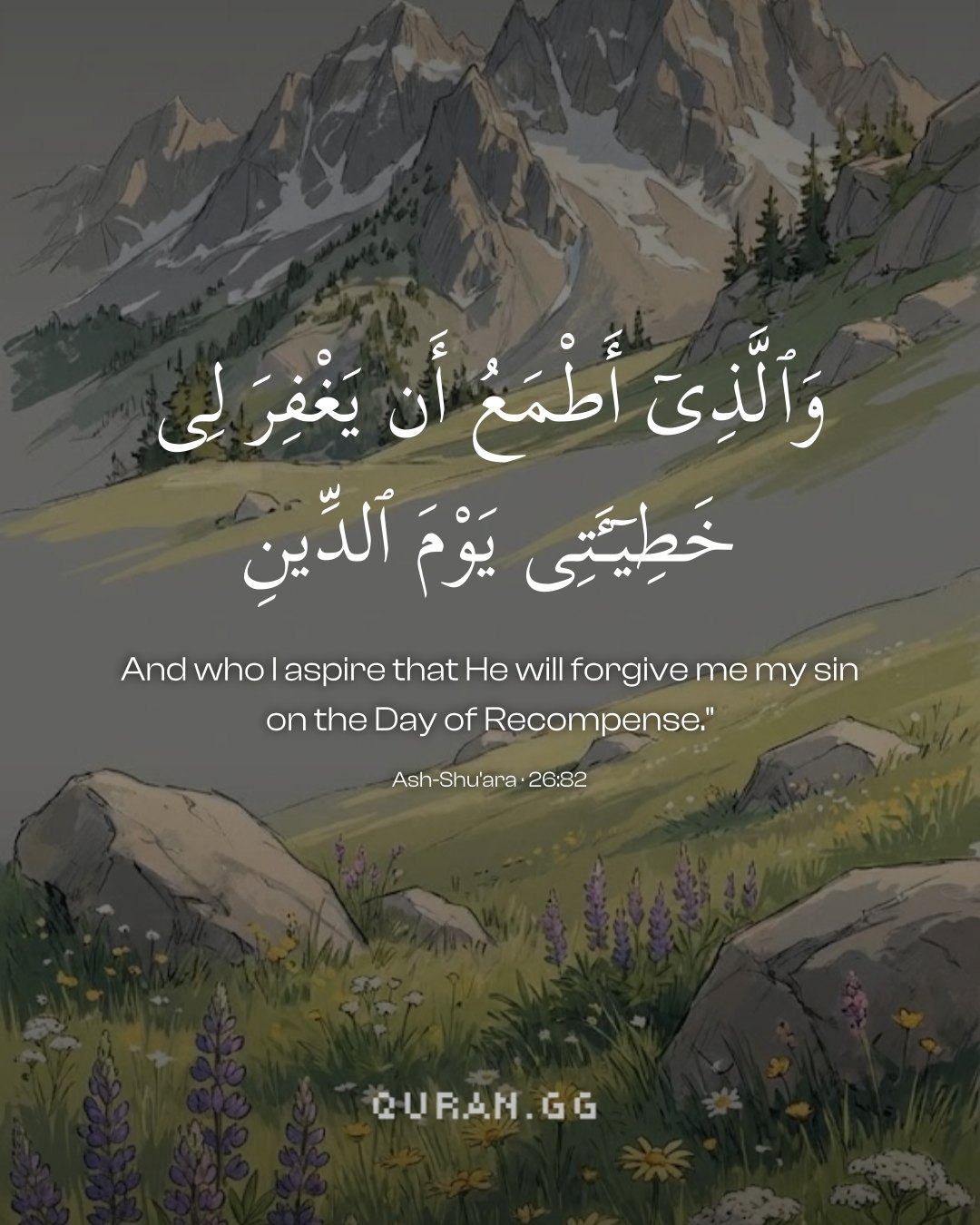
Man is an independent being. He has the wisdom to distinguish between good and bad, and make inferences from his continued sustenance on earth. When he falls ill, he finds that there is an abundance of resources from which to derive remedies. But then, man observes that in spite of all his apparent freedom, he is helpless in the face of death. He dies at the end of his allotted lifespan. All these factors can be caused by none other than the one and only God. Then, how can it be legitimate and proper to worship anybody except Him alone? Moreover, a man should be extremely serious and sincere in this matter, because these factors also indicate that whatever God does is in preparation for the day when man will be called before Him to give an account of himself. Death marks the beginning of this process when man will be judged by God on the basis of the performance of his deeds on earth.
Uthmani text of the Madinah mushaf (King Fahd Complex). Translation: Saheeh International. Tafsir via Quran.com.