The Prayer of Ibrahim for Himself and for His Father
Here Ibrahim, upon him be peace, asks his Lord to give him Hukm. Ibn `Abbas said, "This is knowledge."
وَأَلْحِقْنِى بِالصَّـلِحِينَ
(and join me with the righteous.) means, `make me one of the righteous in this world and the Hereafter.' This is like the words the Prophet said three times when he was dying:
«اللَّهُمَّ فِي الرَّفِيقِ الْأَعْلَى»
(O Allah, with the Exalted Companion (of Paradise)).
وَاجْعَل لِّى لِسَانَ صِدْقٍ فِى الاٌّخِرِينَ
(And grant me an honorable mention in later generations.) meaning, `cause me to be remembered in a good manner after my death, so that I will be spoken of and taken as a good example.' This is like the Ayah,
Continue reading the tafsir of ayahs 83–89 Supplication for the absolution of disbelievers is not allowed
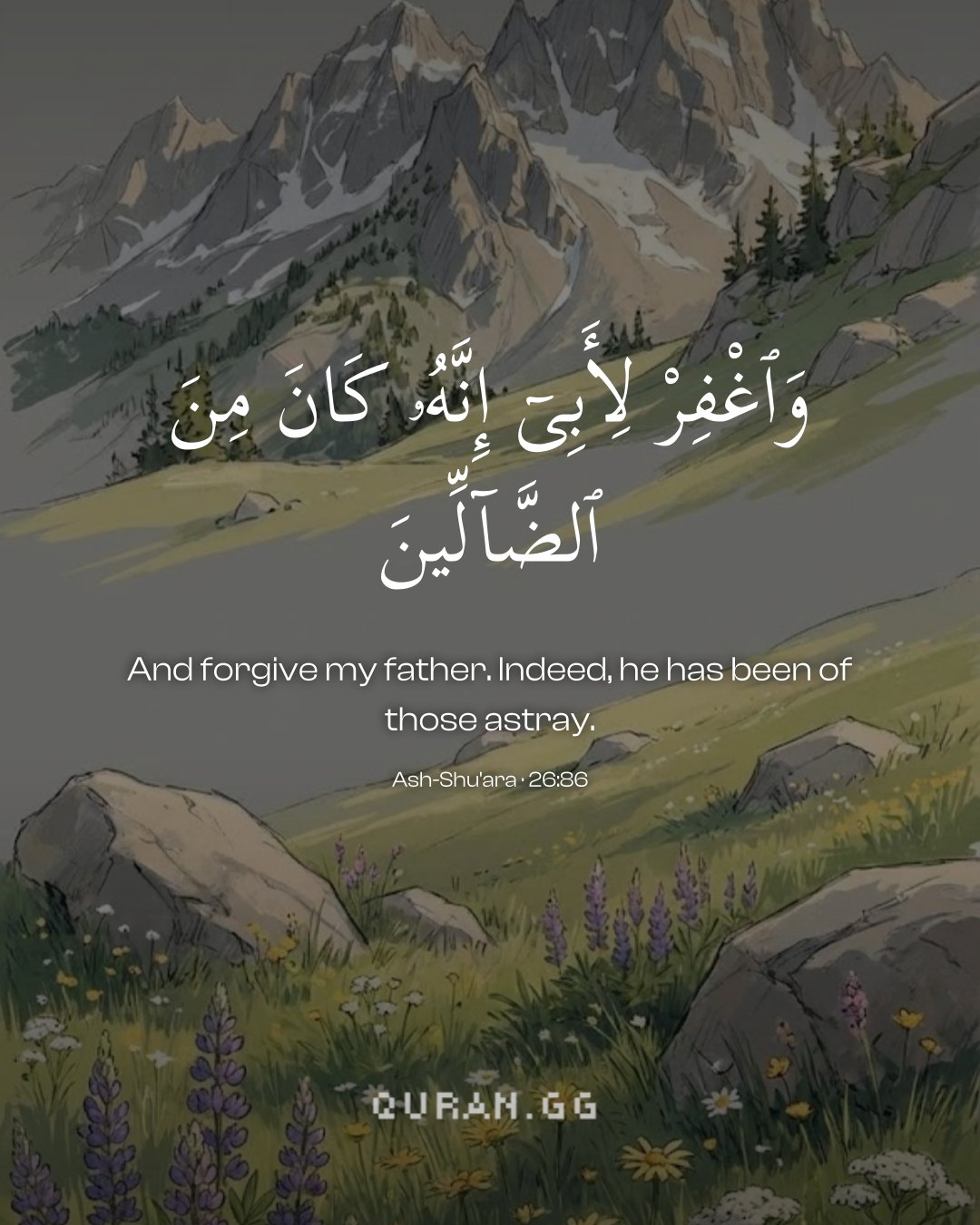
وَاغْفِرْ لِأَبِي إِنَّهُ كَانَ مِنَ الضَّالِّينَ ﴿86﴾
And forgive my father. Indeed he was among those who went astray. (26:86)
This prayer of Sayyidna Ibrahim (علیہ السلام) ill seems to be against the following verse:
مَا كَانَ لِلنَّبِيِّ وَالَّذِينَ آمَنُوا أَن يَسْتَغْفِرُوا لِلْمُشْرِكِينَ وَلَوْ كَانُوا أُولِي قُرْبَىٰ مِن بَعْدِ مَا تَبَيَّنَ لَهُمْ أَنَّهُمْ أَصْحَابُ الْجَحِيمِ
"It is not for the Prophet and the believers to seek forgiveness for the Mushriks, even if they are kinsmen, after it became clear to them that they are the people of hell. (9:113)
This verse clearly lays down the rule that it is not allowed for a Muslim to pray for the forgiveness of the one about whom it is certainly known that he died in the state of kufr.
Now the question arises here as to why did Sayyidna Ibrahim (علیہ السلام) supplicate for the forgiveness of his father, who was a disbeliever? Allah Ta’ ala himself has given answer to this question in the Holy Qur’ an:
وَمَا كَانَ اسْتِغْفَارُ إِبْرَاهِيمَ لِأَبِيهِ إِلَّا عَن مَّوْعِدَةٍ وَعَدَهَا إِيَّاهُ فَلَمَّا تَبَيَّنَ لَهُ أَنَّهُ عَدُوٌّ لِّلَّـهِ تَبَرَّأَ مِنْهُ ۚ إِنَّ إِبْرَاهِيمَ لَأَوَّاهٌ حَلِيمٌ
And the prayer of Ibrahim for the forgiveness of his father was not but due to a promise he had made to him. Later when it became clear to him that he was an enemy of Allah, he withdrew himself from him. Surely, Ibrahim is oft-sighing (before Allah), forbearing. (9:114)
The gist of the answer is that Sayyidna Ibrahim (علیہ السلام) had supplicated for the pardon of his father within his lifetime with the intent and desire that Allah Ta’ ala would give him Divine help to turn to faith, after which the forgiveness was sure. Alternatively, Sayyidna Ibrahim (علیہ السلام) was of the opinion that his father had accepted the faith, but had not made it public. But once he learnt that his father had died as an infidel, he pronounced his complete disgust against his attitude and disowned it.
Note
The point whether Sayyidna Ibrahim (علیہ السلام) had become aware of the infidelity of his father within his lifetime or came to know about it after his death, or he would know this on the Dooms Day, is fully discussed in Surah Taubah.
Man is an independent being. He has the wisdom to distinguish between good and bad, and make inferences from his continued sustenance on earth. When he falls ill, he finds that there is an abundance of resources from which to derive remedies. But then, man observes that in spite of all his apparent freedom, he is helpless in the face of death. He dies at the end of his allotted lifespan. All these factors can be caused by none other than the one and only God. Then, how can it be legitimate and proper to worship anybody except Him alone? Moreover, a man should be extremely serious and sincere in this matter, because these factors also indicate that whatever God does is in preparation for the day when man will be called before Him to give an account of himself. Death marks the beginning of this process when man will be judged by God on the basis of the performance of his deeds on earth.
Uthmani text of the Madinah mushaf (King Fahd Complex). Translation: Saheeh International. Tafsir via Quran.com.