Surah Ash-Shuraa Ayah 44 (42:44) — Meaning & Tafsir | Quran.GG

Surah Ash-Shuraa, Ayah 44

42:44 · Meaning and tafsir

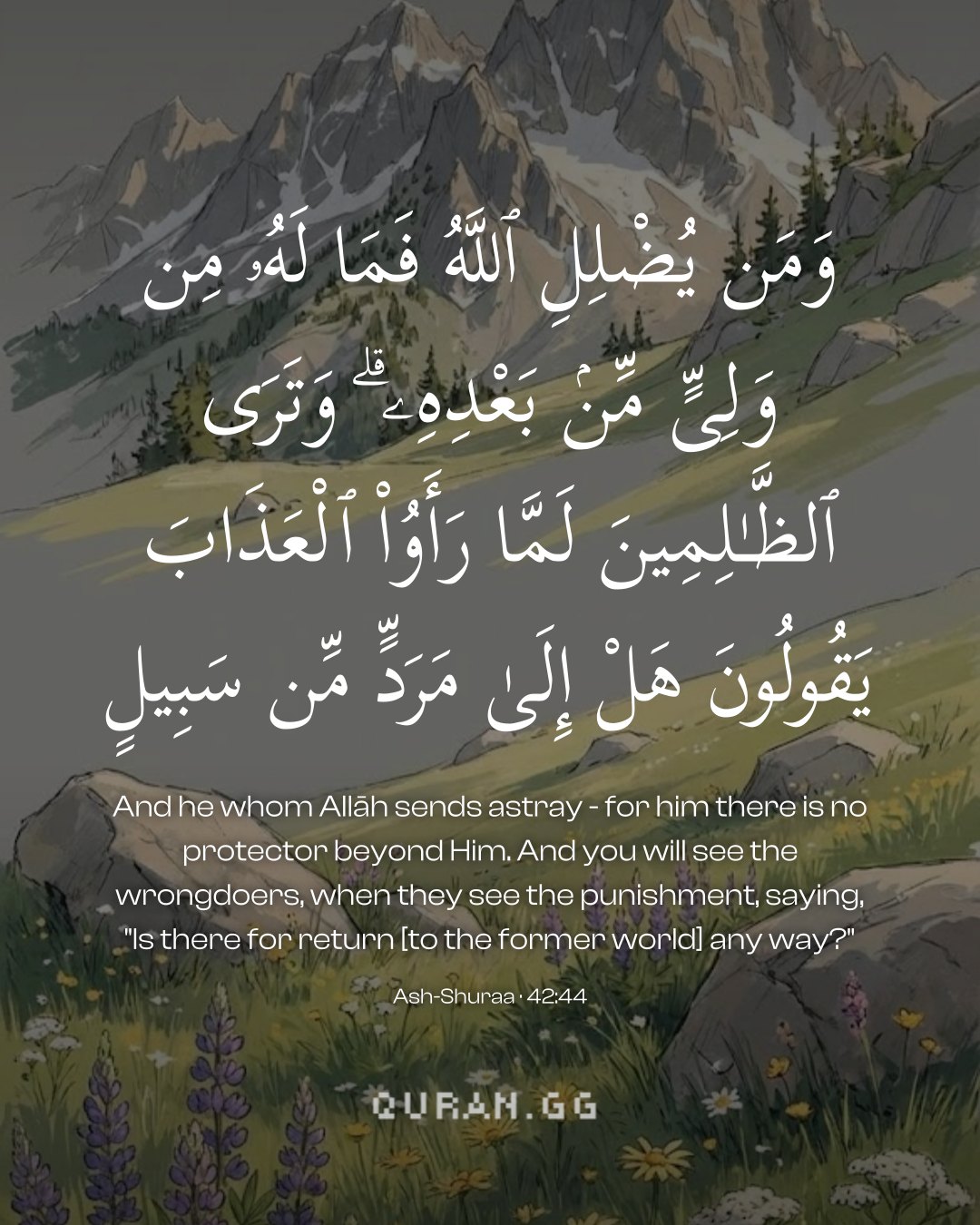
وَمَن يُضْلِلِ ٱللَّهُ فَمَا لَهُۥ مِن وَلِىٍّ مِّنۢ بَعْدِهِۦ ۗ وَتَرَى ٱلظَّـٰلِمِينَ لَمَّا رَأَوُا۟ ٱلْعَذَابَ يَقُولُونَ هَلْ إِلَىٰ مَرَدٍّ مِّن سَبِيلٍ ٤٤

And he whom Allāh sends astray - for him there is no protector beyond Him. And you will see the wrongdoers, when they see the punishment, saying, "Is there for return [to the former world] any way?"

Surah Ash-Shuraa 42:44 in Arabic with its translation: “And he whom Allāh sends astray - for him there is no protector beyond Him. And you will see the wrongdoers,…”

Make something with this ayah

Turn it into a video for Stories, Reels or TikTok, recited by the reciter you pick, or an image on a background you choose. Free, in your browser.

Download this image

Tafsir Ibn Kathir (abridged)

The State of the Wrongdoers on the Day of Resurrection

Allah tells us that whatever He wills happens and whatever He does not will does not happen, and no one can make it happen. Whomever He guides, none can lead astray, and whomever He leads astray, none can guide, as He says:

وَمَن يُضْلِلْ فَلَن تَجِدَ لَهُ وَلِيًّا مُّرْشِدًا

(but he whom He sends astray, for him you will find no protecting to lead him.) (18:17). Then Allah tells us about the wrongdoers, i.e., the idolators who associate others in worship with Allah:

لَمَّا رَأَوُاْ اْلَعَذَابَ

(when they behold the torment,) i.e., on the Day of Resurrection, they will wish that they could go back to this world.

يَقُولُونَ هَلْ إِلَى مَرَدٍّ مِّن سَبِيلٍ

(they will say: "Is there any way of return") This is like the Ayah:

وَلَوْ تَرَى إِذْ وُقِفُواْ عَلَى النَّارِ فَقَالُواْ يلَيْتَنَا نُرَدُّ وَلاَ نُكَذِّبَ بِـَايَـتِ رَبِّنَا وَنَكُونَ مِنَ الْمُؤْمِنِينَ - بَلْ بَدَا لَهُمْ مَّا كَانُواْ يُخْفُونَ مِن قَبْلُ وَلَوْ رُدُّواْ لَعَـدُواْ لِمَا نُهُواْ عَنْهُ وَإِنَّهُمْ لَكَـذِبُونَ

(If you could but see when they will be held over the (Hell) Fire! They will say: "Would that we were but sent back! Then we would not deny the Ayat of our Lord, and we would be of the believers!" Nay, it has become manifest to them what they had been concealing before. But if they were returned, they would certainly revert to that which they were forbidden. And indeed they are liars.) (6:27-28)

وَتَرَاهُمْ يُعْرَضُونَ عَلَيْهَا

(And you will see them brought forward to it) means, to the Fire.

خَـشِعِينَ مِنَ الذُّلِّ

(made humble by disgrace,) means, in a befitting manner, because of their previous disobedience towards Allah.

يَنظُرُونَ مِن طَرْفٍ خَفِىٍّ

((and) looking with stealthy glance.) Mujahid said, "In a humiliated manner." That is, they will steal glances at it, because they will be afraid of it. But the thing that they are afraid of will undoubtedly happen, and worse than that -- may Allah save us from that.

وَقَالَ الَّذِينَ ءَامَنُواْ

(And those who believe will say) means, on the Day of Resurrection they will say:

إِنَّ الْخَـسِرِينَ

(Verily, the losers...) means, the greatest losers.

الَّذِينَ خَسِرُواْ أَنفُسَهُمْ وَأَهْلِيهِمْ يَوْمَ الْقِيَـمَةِ

(are they who lose themselves and their families on the Day of Resurrection. ) means, they will be taken to the Fire and deprived of any pleasures in the Hereafter. They will lose themselves, and they will be separated from their loved ones, companions, families and relatives, and they will lose them.

أَلاَ إِنَّ الظَّـلِمِينَ فِى عَذَابٍ مُّقِيمٍ

(Verily, the wrongdoers will be in a lasting torment.) means, everlasting and eternal, with no way out and no escape.

وَمَا كَانَ لَهُم مِّنْ أَوْلِيَآءَ يَنصُرُونَهُم مِّن دُونِ اللَّهِ

(And they will have no protectors to help them other than Allah.) means, no one to save them from the punishment and torment which they are suffering.

وَمَن يُضْلِلِ اللَّهُ فَمَا لَهُ مِن سَبِيلٍ

(And he whom Allah sends astray, for him there is no way.) means, no salvation.

Ma'arif al-Qur'an

Seventh virtue:۔ وَالَّذِينَ إِذَا أَصَابَهُمُ الْبَغْيُ هُمْ يَنتَصِرُ‌ونَ (and those who, when they are subjected to aggression, defend themselves - 39.) The original word used in the text is ` yantasirun' which may be translated as ` defend themselves' and also as ` retaliate'. In the latter case, retaliation must be equal, and should in no case exceed the limit of equality. This quality, in reality, is a further elaboration of the third virtue, i.e forgiving the opponents. It means that though forgiveness is a good quality, yet one may face certain situations where the mischief gets a fillip if one forgives, and hence it is better to take revenge in those situations. This verse has defined the rule that in those situations where taking revenge is the more suitable option, one has to take care that one does not exceed the equalizing limit, otherwise he will become unjust and transgressor. That is why this verse is followed by the verse 40, وَجَزَاءُ سَيِّئَةٍ سَيِّئَةٌ مِّثْلُهَا (and the recompense of evil is evil like it.) which lays down the equitable rule of retaliation that one may cause just as much physical or monetary harm to his opponent as he has received from him; but the condition is that causing that harm is not a sin in itself. For example, if someone has been forced by another to take an alcoholic drink, it would not be permissible for him to force the other person to take an alcoholic drink.

Continue reading the tafsir of ayahs 39–44

Tazkirul Quran

When a man attains Faith in the real sense, this brings about a revolution in him and a new personality emerges. The qualities of a servant of God described here are the same that develop in a man as a result of the emergence of the aforesaid Faith-oriented personality. Such a man’s nature develops to the point where he is ready to give due recognition to the reality. He fully realises the godliness of God and his being the subject of God and, under the impact of this realisation, bows down before Him. When God calls him, it becomes impossible for him not to respond positively. The consciousness springing out of Faith makes him sensitive to right and wrong. He does whatever is required to be done and abstains from doing whatever should not be done. The realisation of his real position develops in him modesty and humility, which take away the anger, the propensity to transgress and the arrogance from his temperament. This humility enables him to benefit from others’ advice in collective matters and requires him to desist from taking steps simply on the basis of his personal opinion. His relationship with others is that of well-wishing and not that of obduracy and exploitation. One so inclined is never aggressive towards others. Whenever he takes steps against others, he does so in self-defence and only to the extent necessary to stop the oppression. Even when faced with extreme provocation, he is ready to forgive people and forget the wrong they have done him. A believer does all this under the influence of his strong Faith. And God acknowledges his virtue by confering upon him the titles of ‘Courageous’ and ‘Firm in Determination’ and admits him to the Garden of unending bounties.

Continue reading the tafsir of ayahs 43–45

Uthmani text of the Madinah mushaf (King Fahd Complex). Translation: Saheeh International. Tafsir via Quran.com.