(Say: "Yes! By my Lord, you will certainly be resurrected, then you will be informed of what you did...") meaning, `you will be informed of all of your actions, whether major or minor, big or small,'
وَذَلِكَ عَلَى اللَّهِ يَسِيرٌ
(and that is easy for Allah.) `resurrecting and recompensing you is easy for Allah.' This is the third Ayah in which Allah orders His Messenger to swear by His Lord, the Exalted and Most Honored, that Resurrection occurs. The first is in Surah Yunus,
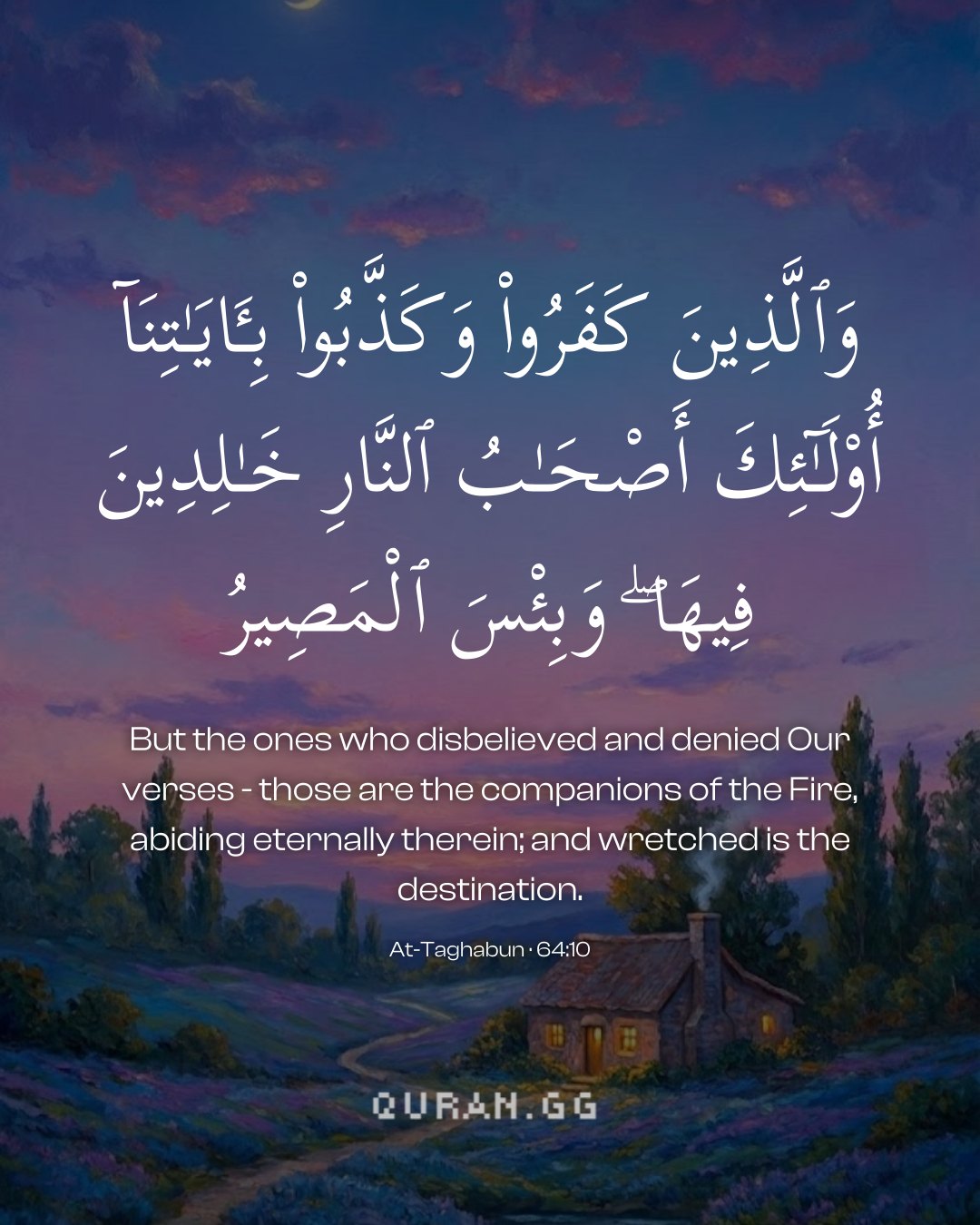
يَوْمَ يَجْمَعُكُمْ لِيَوْمِ الْجَمْعِ ۖ ذَٰلِكَ يَوْمُ التَّغَابُنِ ([ Be mindful of ] the day when He will gather you for the Day of Gathering. That will be the Day of loss and gain…64:9) ‘The Day of Gathering’ and ‘the Day of Loss and gain’ are both the names of the Day of Judgment. The reason why that day is called ‘The Day of Gathering’ is quite obvious. On that day all creations, the earlier generation as well as the later generations, will be brought together to give account of their deeds and for reward and punishment. The reason for calling the day a ‘The Day of Loss and Gain’ is because the word taghabun is derived from ghabn which means ‘loss’. Financial loss as well as mental deficiency is referred to as ghabn. Imam Raghib Isfahani in his Mufrada-ul-Qur’ an says that when the word refers to financial loss, it is expressed in the passive voice thus ghubina fulanun ‘so-and-so suffered financial loss’. When one wants to say that ‘he was or became deficient in his opinion or judgment’, one would express it thus ghabina from the tri-literal verb form, the second radical being vowelled with kasrah [-i-] on the measure of sami’ a. the word taghabun is a two-way process and signifies ‘mutuality of actions’, where two parties mutually cause loss of each other, or they make manifest each other’ s loss. In the context of this verse, however, it is one-sided or one-way process of making manifest of non-believer’ s loss. The latter sense is also its recognized use. ‘The Day of Loss and Gain’ is so called because, according to authentic Traditions, Allah has created two abodes for everyone in the Hereafter_one in Hell and another in Paradise. Before admitting the righteous believers to Paradise, they will be shown the abode in Hell, which they would have received if they failed to believe and act righteously, so that they may appreciate their abode in Paradise more highly and thank Allah more profoundly. On the other hand, the non-believers will be shown their abode in Paradise, which they would have received had they believed and acted righteously, so that they may regret more bitterly and be more remorseful. These narratives also tell us that the abodes in Paradise that were prepared for the non-believers will be given to the believers in Paradise, and the abodes in Hell that were prepared for the believers will be given to the non-believers in Hell. These Traditions are elaborately recorded in the two Sahihs and other collections of Traditions. When the inmates of Paradise will attain the places originally prepared for the disbelievers, the latter will realize what they have lost what they have gained.
People take the world to be a place of winning or losing (taghabun). One who is successful here becomes very happy, but one who meets with failure is looked upon with contempt. In this world, however, success is as valueless as failure is. The place of true success or failure is the Hereafter. One is a failure if he fails in the Hereafter and successful if he is successful in the Hereafter, and the criterion of success or failure there is entirely different from that of this world, where it is based on outward materialism: success or failure in the Hereafter will be on the basis of Divine moral values. At that time, people will be surprised to see that the whole complexion of things has completely changed. Gaining, which was considered as such will actually turn out to be losing, while what was considered as losing will turn out to be gaining in the real sense. Failure on that Day is real failure and success on that Day will be real success.
Uthmani text of the Madinah mushaf (King Fahd Complex). Translation: Saheeh International. Tafsir via Quran.com.