Tafsir Ibn Kathir (abridged)
Ismail ibn Kathir
Qualities of Faithful Believers
After Allah mentioned the evil characteristics of the hypocrites, He then mentioned the good qualities of the believers,
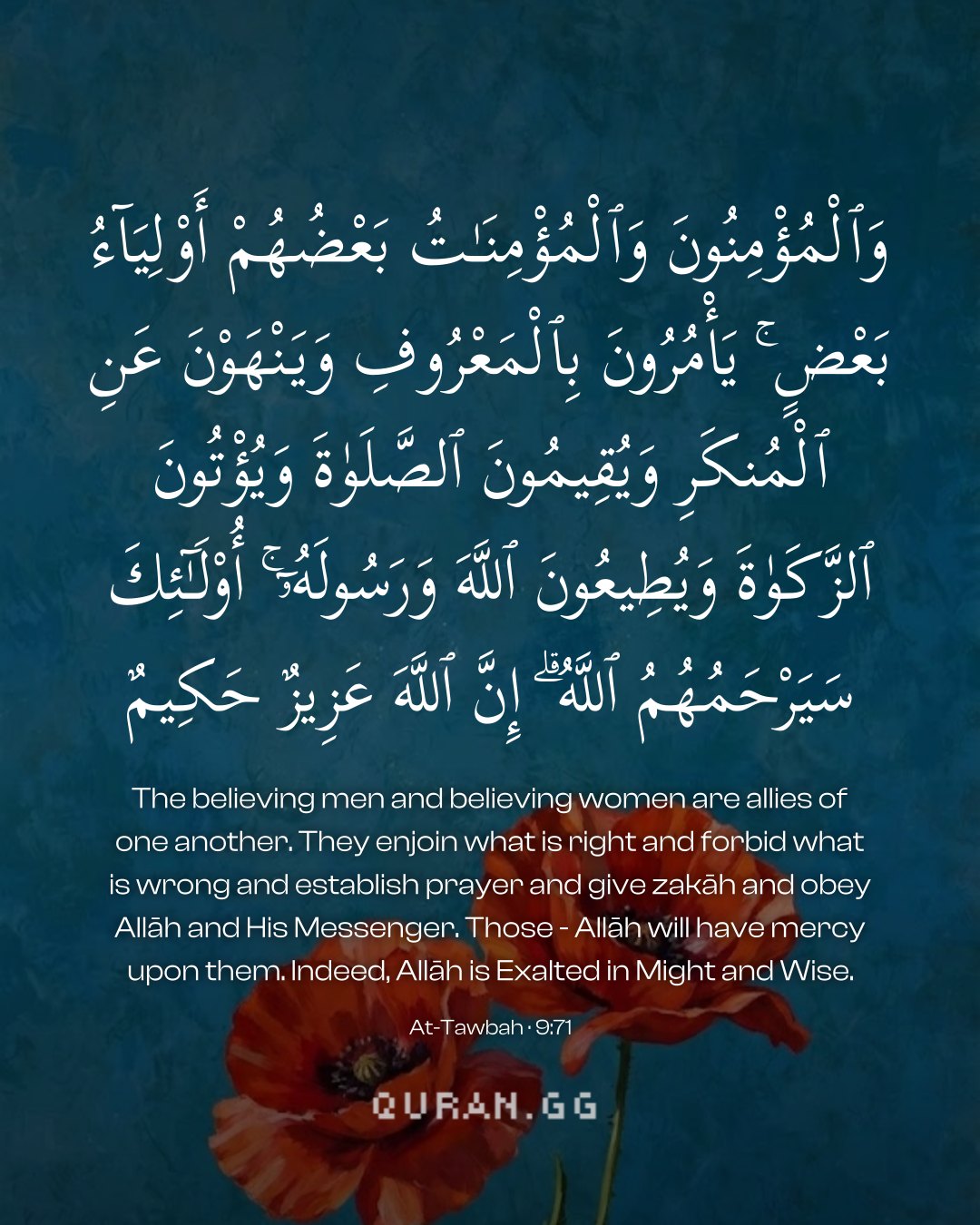
وَالْمُؤْمِنُونَ وَالْمُؤْمِنَـتِ بَعْضُهُمْ أَوْلِيَآءُ بَعْضٍ
(The believers, men and women, are supporters of one another;) they help and aid each other. Surely, an authentic Hadith states,
«الْمُؤْمِنُ لِلْمُؤْمِنِ كَالْبُنْيَانِ يَشُدُّ بَعْضُهُ بَعْضًا»
(The believer to the believer is just like a building, its parts support each other.) and the Prophet crossed his fingers together. In the Sahih it is recorded,
«مَثَلُ الْمُؤْمِنِينَ فِي تَوَادِّهِمْ وَتَرَاحُمِهِمْ كَمَثَلِ الْجَسَدِ الْوَاحِدِ، إِذَا اشْتَكَى مِنْهُ عُضْوٌ تَدَاعَى لَهُ سَائِرُ الْجَسَدِ بِالْحُمَّى وَالسَّهَر»
(The example of the believers in the compassion and mercy they have for each other, is the example of one body: if a part of it falls ill, the rest of the body suffers with fever and sleeplessness.) Allah's statement,
يَأْمُرُونَ بِالْمَعْرُوفِ وَيَنْهَوْنَ عَنِ الْمُنْكَرِ
(...they enjoin good, and forbid evil), this is similar to,
وَلْتَكُن مِّنْكُمْ أُمَّةٌ يَدْعُونَ إِلَى الْخَيْرِ وَيَأْمُرُونَ بِالْمَعْرُوفِ وَيَنْهَوْنَ عَنِ الْمُنْكَرِ
(Let there arise out of you a group of people inviting to all that is good, enjoining Al-Ma`ruf and forbidding the Munkar...) 3:104. Allah said next,
وَيُقِيمُونَ الصَّلَوةَ وَيُؤْتُونَ الزَّكَوةَ
(they perform the Salah, and give the Zakah), they obey Allah and are kind to His creation,
وَيُطِيعُونَ اللَّهَ وَرَسُولَهُ
(and obey Allah and His Messenger), concerning what he commands and refraining from what he prohibits,
أُوْلَـئِكَ سَيَرْحَمُهُمُ اللَّهُ
(Allah will have mercy on them.) Therefore, Allah will give mercy to those who have these qualities,
أَنَّ اللَّهَ عَزِيزٌ
(Surely, Allah is All-Mighty), He grants glory to those who obey Him, for indeed, might and glory is from Allah Who gives it to His Messenger and the believers,
حَكِيمٌ
(All-Wise), in granting these qualities to the believers, while giving evil characteristics to hypocrites. Surely, Allah's wisdom is perfect in all His actions; praise and glory be to Him.
Commentary
Previous verses mentioned hypocrites - their conspiracies, hostilities, and the punishment waiting for them. The characteristic style of the Qur'an required that true believers should also be mentioned at this place giving a view of their life style, rewards and ranks. The verses cited above do just that.
It is interesting that the text, while making a comparison between hypocrites and true believers on this occasion, has this to say: بَعْضُهُم مِّن بَعْضٍ (they are all alike - 67). However, what it has to say about true believers is: بَعْضُهُمْ أَوْلِيَاءُ بَعْضٍ (the believers are friends to each other - 71). This releases a hint about the nature of their mutual relationships. Hypocrites base it on functional cooperation between kinsfolk or on self-interest. Such bonds do not last long, nor do they bring the kind of spiritual benefits that are the hallmarks of a heart-to-heart friendship. Juxtaposed against hypocrites there are the true believers. They are sincere friends and wish well of each other. (Qurtubi)
Moreover, since this friendship and concern for each other is for Allah alone, it is always constant. It remains the same under all conditions, open or secret, present or absent. And it is lasting. This is the mark of a true believer. It is in the very nature of 'Iman (faith) and Al-Amal as-Salih اَلاَعمَال اصَآالح (good deed) that they generate mutual love and friendship. The Holy Qur'an confirms it when it says: سَيَجْعَلُ لَهُمُ الرَّحْمَـٰنُ وُدًّا (19:96). It means that among those who have believed and taken to consistent good conduct in life, Allah Ta` ala creates friendship that is deeply rooted into their hearts. What has happened to us in our time? May be we are short on the faith in our hearts and the concern for good in our conduct. That is why mutual relationships among Muslims do not seem to be what the Qur'an would like them to be. Unfortunately, these are subservient to worldly needs and interests - and are not for the sake of Allah alone, as they should be.
The characteristics of people hypocritically connected with Islam are carelessness about the Hereafter, interest in worldly affairs, avoidance of cooperation with goodness, and an inclination towards exhibitionism. Because of these common characteristics, they remain very well united. These things give them subjects of common interest for discussion, and provide them with a field for mutual cooperation. This becomes a basis for close relations between them. The reverse is true of genuine believers, because the love of God is embedded in their hearts. Their greatest care is for the Hereafter. They have connections with worldly things only to the extent necessary and not as a goal. If any work which is pleasing to God is under way, their hearts are immediately attracted towards it. On the contrary, any work of an evil nature arouses disgust and loathing in them. Their life and their assets are first and foremost for the sake of God and not for themselves. They commemorate God and spend for His cause.
Uthmani text of the Madinah mushaf (King Fahd Complex). Translation: Saheeh International. Tafsir via Quran.com.