Hypocrites seek Wealth but are Stingy with Alms
Allah says, some hypocrites give Allah their strongest oaths that if He enriches them from His bounty, they will give away alms and be among the righteous. However, they did not fulfill their vows or say the truth with their words. The consequence of this action is that hypocrisy was placed in their hearts until the Day they meet Allah the Exalted, on the Day of Resurrection. We seek refuge with Allah from such an end. Allah said,
بِمَآ أَخْلَفُواْ اللَّهَ مَا وَعَدُوهُ
(...because they broke that (covenant) with Allah which they had promised to Him) He placed hypocrisy in their hearts because they broke their promise and lied. In the Two Sahihs, it is recorded that the Messenger of Allah ﷺ said,
«آيَةُ الْمُنَافِقِ ثَلَاثٌ: إِذَا حَدَّثَ كَذَبَ، وَإِذَا وَعَدَ أَخْلَفَ، وَإِذَا ائْتُمِنَ خَان»
(There are three signs for a hypocrite: if he speaks, he lies; if he promises, he breaks the promise; and if he is entrusted, he betrays the trust.) Allah said,
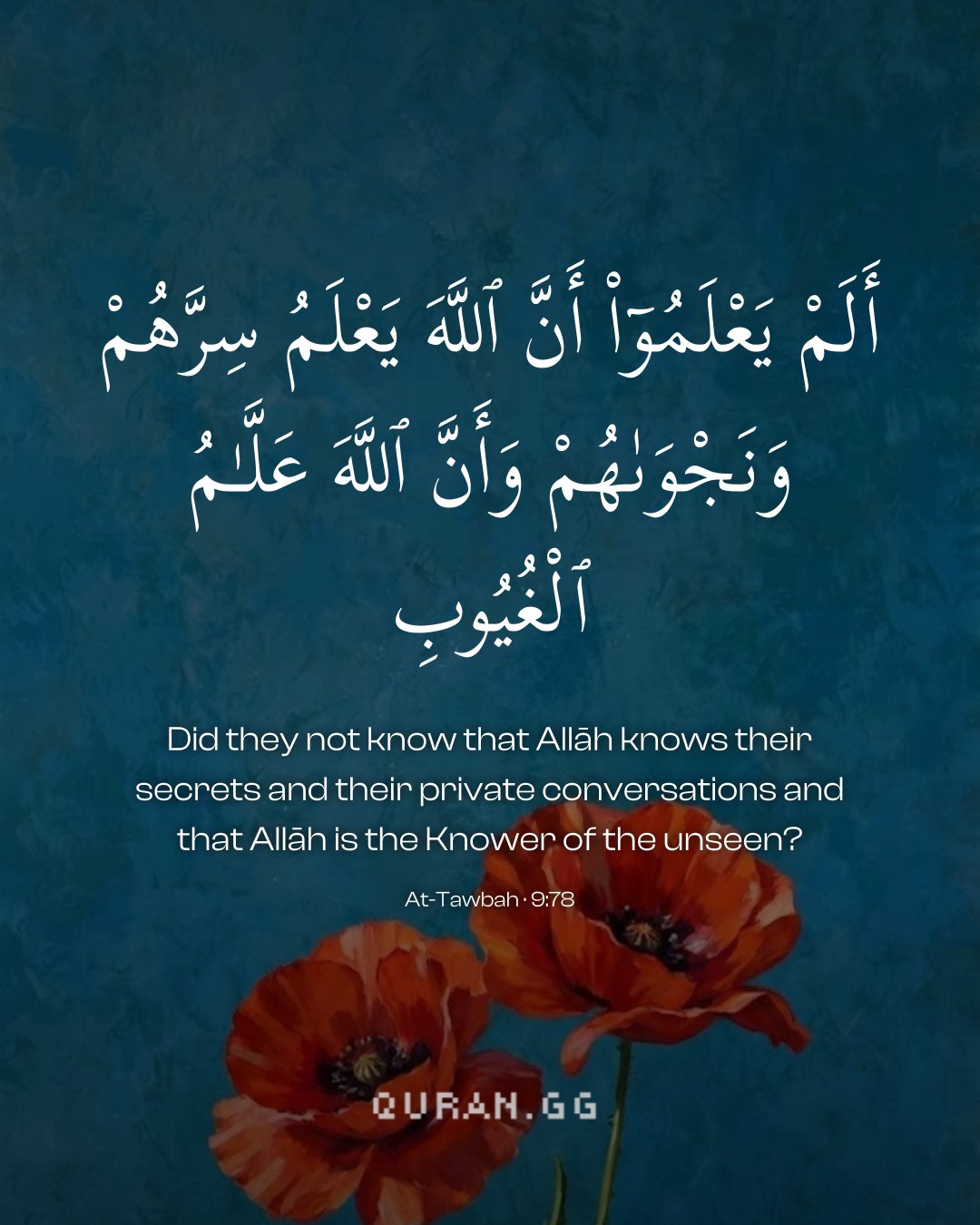
أَلَمْ يَعْلَمُواْ أَنَّ اللَّهَ يَعْلَمُ سِرَّهُمْ وَنَجْوَاهُمْ
(Know they not that Allah knows their secret ideas, and their Najwa,) Allah states that He knows the secret and what is more hidden than the secret. He has full knowledge of what is in their hearts, even when they pretend that they will give away alms, if they acquire wealth, and will be grateful to Allah for it. Truly, Allah knows them better than they know themselves, for He is the All-Knower of all unseen and apparent things, every secret, every session of counsel, and all that is seen and hidden.
Verse 77: فَأَعْقَبَهُمْ نِفَاقًا فِي قُلُوبِهِمْ (So Allah, in turn, put hypocrisy in their hearts) points out to its cause which lies in their lying and pledge breaking. As a consequence, Allah made the hypocrisy of their hearts become deep and firm. Now, they would just not have the ability to make Taubah itself.
A serious note of warning
From here we learn that there are occasions when the curse of evil deeds assumes alarming proportions, so much so that one is deprived of the very ability (taufiq) of making Taubah. May Allah protect us from this misfortune!
Let us now go back to the detailed narrative of Sayyidna Abu Umamah ؓ mentioned a little earlier. Ibn Jarir writes at the end of it: When the Holy Prophet ﷺ said Was for Tha'labah' three times, some of his relatives were present in the gathering. When they heard it, one of them immediately traveled to see Tha’ labah. When he reached there, he reproached him for his behavior while informing him that it has caused the revelation of a particular verse of the Qur'an. This made Tha'labah nervous. He reached Madinah and requested the Holy Prophet ﷺ that his Sadaqah may be accepted. He said that Allah Ta` ala had told him not to accept his Sadaqah. Hearing this, Tha'labah went crazy with disappointment and literally started throwing dust on his head.
Continue reading the tafsir of ayahs 77–78 Tha‘laba ibn Hathib Ansari requested the Prophet Muhammad to pray to God to bless him with wealth. The Prophet said that to be grateful to God for less wealth is better than acquiring a lot of wealth and then being unable to be grateful to Him. But Tha‘laba repeated his request several times. So, the Prophet prayed, ‘O God, bless Tha‘laba with wealth.’ Thereafter, Tha‘laba reared a goat. The breed of goats increased to such an extent that the land of Madinah could not provide enough fodder for his goats. Tha‘laba then shifted to a valley outside Madinah. Now Tha‘laba started becoming remiss in his Islamic observances. First of all he missed the congregational prayers. Then he missed the Friday prayers. A stage came when an official on behalf of the Prophet Muhammad approached Tha‘laba to collect alms (zakat) and he refused, saying, ‘This is nothing but a capital tax (jizyah); this is in no way different from the tax levied on those who deny the truth.’
Uthmani text of the Madinah mushaf (King Fahd Complex). Translation: Saheeh International. Tafsir via Quran.com.