Tafsir Ibn Kathir (abridged)
The Bedouins are the Worst in Disbelief and Hypocrisy
Allah states that there are disbelievers, hypocrites and believers among the bedouins. He also states that the disbelief and hypocrisy of the bedouins is worse and deeper than the disbelief and hypocrisy of others. They are the most likely of being ignorant of the commandments that Allah has revealed to His Messenger . Al-A`mash narrated that Ibrahim said, "A bedouin man sat next to Zayd bin Sawhan while he was speaking to his friends. Zayd had lost his hand during the battle of Nahawand. The bedouin man said, `By Allah! I like your speech. However, your hand causes me suspicion.' Zayd said, `Why are you suspicious because of my hand, it is the left hand that is cut' The bedouin man said, `By Allah! I do not know which hand they cut off (for committing theft), is it the right or the left' Zayd bin Sawhan said, `Allah has said the truth,
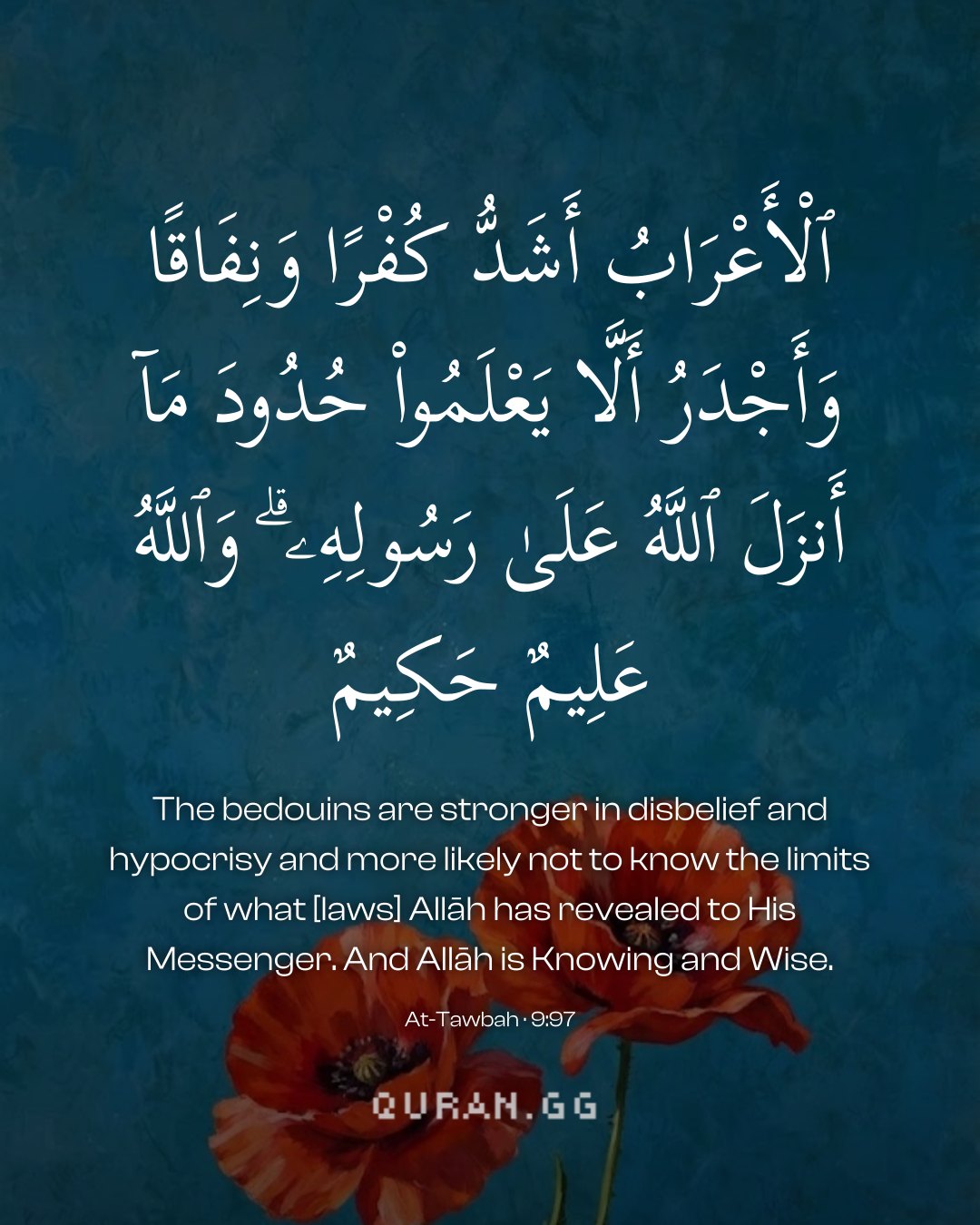
الاٌّعْرَابُ أَشَدُّ كُفْرًا وَنِفَاقًا وَأَجْدَرُ أَلاَّ يَعْلَمُواْ حُدُودَ مَآ أَنزَلَ اللَّهُ عَلَى رَسُولِهِ
(The bedouins are the worst in disbelief and hypocrisy, and more likely to not know the limits which Allah has revealed to His Messenger.)" Imam Ahmad narrated that Ibn `Abbas said that the Messenger of Allah ﷺ said,
«مَنْ سَكَنَ الْبَادِيَةَ جَفَا، وَمَنِ اتَّبَعَ الصَّيْدَ غَفَلَ، وَمَنْ أَتَى السُّلْطَانَ افْتُتِن»
(He who lives in the desert becomes hard-hearted, he who follows the game becomes heedless, and he who associates with the rulers falls into Fitnah.) Abu Dawud, At-Tirmidhi and An-Nasa'i collected this Hadith. At-Tirmidhi said, "Hasan Gharib." The Prophet once had to give a bedouin man many gifts because of what he gave him as a gift, until the bedouin became satisfied. The Prophet said,
«لَقَدْ هَمَمْتُ أَنْ لَا أَقْبَلَ هَدِيَّةً إِلَّا مِنْ قُرَشِيَ أَوْ ثَقَفِيَ أَوْ أَنْصَارِيَ أَوْ دَوْسِي»
(I almost decided not to accept a gift except from someone from Quraysh, Thaqafi, the Ansar or Daws.) This is because these people lived in cities, Makkah, At- Ta'if, Al-Madinah and Yemen, and therefore, their conduct and manners are nicer than that of the hard-hearted bedouins. Allah said next,
وَاللَّهُ عَلِيمٌ حَكِيمٌ
(And Allah is All-Knower, All-Wise.) Allah knows those who deserve to be taught faith and knowledge, He wisely distributes knowledge or ignorance, faith or disbelief and hypocrisy between His servants. He is never questioned as to what He does, for He is the All-Knower, All-Wise. Allah also said that among bedouins are those,
مَن يَتَّخِذُ مَا يُنفِقُ
(who look upon what they spend), in the cause of Allah,
مَغْرَمًا
(as a fine), as a loss and a burden,
وَيَتَرَبَّصُ بِكُمُ الدَّوَائِرَ
(and watch for calamities for you), awaiting afflictions and disasters to strike you,
عَلَيْهِمْ دَآئِرَةُ السَّوْءِ
(on them be the calamity of evil), evil will touch them instead,
وَاللَّهُ سَمِيعٌ عَلِيمٌ
(And Allah is All-Hearer, All-Knower.) Allah hears the invocation of His servants and knows who deserves victory, who deserve failure. Allah's said;
وَمِنَ الاٌّعْرَابِ مَن يُؤْمِنُ بِاللَّهِ وَالْيَوْمِ الاٌّخِرِ وَيَتَّخِذُ مَا يُنفِقُ قُرُبَـتٍ عِندَ اللَّهِ وَصَلَوَتِ الرَّسُولِ
(And of the bedouins there are some who believe in Allah and the Last Day, and look upon what they spend (in Allah's cause) as means of nearness to Allah, and a cause of receiving the Messenger's invocations.) This is the type of praiseworthy bedouins. They give charity in Allah's cause as way of achieving nearness to Allah and seeking the Messenger's invocation for their benefit,
أَلا إِنَّهَا قُرْبَةٌ لَّهُمْ
(Indeed these are a means of nearness for them.) they will attain what they sought,
سَيُدْخِلُهُمُ اللَّهُ فِى رَحْمَتِهِ إِنَّ اللَّهَ غَفُورٌ رَّحِيمٌ
(Allah will admit them to His mercy. Certainly Allah is Oft-Forgiving, Most Merciful.)