The Stubbornness of the Idolators; Their Punishment
Allah the Exalted reaffirms the stubbornness of the idolators and their ignorance of what goes around them,
وَإِن يَرَوْاْ كِسْفاً مِّنَ السَّمَآءِ سَـقِطاً
(And if they were to see a piece of the heaven falling down,) meaning, on them as punishment, they would not believe it is coming their way, saying that, these are layers of clouds on top of each other. Allah the Exalted said in other Ayat,
وَلَوْ فَتَحْنَا عَلَيْهِم بَاباً مِّنَ السَّمَاءِ فَظَلُّواْ فِيهِ يَعْرُجُونَ - لَقَالُواْ إِنَّمَا سُكِّرَتْ أَبْصَـرُنَا بَلْ نَحْنُ قَوْمٌ مَّسْحُورُونَ
(And even if We opened to them a gate from the heaven and they were to keep on ascending thereto (all day long), they would surely say (in the evening): "Our eyes have been dazzled. Nay, we are a people bewitched.")(15:14-15) Allah the Exalted said,
Continue reading the tafsir of ayahs 44–49Ma'arif al-Qur'an
Mufti Muhammad Shafi
Commentary
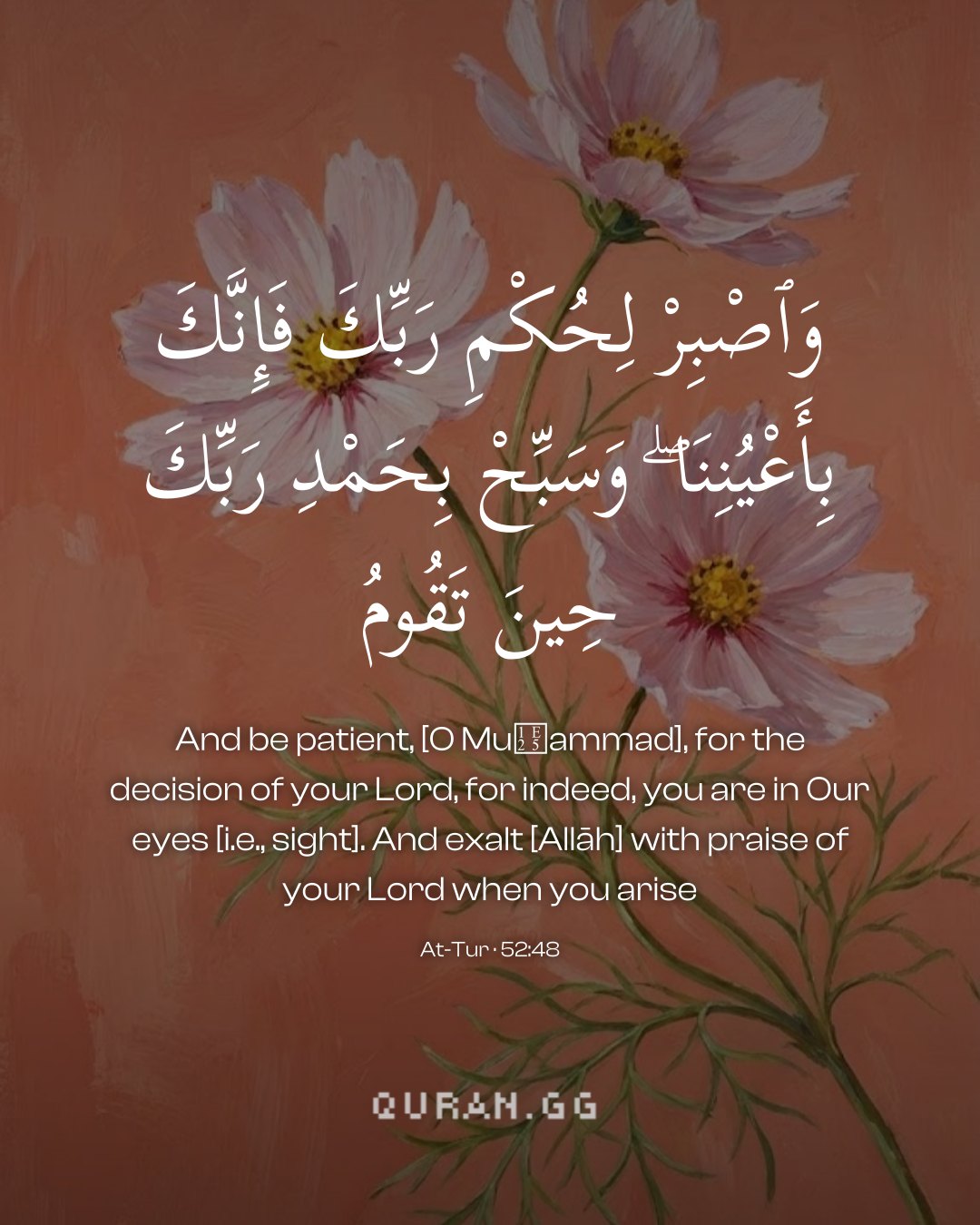
فَإِنَّكَ بِأَعْيُنِنَا (...you are before Our Eyes....) The hostility of the enemies towards, and their opposition to, and rejection of the Holy Prophet ﷺ depressed him. At the conclusion of the chapter, the Qur'an says 'You are before Our eyes', that is, under Our care and We shall protect you from every evil. Do not be anxious about it. On another occasion, the Qur'an says, وَاللَّـهُ يَعْصِمُكَ مِنَ النَّاسِ 'And Allah shall protect you from the people'.
Then the verse goes on to say, وَسَبِّحْ بِحَمْدِ رَبِّكَ حِينَ تَقُومُ (And proclaim the purity of your Lord along with His praise when you stand [ in Prayer ]... 48]. To proclaim the purity and praise of Allah is the real purpose of life, and also the real cure of every calamity. Thus the Qur'an enjoins it upon the Holy Prophet ﷺ . 'When you stand' could mean to stand up for the Salah or to arise or get up from sleep or bed. The latter meaning is preferred by Ibn Jarir. This view is supported by the Tradition recorded in the Musnad of Imam Ahmad Ibn Hanbal (رح) on the authority of Sayyidna ` Ubadah Ibn Samit ؓ who reports that the Holy Prophet ﷺ said: "Whoever gets up at night and recites:
لَا اِلٰہَ ِالّا اللہُ وَحدَہُ ، لَا شَرِیکَ لَہُ ، لَہُ المُلک وَ لَہُ الحَمدُ وھُوَ علیٰ کُلِّ شیٔ قَدِیر، سُبحَانَ اللہِ وَالحَمدُ للہِ وَ لا إلہ إلا اللہُ و اللہُ اَکبَر وَلَاحولَ وَلَا قُوَّۃَ اِلَّا بِاللہِ
'There is no God except Allah. He is One without partners. For Him is the kingdom and all praise is due to Him. He has power over all things. Glory be to Allah and all praise is due to Allah, and there is no God except Allah, and Allah is the Greatest. There is neither might nor power except with Allah.' Then, if he intends to pray, and performs prayer after ablution, the prayers will be accepted. (Ibn Kathir)
Kaffarat-ul-Majlis : A recitation at the end of a meeting that expiates sins
Sayyidna Mujahid, Abul Ahwas and other leading authorities on Tafsir have interpreted "when you stand" in this verse to mean that when a person wants to stand from a gathering or a meeting, he should recite: سُبحَانکَ اللَّھُمَّ وَ بِحَمدِکَ 'I proclaim Your Purity, 0 Allah, along with Your praise'. Sayyidna ` Ata' Ibn Abi Rabah, interpreting this verse, has said:
"When you stand from a gathering, proclaim the purity and praise of Allah. If you have done any good work, your good work will be increased and enhanced. If you had done any bad deed, these words of proclamation will serve as an expiation and atonement".
On the authority of Sayyidna Abu Hurairah ؓ ، the Holy Prophet ﷺ is reported to have said:
"Whoever sits in a gathering in which he speaks idle excessively, but says before he stands up to depart that gathering, سُبحَانَکَ اللَّھُمِّ وَبِحَمدِکَ اَشھَدُ اَن لَّا اِلٰہَ اِلَّا اَنتَ اَستَغفِرُکَ وَ اَتُوبُ اِلَیکَ ('I proclaim Your Purity, 0 Allah, along with Your Praise', I testify that there is no God except You, I seek Your forgiveness, I repent to You.' ) Allah will forgive him what he has said in that gathering ".
Why were the people of ancient Makkah so inclined that, wherever they saw God’s punitive devices falling from the sky, they would say that it was only a cloud? The reason for this was not that they did not accept God or His powers. The real reason for this was that they were doubtful of the Prophet really being a prophet. They were not convinced that the rejection of the person who was before them and who was apparently just like them could be so great a crime as to bring down a mountain of destruction upon them. The personality of the Prophet Muhammad was a matter of controversy among his contemporaries. He had at that time no established reputation, as it would seem to people today. But, it is the real test of man that he should see the reality by tearing asunder the veils of doubt. He should be able to discover the essence of the established personality in the apparently controversial personality.
Uthmani text of the Madinah mushaf (King Fahd Complex). Translation: Saheeh International. Tafsir via Quran.com.