Which was revealed in Madina
The Virtues of Surat Az-Zalzalah
Imam Ahmad recorded from `Abdullah bin `Amr that he said, "A man came to the Messenger of Allah and said, `Teach me what to recite, O Messenger of Allah!' The Prophet said,
«اقْرَأْ ثَلَاثًا مِنْ ذَوَاتِ الر»
(Recite three from those which begin with the letters Alif, Lam, Ra') The man then said to him, `I have become old in age, my heart has hardened and my tongue has become harsh.' The Prophet said,
«فَاقْرَأْ مِنْ ذَوَاتِ حم»
(Then recite from those which begin with the letters Ha-Mim.) The man said the same thing as he had said before, so the Prophet said,
«اقْرَأْ ثَلَاثًا مِنَ الْمُسَبِّحَات»
Continue reading the tafsir of ayahs 1–8Ma'arif al-Qur'an
Mufti Muhammad Shafi
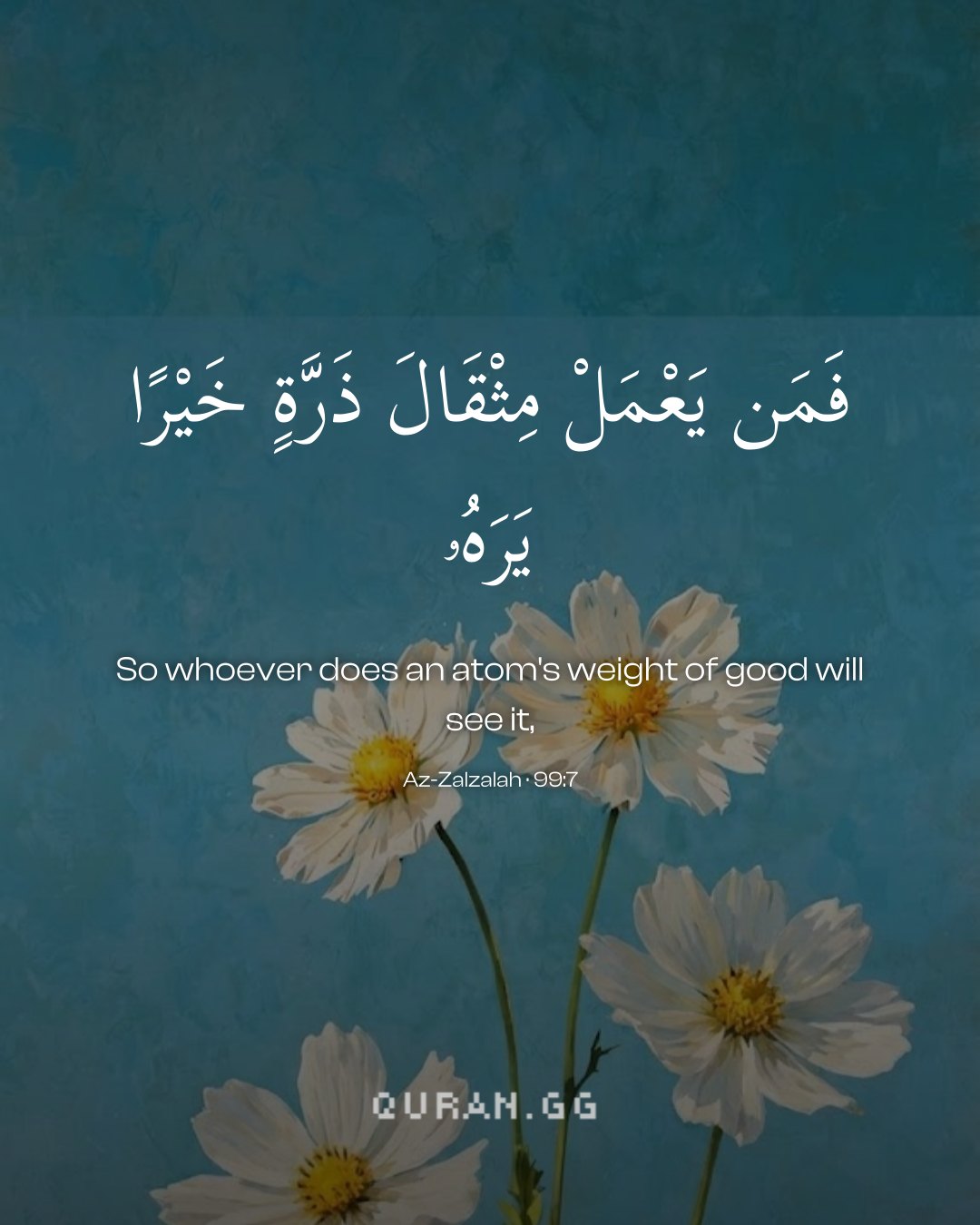
Verse [ 7] فَمَن يَعْمَلْ مِثْقَالَ ذَرَّةٍ خَيْرًا يَرَهُ (So, whoever does good [ even ] to the weight of a particle shall see it.) The word 'good' here refers to what is good in terms of Shari` ah, that is, only a good deed done in the wake of faith is recognized by Allah. Any good deed done in the state of disbelief is not recognized, and consequently it will not be rewarded in the Hereafter, though it might have been rewarded in this world. It is argued on the basis of this verse that anyone who has an atom's weight of faith will eventually be taken out of Hell. The reason being that, according to the promise made in this verse, man must reap the fruit of his righteousness in the Hereafter. If he has not done any righteous deeds, faith itself is a great righteousness. Thus no matter how sinful a believer may be, he will not be condemned to Hell for good. On the other hand, if a non-believer has done tons of good deeds, they will be rendered vain in the Hereafter on account of lack of faith. He will, however, receive reward for them here in this world.
Uthmani text of the Madinah mushaf (King Fahd Complex). Translation: Saheeh International. Tafsir via Quran.com.