Tafsir Ibn Kathir (abridged)
The Shaytan is the Companion of the One Who turns away from Ar-Rahman
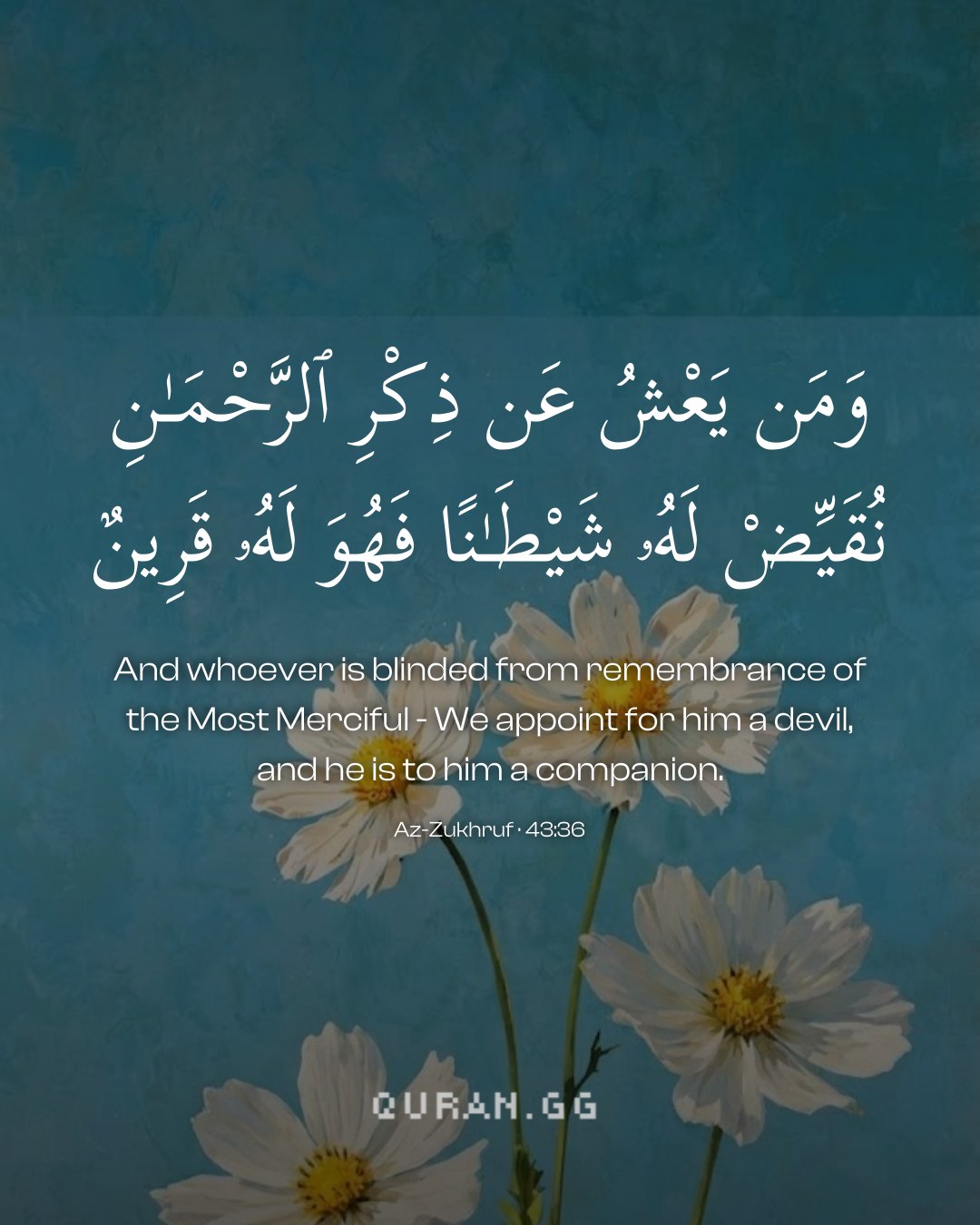
وَمَن يَعْشُ
(And whosoever Ya`shu (turns away blindly)) means, whoever willfully ignores and turns away
عَن ذِكْرِ الرَّحْمَـنِ
(from the remembrance of the Most Gracious,) Al-`Asha (the root of Ya`sh) refers to weakness of vision; what is meant here is weakness of insight.
نُقَيِّضْ لَهُ شَيْطَاناً فَهُوَ لَهُ قَرِينٌ
(We appoint for him Shaytan to be a Qarin (a companion) to him.) This is like the Ayat:
وَمَن يُشَاقِقِ الرَّسُولَ مِن بَعْدِ مَا تَبَيَّنَ لَهُ الْهُدَى
(And whoever contradicts and opposes the Messenger after the right path has been shown clearly to him) (4:115),
فَلَمَّا زَاغُواْ أَزَاغَ اللَّهُ قُلُوبَهُمْ
(So when they turned away, Allah turned their hearts away) (61:5), and
وَقَيَّضْنَا لَهُمْ قُرَنَآءَ فَزَيَّنُواْ لَهُم مَّا بَيْنَ أَيْدِيهِمْ وَمَا خَلْفَهُمْ
(And We have assigned for them intimate companions, who have made fair seeming to them, what was before them and what was behind them) (41:25). Allah says here:
وَإِنَّهُمْ لَيَصُدُّونَهُمْ عَنِ السَّبِيلِ وَيَحْسَبُونَ أَنَّهُم مُّهْتَدُونَ حَتَّى إِذَا جَآءَنَا
(And verily, they hinder them from the path, but they think that they are guided aright! Until, when he comes to Us,) meaning, for this person who willfully neglects true guidance, We send to him a Shaytan to lead him astray and show him the path to Hell. When he comes before Allah on the Day of Resurrection, he will complain about the Shaytan who was appointed to accompany him.
قَالَ يلَيْتَ بَيْنِي وَبَيْنَكَ بُعْدَ الْمَشْرِقَيْنِ فَبِئْسَ الْقَرِينُ
(he says, "Would that between me and you were the distance of the two easts -- a worst companion (indeed)!") Some of them recited it; (حَتْى إِذَا جَاءَانَا) (Till, when they both come to Us.) referring to the companion Shaytan and the one whom he accompanies. Then Allah says:
وَلَن يَنفَعَكُمُ الْيَوْمَ إِذ ظَّلَمْتُمْ أَنَّكُمْ فِى الْعَذَابِ مُشْتَرِكُونَ
(It will profit you not this Day as you did wrong, (and) that you will be sharers in the punishment.) means, `your being together in the Fire will not help you in the slightest, and you will both partake of the painful punishment.' Allah says:
أَفَأَنتَ تُسْمِعُ الصُّمَّ أَوْ تَهْدِى الْعُمْىَ وَمَن كَانَ فِى ضَلَـلٍ مُّبِينٍ
Can you make the deaf to hear, or can you guide the blind or him who is in manifest error؟ means, `that is not up to you. All you have to do is convey the Message, but you do not have to guide them. Allah guides whomsoever He wills and sends astray whomsoever He wills, and He is Wise and Just in doing so.'
Allah's Vengeance upon the Enemies of His Messenger will surely come to pass
Allah further says:
فَإِمَّا نَذْهَبَنَّ بِكَ فَإِنَّا مِنْهُم مُّنتَقِمُونَ
(And even if We take you away, We shall indeed take vengeance on them.) means, `We will inevitably wreak vengeance upon them and punish them, even if you pass away.'
أَوْ نُرِيَنَّكَ الَّذِى وَعَدْنَـهُمْ فَإِنَّا عَلَيْهِمْ مُّقْتَدِرُونَ
(Or (if) We show you that wherewith We threaten them, then verily, We have perfect command over them.) means, `We are able to do both,' but Allah will not take His Messenger (in death) until He gives him the joy of seeing his enemies brought low and gives him power and authority over them and their wealth. This was the view of As-Suddi and was the opinion favored by Ibn Jarir.
Encouragement to adhere to the Qur'an
Allah then says;
فَاسْتَمْسِكْ بِالَّذِى أُوحِىَ إِلَيْكَ إِنَّكَ عَلَى صِرَطٍ مُّسْتَقِيمٍ
(So hold you fast to that which is revealed to you. Verily, you are on the straight path.) means, hold fast to the Qur'an which has been sent down to your heart, for it is truth and what it leads to is truth that shows the way to the straight path that leads to Gardens of Delight and eternal, everlasting goodness.
وَإِنَّهُ لَذِكْرٌ لَّكَ وَلِقَوْمِكَ
(And verily, this is a Dhikr for you and your people,) It was said that this means, `it is an honor for you and your people;' this was the view of Ibn `Abbas, may Allah be pleased with him, Mujahid, Qatadah, As-Suddi and Ibn Zayd. This means that it is an honor for them in that it was revealed in their language, so they are the people who have the best understanding of it among mankind and hence are obliged to be the most steadfast in adhering to its commandments. This is how the best of them were, the first immigrants and those who emulated them and followed them. It was also said that the meaning of the phrase;
وَإِنَّهُ لَذِكْرٌ لَّكَ وَلِقَوْمِكَ
(And verily, this is indeed a Dhikr for you and your people,) was that `it was sent to remind you and your people.' The fact that they are singled out does not exclude others. This is like the Ayat:
لَقَدْ أَنزَلْنَآ إِلَيْكُمْ كِتَـباً فِيهِ ذِكْرُكُمْ أَفَلاَ تَعْقِلُونَ
(Indeed, We have sent down for you (O mankind) a Book in which there is Dhikrukum (your Reminder). Will you not then understand) (21:10)
وَأَنذِرْ عَشِيرَتَكَ الاٌّقْرَبِينَ
(And warn your tribe of near kindred) (26:214)
وَسَوْفَ تُسْـَلُونَ
(and you will be questioned.) means, `about this Qur'an, and how you acted upon it and what your response to it was.'
وَاسْئلْ مَنْ أَرْسَلْنَا مِن قَبْلِكَ مِن رُّسُلِنَآ أَجَعَلْنَا مِن دُونِ الرَّحْمَـنِ ءَالِهَةً يُعْبَدُونَ
(And ask whom We sent before you of Our Messengers: "Did We ever appoint gods to be worshipped besides the Most Gracious") means, `all the Messengers called their people to the same as that to which you are calling mankind, namely the worship of Allah Alone with no partner or associate, and they forbade the worship of idols and false gods.' This is like the Ayah:
وَلَقَدْ بَعَثْنَا فِى كُلِّ أُمَّةٍ رَّسُولاً أَنِ اعْبُدُواْ اللَّهَ وَاجْتَنِبُواْ الْطَّـغُوتَ
(And verily, We have sent among every Ummah (nation) a Messenger (proclaiming): "Worship Allah, and avoid all false deities.") (16:36) Mujahid said that `Abdullah bin Mas`ud recited it: (وَاسْأَلِ الَّذِينَ أَرْسَلْنَا إِلَيْهِمْ قَبْلَكَ (مِنْ) رُسُلِنَا) (And ask those whom We sent before you of Our Messengers.) This was narrated by Qatadah, Ad-Dahhak and As-Suddi from Ibn Mas`ud, may Allah be pleased with him. Yet this appears to be an explanation rather than an alternate version of recitation. And Allah knows best.