Surah Az-Zumar Ayah 13 (39:13) — Meaning & Tafsir | Quran.GG

Surah Az-Zumar, Ayah 13

39:13 · Meaning and tafsir

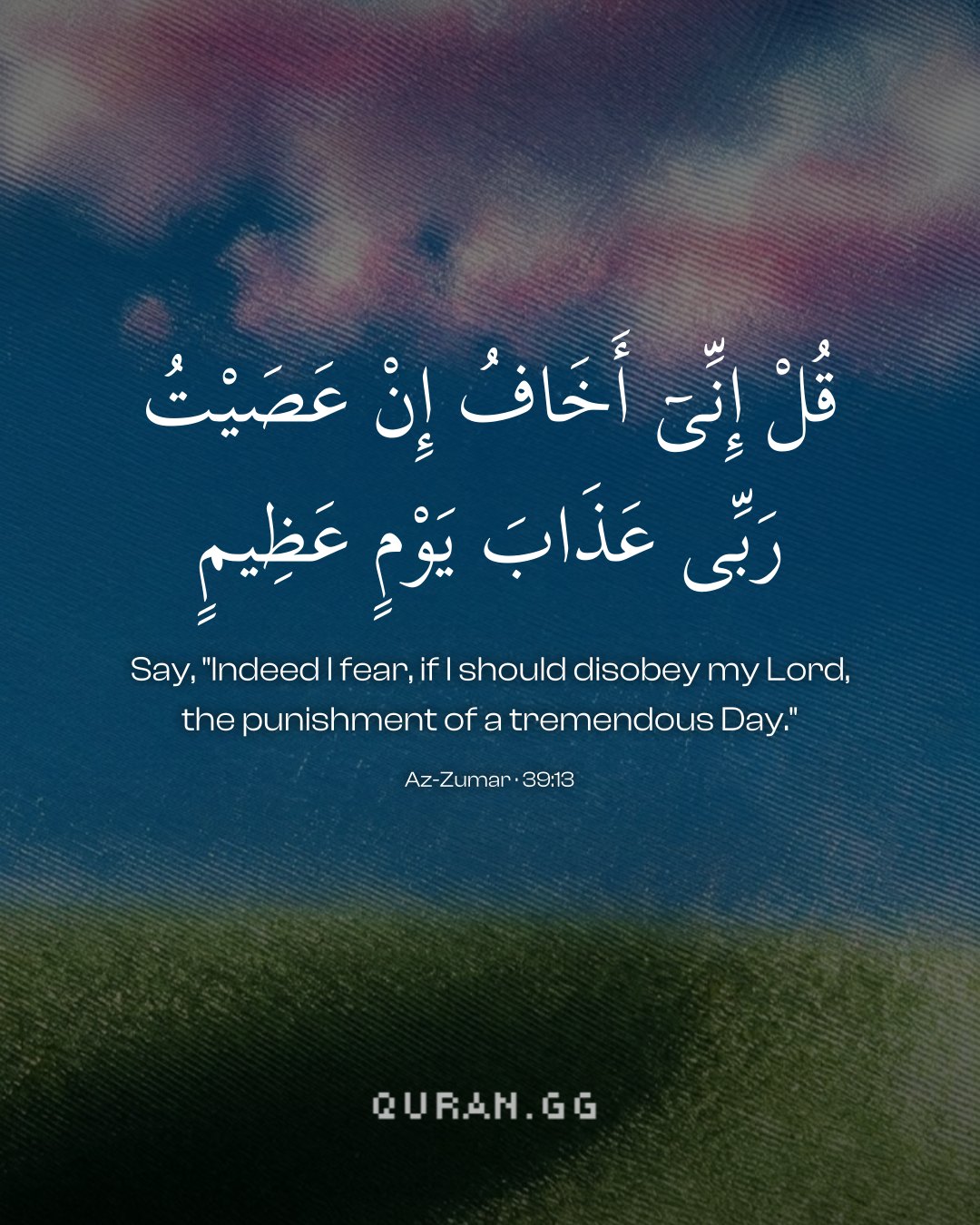
قُلْ إِنِّىٓ أَخَافُ إِنْ عَصَيْتُ رَبِّى عَذَابَ يَوْمٍ عَظِيمٍ ١٣

Say, "Indeed I fear, if I should disobey my Lord, the punishment of a tremendous Day."

Surah Az-Zumar 39:13 in Arabic with its translation: “Say, "Indeed I fear, if I should disobey my Lord, the punishment of a tremendous Day."”

Make something with this ayah

Turn it into a video for Stories, Reels or TikTok, recited by the reciter you pick, or an image on a background you choose. Free, in your browser.

Download this image

Tafsir Ibn Kathir (abridged)

Creating Fear of the Punishment of Allah

Allah `says, say O Muhammad, even though you are the Messenger of Allah ﷺ:'

إِنِّى أَخَافُ إِنْ عَصَيْتُ رَبِّى عَذَابَ يَوْمٍ عَظِيمٍ

(Verily, if I disobey my Lord, I am afraid of the torment of a great Day.) meaning the Day of Resurrection. This is a conditional sentence, and if what is referred to here applies to the Prophet , it applies even more so to others,

قُلِ اللَّهَ أَعْبُدُ مُخْلِصاً لَّهُ دِينِى فَاعْبُدُواْ مَا شِئْتُمْ مِّن دُونِهِ

(Say: "Allah Alone I worship by doing religious deeds sincerely for His sake only. So, worship what you like besides Him.") This is also a threat, and a disowning of them.

قُلْ إِنَّ الْخَـسِرِينَ

(Say: "The losers...") means, the greatest losers of all,

الَّذِينَ خَسِرُواْ أَنفُسَهُمْ وَأَهْلِيهِمْ يَوْمَ الْقِيَـمَةِ

(are those who will lose themselves and their families on the Day of Resurrection.) means, they will be separated and will never meet again, whether their families have gone to Paradise and they have gone to Hell, or all of them have gone to Hell, they will never meet or feel happiness again.

أَلاَ ذَلِكَ هُوَ الْخُسْرَانُ الْمُبِينُ

(Verily, that will be a manifest loss!) means, this is the clearest and most obvious loss. Then He describes their state in the Fire:

لَهُمْ مِّن فَوْقِهِمْ ظُلَلٌ مِّنَ النَّارِ وَمِن تَحْتِهِمْ ظُلَلٌ

(They shall have coverings of Fire, above them and covering (of Fire) beneath them.) This is like the Ayat:

لَهُم مِّن جَهَنَّمَ مِهَادٌ وَمِن فَوْقِهِمْ غَوَاشٍ وَكَذَلِكَ نَجْزِى الظَّـلِمِينَ

(Theirs will be a bed of Hell (Fire), and over them coverings (of Hell-fire). Thus do We recompense the wrongdoers) (7:41)

يَوْمَ يَغْشَـهُمُ الْعَذَابُ مِن فَوْقِهِمْ وَمِن تَحْتِ أَرْجُلِهِمْ وَيِقُولُ ذُوقُواْ مَا كُنْتُمْ تَعْمَلُونَ

(On the Day when the torment (Hell-fire) shall cover them from above them and from underneath their feet, and it will be said: "Taste what you used to do.") (29:55)

ذَلِكَ يُخَوِّفُ اللَّهُ بِهِ عِبَادَهُ

(With this Allah frightens His servants:) means, Allah tells us about this, which will undoubtedly come to pass, to frighten His servants, so that they will keep away from unlawful things and from sin.

يعِبَادِ فَاتَّقُونِ

(O My servants, therefore have Taqwa of Me!) means, `fear My wrath, My anger, My punishment and My vengeance.'

Ma'arif al-Qur'an

In verse 10, it was said: وَأَرْ‌ضُ اللَّـهِ وَاسِعَةٌ (and the earth of Allah is wide).In the sentence previous to this, Good deeds had been enjoined. This might prompt someone to come up with the excuse, 'The city or country in which I live, or the social milieu I am stuck with around me stops me from doing good deeds.' This sentence carries an answer to this excuse - 'if you find adherence to Islamic legal injunctions difficult while living in some particular country, city or social setup, then, leave it. The earth of Allah is wide enough. Go and live at a place and in a surrounding that is conducive to remaining obedient to Divine commandments.' This persuades one to migrate from a place living in which one cannot dutifully follow and observe what has been enjoined by his religion. Some rules relating to hijrah (emigration) have already appeared in the commentary on Surah An-Nisa' (Ma’ ariful-Qur’ an, Volume II, Index p. 659, see under Hijrah).

Continue reading the tafsir of ayahs 10–17

Tazkirul Quran

When a man attains deep realisation of God, the essential result of this is that he becomes God-fearing. The realisation of the majesty of God makes him humble and he spends his life following the commandments of God. This makes him so serious that he renounces everything and leads a god-oriented life. To build up one’s life on the basis of faith involves a tremendous trial. Only those succeed in this trial for whom faith is the greatest wealth, for the sake of which they are prepared to forego everything else. A life of faith is a life of patience. Those who are prepared to become believers at the price of patience will be the ones who will be blessed with the superior grace of God.

Uthmani text of the Madinah mushaf (King Fahd Complex). Translation: Saheeh International. Tafsir via Quran.com.