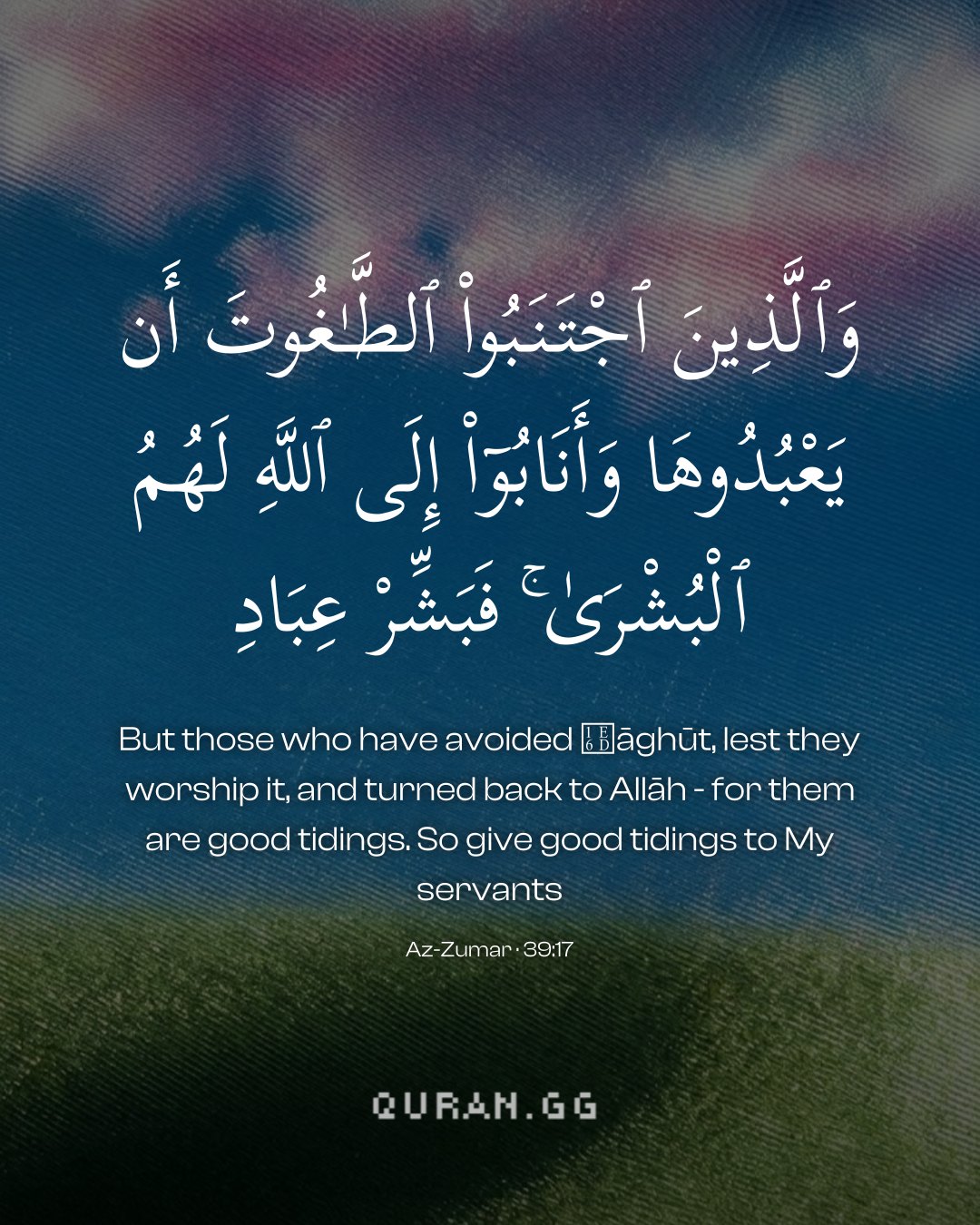
Good News for the Righteous `Abdur-Rahman bin Zayd bin Aslam said, narrating from his father
وَالَّذِينَ اجْتَنَبُواْ الطَّـغُوتَ أَن يَعْبُدُوهَا
(Those who avoid At-Taghut by not worshipping them) was revealed concerning Zayd bin `Amr bin Nufayl and Abu Dharr and Salman Al-Farisi, may Allah be pleased with them. The correct view is that it includes them and all others who avoided worshipping idols and turned to the worship of Ar-Rahman. These are the people for whom there is good news in this world and in the Hereafter. Then Allah says:
فَبَشِّرْ عِبَادِالَّذِينَ يَسْتَمِعُونَ الْقَوْلَ فَيَـتَّبِعُونَ أَحْسَنَهُ
(so announce the good news to My servants -- those who listen to the Word and follow the best thereof,) meaning, those who understand it and act in accordance with it. This is like the Words of Allah, may He be exalted, to Musa, peace be upon him, when He gave him the Tawrah:
فَخُذْهَا بِقُوَّةٍ وَأْمُرْ قَوْمَكَ يَأْخُذُواْ بِأَحْسَنِهَا
(Hold unto these with firmness, and enjoin your people to take the better therein) (7:145).
أُوْلَـئِكَ الَّذِينَ هَدَاهُمُ اللَّهُ
(those are whom Allah has guided) means, those who are described in this manner are the ones whom Allah has guided in this world and the Hereafter.
وَأُوْلَـئِكَ هُمْ أُوْلُو الاٌّلْبَـبِ
(and those are men of understanding.) means, they possess sound reasoning and an upright nature.
In verse 10, it was said: وَأَرْضُ اللَّـهِ وَاسِعَةٌ (and the earth of Allah is wide).In the sentence previous to this, Good deeds had been enjoined. This might prompt someone to come up with the excuse, 'The city or country in which I live, or the social milieu I am stuck with around me stops me from doing good deeds.' This sentence carries an answer to this excuse - 'if you find adherence to Islamic legal injunctions difficult while living in some particular country, city or social setup, then, leave it. The earth of Allah is wide enough. Go and live at a place and in a surrounding that is conducive to remaining obedient to Divine commandments.' This persuades one to migrate from a place living in which one cannot dutifully follow and observe what has been enjoined by his religion. Some rules relating to hijrah (emigration) have already appeared in the commentary on Surah An-Nisa' (Ma’ ariful-Qur’ an, Volume II, Index p. 659, see under Hijrah).
Continue reading the tafsir of ayahs 10–17 The real call of the prophet yearns to make man discover and worship the one and only God, leaving aside the worship of everything else. A prophet pursues the dawah mission as a matter of personal concern. Not only does he guide his fellow-men but establishes an example by adopting the right path himself. This nature of a prophet’s work, indicates the nature of a dayee’s work. The messenger of truth is one for whom the Truth becomes his personal problem. His call of Truth is the spontaneous expression of his inner experience and not merely a superficial call.
Uthmani text of the Madinah mushaf (King Fahd Complex). Translation: Saheeh International. Tafsir via Quran.com.