يُحَلَّوْنَ فِيهَا مِنْ أَسَاوِرَ مِن ذَهَبٍ وَلُؤْلُؤاً
(therein will they be adorned with bracelets of gold and pearls,) It was recorded in the Sahih from Abu Hurayrah, may Allah be pleased with him, that the Messenger of Allah ﷺ said:
«تَبْلُغُ الْحِلْيَةُ مِنَ الْمُؤْمِنِ حَيْثُ يَبْلُغُ الْوَضُوء»
(The ornaments of the believer will reach as far as his Wudu'.)
وَلِبَاسُهُمْ فِيهَا حَرِيرٌ
(and their garments therein will be of silk.) For this reason it is forbidden for them (the males) in this world, but Allah will permit it for them in the Hereafter. It was recorded in the Sahih that the Messenger of Allah ﷺ said:
Continue reading the tafsir of ayahs 33–35Ma'arif al-Qur'an
Mufti Muhammad Shafi
A person who will use utensils of gold and silver and dresses of silk will remain deprived of these in Jannah
Sayyidna Hudhaifah ؓ says that he heard the Holy Prophet ﷺ saying, 'Do not wear dresses of silk and do not drink water in utensils of gold and silver, nor use plates made of these in eating food - because, these things are for disbelievers in this world and for you, in the Hereafter.' (al-Bukhari and Muslim)
And Sayyidna ` Umar ؓ reports that the Holy Prophet ﷺ said, 'Any male who wore a dress made of silk in this world will not wear it in the Hereafter' (al-Bukhari and Muslim). And a narration of Sayyidna Abu Said al-Khudri ؓ says, 'A male who wears a dress made of silk in this world will remain deprived of it in the Hereafter, even if he were to go to Jannah.' (Mazhari)
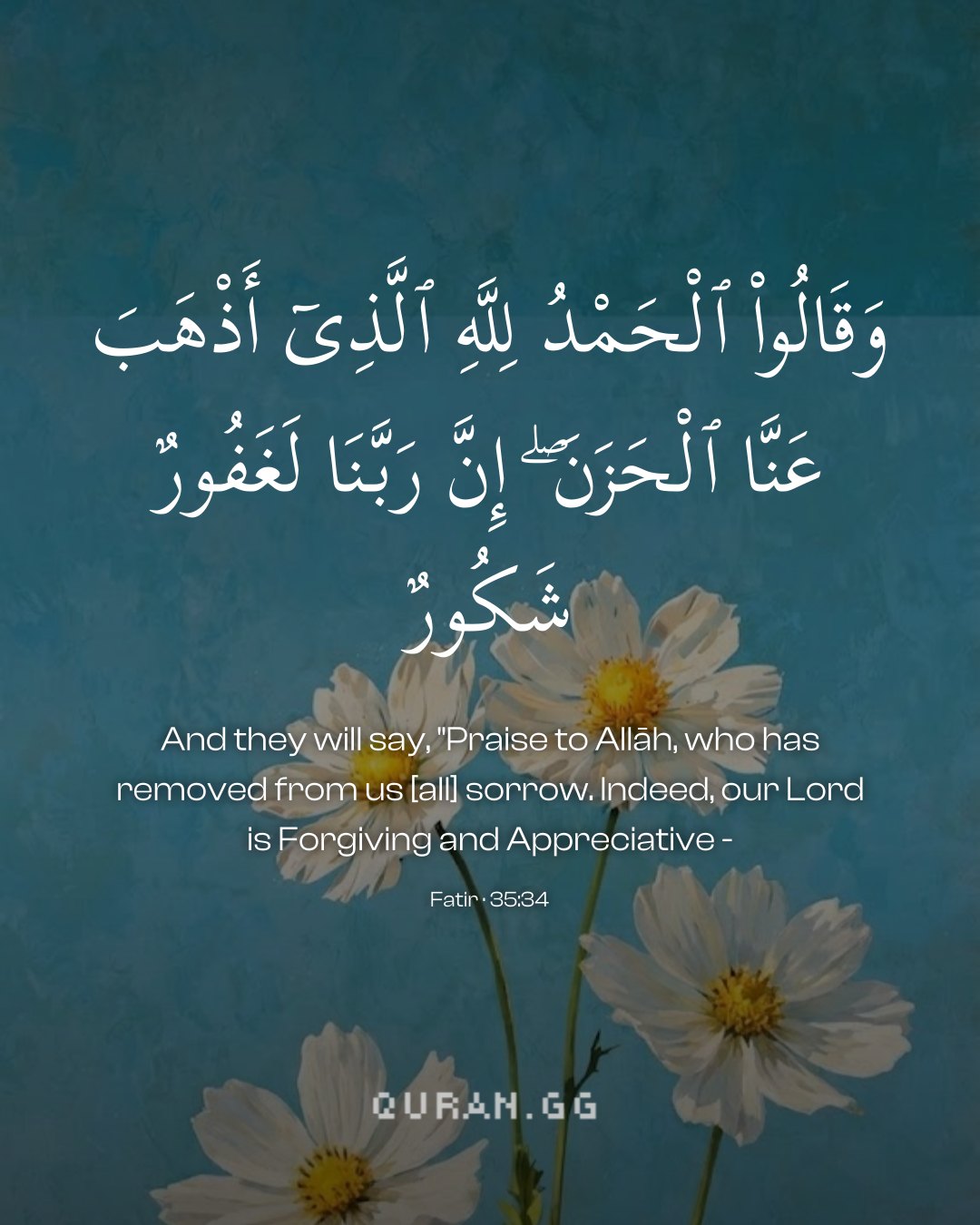
The next verse (34): وَقَالُوا الْحَمْدُ لِلَّـهِ الَّذِي أَذْهَبَ عَنَّا الْحَزَنَ إِنَّ رَبَّنَا لَغَفُورٌ شَكُورٌ (And they will say, "Praise be to Allah who has removed all sorrow from us." ) tells us about what the people of Paradise will say when they enter Jannah. What does 'sorrow' mean at this place? Leading commentators have given various explanations about it. However, the truth of the matter is that all sorrows stand included therein. In this world, one may become a king or a prophet or a saint, yet no one can escape it:
دریں دنیا کسے بےغم نباشد۔-- وگر باشد بنی آدم نباشد
In this world, no one is free of sorrow And if one is, one is not a human being.
In this world of our experience, no one good or bad can get away from one or the other concern, anxiety or sorrow. Therefore, people of wisdom call this world a home of sorrows. The sorrow the removal of which this verse mentions includes all these mortal states of concern. The second concern is that of the Day of Judgment and Resurrection. The third concern is that of Reckoning of Deeds, and the fourth, that of the punishment of Jahannam. From the people of Jannah, Allah Ta’ ala will remove all these concerns, anxieties and sorrows.
According to a narration of Sayyidna ` Abdullah Ibn ` Umar ؓ ، the Holy Prophet ﷺ said, 'For the people who uphold the Kalimah of لا إلہ إلا اللہ la ilaha il-lal-lah (there is no God but Allah), there is no fear and loneliness at the time of death, nor in the grave, nor when they rise again on the Day of Resurrection - as if I am virtually seeing them rise from their respective graves saying: الْحَمْدُ لِلَّـهِ الَّذِي أَذْهَبَ عَنَّا الْحَزَنَ (Praise be to Allah who has removed all sorrow from us." ).' (Reported by at-Tabarani, Mazhari)
At this point, let us refer back to the Hadith of Sayyidna Abu-D-Darda` ؓ that has appeared a little earlier. There it has been stated that it will be said by the unjust, those who have wronged their own selves. This is because they would initially face great anxiety on the plains of Resurrection but, finally, when they are asked to enter Paradise, it will sound removed. This statement does not contradict the Hadith of Sayyidna Ibn ` Umar ؓ appearing immediately above. Again, the reason is that the person who has wronged himself would have an additional sorrow on his hands, more serious than that of others, on the plains of the Resurrection as well - something that will stand removed at the time of one's entry into the Paradise. In short, this is a statement that will be made by all people of Jannah, no matter to which kind they belong, to the ones who have been ahead of all in good deeds, or to those who have followed the middle course, or to those who have been unjust to their own selves. But, the thought of everyone's roster of sorrows being separate from each other is not too far out.
Imam Abu Bakr al-Jassas (رح) said: It is the typical state of a believer that he never remains free of concerns while in this world. The Holy Prophet ﷺ has said that the world is a prison for the believer. This is the reason why it appears in the accounts of the lives of the Holy Prophet ﷺ and his great Sahabah ؓ that these blessed souls used to look sad fairly often.
Uthmani text of the Madinah mushaf (King Fahd Complex). Translation: Saheeh International. Tafsir via Quran.com.