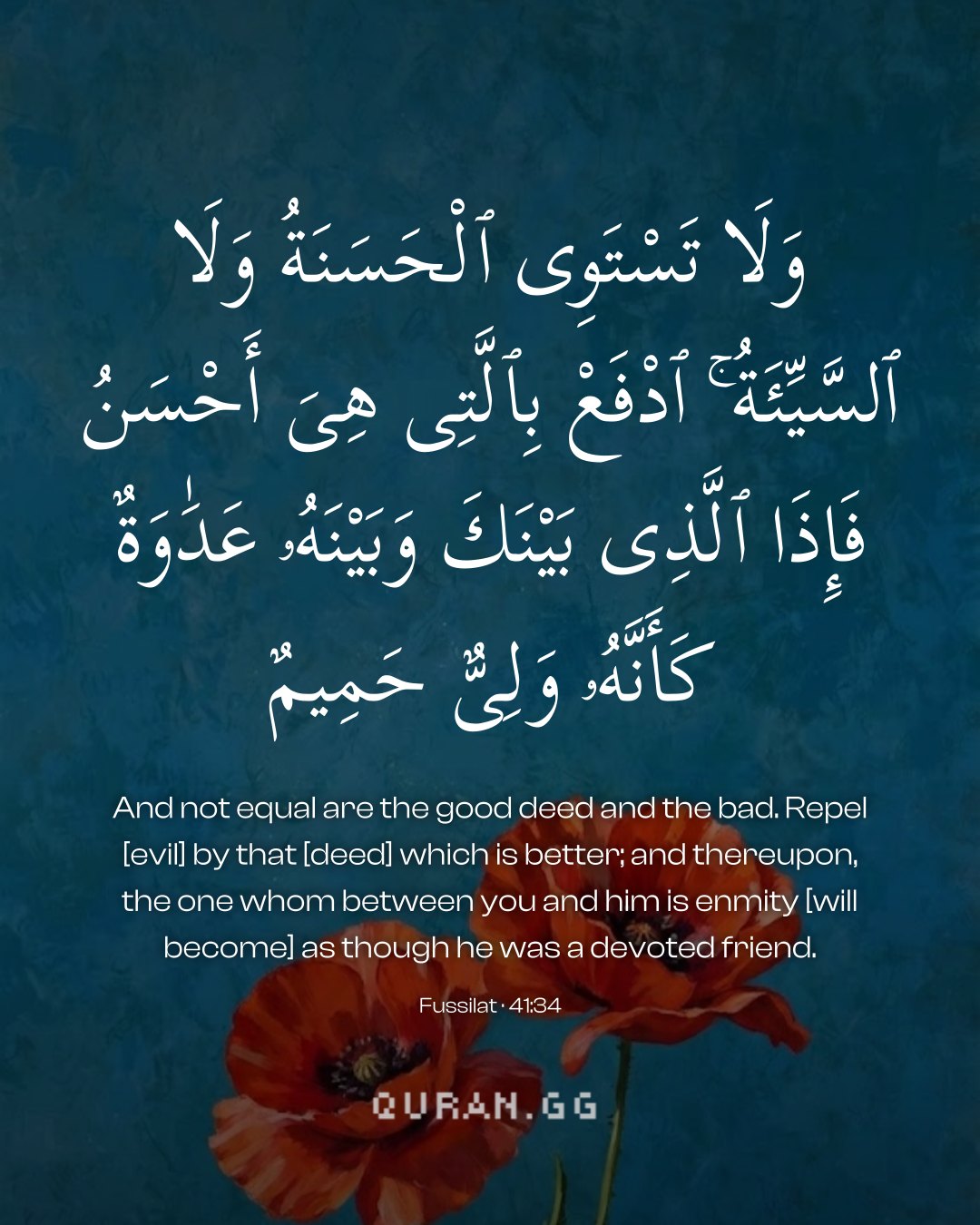
And not equal are the good deed and the bad. Repel [evil] by that [deed] which is better; and thereupon, the one whom between you and him is enmity [will become] as though he was a devoted friend.
(and does righteous deeds, and says: "I am one of the Muslims.") means, he himself follows that which he says, so it benefits him as well as others. He is not one of those who enjoin good but do not do it themselves, or who forbid evil yet they do it themselves. He does good and avoids doing evil, and he calls people to their Creator, may He be blessed and exalted. This is general in meaning and applies to everyone who calls people to what is good and is himself guided by what he says. The Messenger of Allah ﷺ is the foremost among people in this regard, as Muhammad bin Sirin, As-Suddi and `Abdur-Rahman bin Zayd bin Aslam said. It was also said that what was meant here is the righteous Mu'adhdhin, as it was mentioned in Sahih Muslim:
وَلَا تَسْتَوِي الْحَسَنَةُ وَلَا السَّيِّئَةُ (And good and evil are not equal - 34). The special instructions for those who are engaged in calling others towards Allah commence from here. The gist of these instructions is not to repay evil with evil, but to be patient and to be obliging ادْفَعْ بِالَّتِي هِيَ أَحْسَنُ (Repel (evil) with what is best, - 34) means that the habit of those people who are engaged in calling others towards Allah should be to reply to the evil behavior of the addressees in the best possible manner. No doubt, it is good not to repay evil with evil and to forgive, but it is much better to do some good to the evil-doer after forgiving him. Sayyidna Ibn ` Abbas ؓ has said that the instruction in this verse is to be patient with the one who is expressing his anger with you, to be tolerant and forbearing with the one who is being ignorant with you and to forgive the one who has made you suffer. (Mazhari)
Some narrations have it that someone either abused or reviled Sayyidna Abu Bakr ؓ who said to him, ` If what you are saying is true that I am at fault and am bad, then I pray Allah Ta’ ala to forgive me, and if you have told a lie then may Allah Forgive you. (Qurtubi)
Tazkirul Quran
Maulana Wahiduddin KhanOn ayahs 31–35
There are two types of human beings. One consists of those who take Satan and those who misguide others as their leaders. In the world, these people are each other’s best friends. But, in the Hereafter, the position will be just the opposite. There , when the followers see that their selfish leaders have caused them to be cast into hell, they will develop an extreme hatred for these ‘so-called’ leaders, and will wish to have the satisfaction of degrading and dishonouring them. The second type of human beings comprises those who will fraternize with God’s angels. Such people take angels as their comrades (companions) for the period extending from this world up to the Hereafter. The angels shower godly emotions on their hearts, and in difficult times give them peace of mind. Through fine aesthetic experiences, they convey to them God’s good news. Subsequently, these angels will receive them in the Hereafter and lead them to the gardens of paradise.
Uthmani text of the Madinah mushaf (King Fahd Complex). Translation: Saheeh International. Tafsir via Quran.com.