The Call to Tawhid Allah says,
قُلْ
(Say) `O Muhammad, to these disbelievers and idolators,'
إِنَّمَآ أَنَاْ بَشَرٌ مِّثْلُكُمْ يُوحَى إِلَىَّ أَنَّمَآ إِلَـهُكُمْ إِلَـهٌ وَاحِدٌ
(I am only a human being like you. It is revealed to me that your God is One God,) `not like these idols and false gods which you worship. Allah is one God,'
فَاسْتَقِيمُواْ إِلَيْهِ
(therefore take straight path to Him) means, `worship Him Alone sincerely, in accordance with what He has commanded you through His Messengers.'
وَاسْتَغْفِرُوهُ
(and seek forgiveness of Him) means, `for your past sins.'
وَوَيْلٌ لِّلْمُشْرِكِينَ
(And woe to the polytheists.) means, doom and destruction is their lot.
Continue reading the tafsir of ayahs 6–8Ma'arif al-Qur'an
Mufti Muhammad Shafi
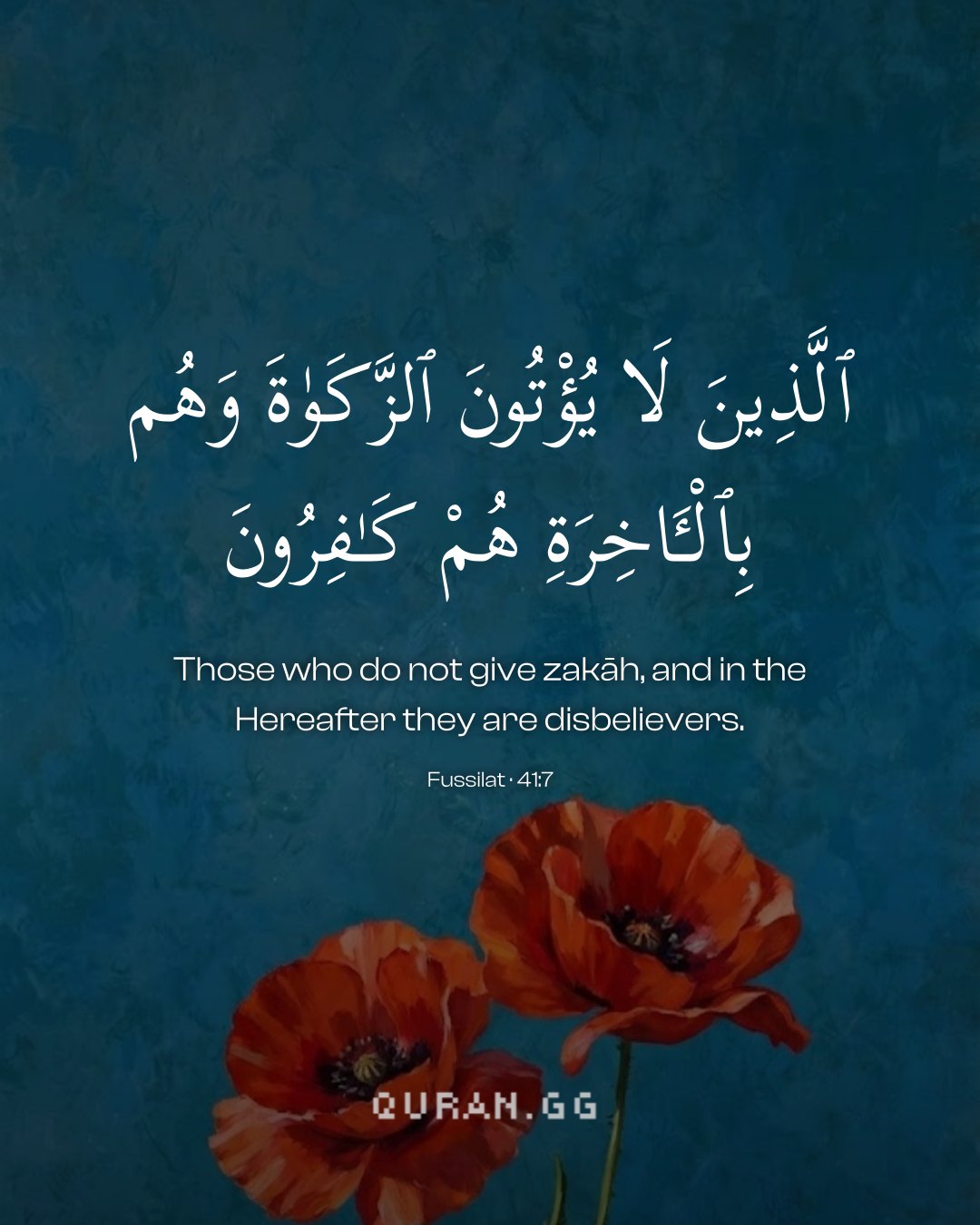
Toward the end of the address, both the aspects of glad tidings and of warnings of the Qur'n have been presented to them, making it clear that there are dire consequences for the mushrikin (those who associate partners with Allah) and eternal rewards for the believers. In the context of the evil fate of the Mushriks, one reason for it has been mentioned that these people did not use to pay Zakah. This gives rise to some questions. The first one is that these verses were revealed in Makkah, whereas Zakah was made obligatory in Madinah. So, how can they be accused of non-payment of Zakah before Zakah was made obligatory?
Ibn Kathir, in reply to this question, has said that Zakah, in principle, had been obligated along with Salah right from the beginning of Islam, as mentioned in Surah Muzzammil. However the determination of the Nisab (minimum capital and property for the applicability of Zakah) and the arrangements for its collection were made in Madinah. Therefore it is not correct to say that Zakah was not obligated in Makkah.
Are Non-Muslims required to follow the practical injunctions of Shari'ah?
The second doubt is that many jurisprudents do not consider Non-Muslims to have been asked or required to carry out religious deeds such as Salah, Fasting, Hajj and Zakah. The direction is that they have to embrace the faith first, and then they are liable to the practical precepts of Shari'ah. According to this view, they are not liable to pay zakah. Why then have they been reprimanded for not paying Zakah in this verse?
It can be said in reply that many of the leading scholars and experts of Islamic jurisprudence are of the view that even the Non-Muslims are required to carry out the obligatory duties of religion; If this view is adopted, there remains no doubt about this verse that has mentioned non-payment of zakah as one of the reasons for their being punished. As for those scholars who do not consider Non-Muslims to have been asked to carry out the obligatory duties, they can say that the real denunciation is not for non-payment of Zakah, but because this non-payment is due to their disbelief and is a sign of it. Therefore the object of the reprimand is that had they been believers, they would have been strict in paying Zakah; their fault is their failure to embrace the faith. (Bayan-ul-Qur’ an).
The detailed discussion of whether or not the infidels have been asked to follow the practical precepts of Shari` ah may be found in the fifth volume of the author's Arabic book "Ahkam-ul-Qur’ an".
The third question which arises here is that the commandment for Salah is the most important of all the commandments of Islam which has not been mentioned here, so what is the wisdom behind making a special mention of Zakah? Qurtubi etc., have said in reply that Quraysh of Arabia were wealthy people, and they were known for their trait of giving alms and charity and helping the poor. But when somebody would become a Muslim, they would deprive him of such financial help and social assistance also. Zakah has been specially mentioned because the object is to denounce this practice. (Allah knows best)
The call of a prophet is the pure call of religion. However, people mostly follow the religion of their forebears. Their thinking is dominated by their national traditions and contemporary mores. For this reason, the prophet’s unadulterated religion does not fit the pattern or mould of their thought. He appears a stranger to them. This difference acts as a mental barrier between the prophet and the common people. Unable to see the prophet’s call in its proper perspective, they are not prepared to accept it. The prophet’s call is in itself extremely rational. It is in itself a proof that it has come from God. But the aforesaid mental barrier proves so impregnable that a man is unable to penetrate it in order to grasp the meaning of the prophet’s call. Thus God opens the doors of His Grace to man, but he does not pass through them.
Uthmani text of the Madinah mushaf (King Fahd Complex). Translation: Saheeh International. Tafsir via Quran.com.