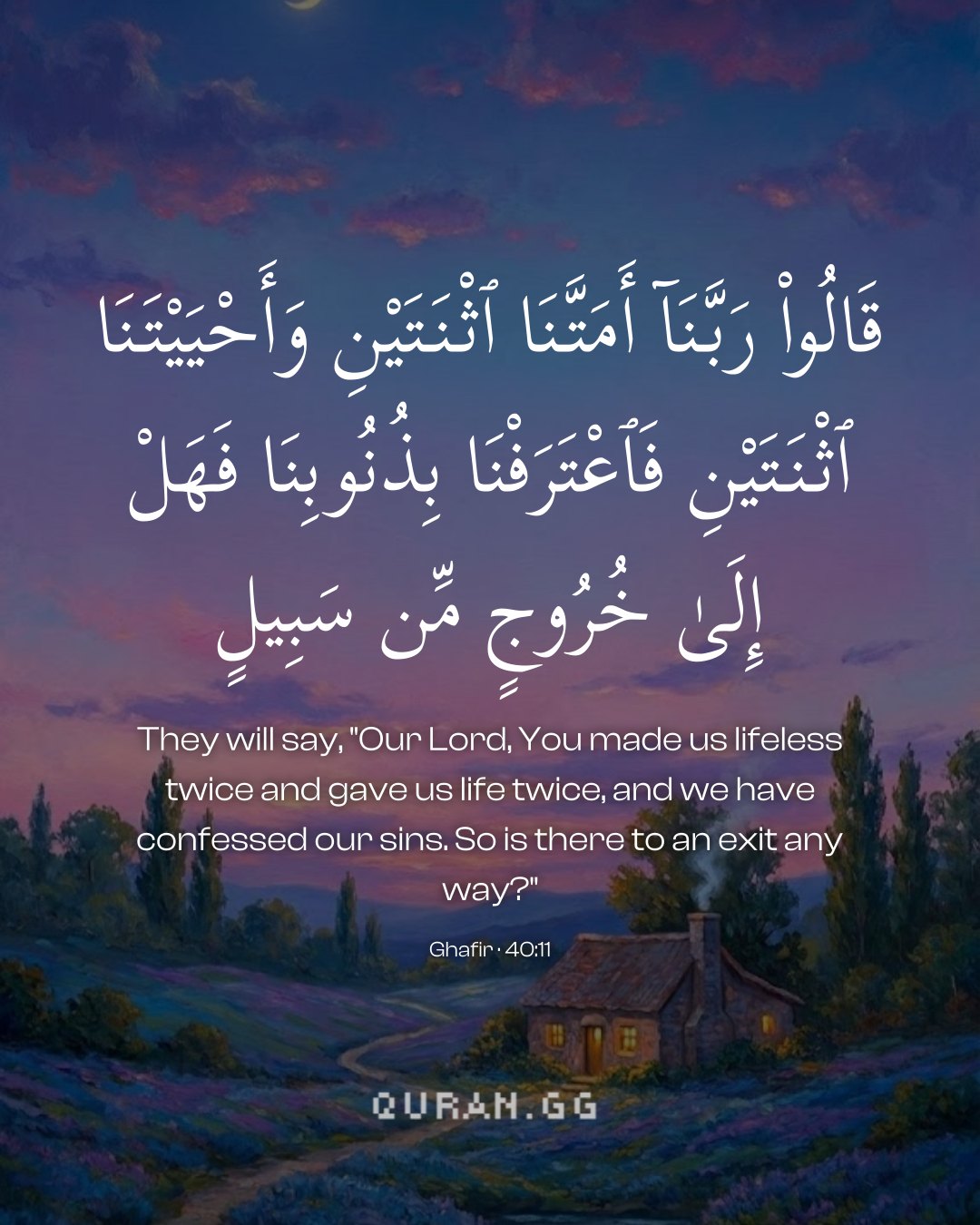
The Regret of the Disbelievers after They enter Hell
Allah tells us that the disbelievers will feel regret on the Day of Resurrection, when they enter Hell and sink in the agonizing depth of fire. When they actually experience the unbearable punishment of Allah, they will hate themselves with the utmost hatred, because of the sins they committed in the past, which were the cause of their entering the Fire. At that point the angels will tell them in a loud voice that Allah's hatred towards them in this world, when Faith was offered to them and they rejected it, is greater than their hatred towards themselves in this situation. Qatadah said, concerning the Ayah:
In verse 7, it was said: الَّذِينَ يَحْمِلُونَ الْعَرْشَ وَمَنْ حَوْلَهُ (Those who are bearing the Throne and those who are around it). The present count of angels who bear the Throne (arsh) is four and, on the day of Qiyamah (the Day of Judgment), they will be eight, and only Allah knows the number of angels around the ` arsh. Some Hadith narrations give the number of their rows that reaches several hundred thousand. They are called: کرّوبِی (karrubi, [ Heb. Kerubh or kerub ], plural: [ Eng. Cherubin, or Cherubim, Heb. Cherubim ]). They are angels close to Allah. In this verse, it has been said that all these angels close to Allah pray for all believers, particularly those who repent from their sins and follow the Shari'ah of the Holy Prophet ﷺ . Either Allah Ta’ ala has appointed them to perform this task, or their nature is such that they keep praying for the good servants of Allah. Therefore, Sayyidna Mutarrif Ibn ` Abdullah Ibn Shikhkhir said that out of all servants of Allah, the angels of Allah are the foremost among those who wish well for believers. Firstly, they pray for them. They implore Allah to forgive them, to save them from the punishment of Jahannam and to admit them to the everlasting gardens of Jannah. Along with it, they also pray for: وَمَن صَلَحَ مِنْ آبَائِهِمْ وَأَزْوَاجِهِمْ وَذُرِّيَّاتِهِمْ those as well who did good from among their fathers and wives and children. - 40:8), that is, also admit anyone from among their fathers and forefathers, and their wives, and their children - who meet the criterion of goodness that makes them deserving of forgiveness, a criterion that requires that they should have departed from the mortal world while adhering to their 'iman or faith - yes, admit them too with the same believers into the Jannah.
The subjects of God who set themselves the task of preaching the pure and unadulterated Truth are always harassed. They are made to feel lowly and small and treated as such wherever they may be. But, at the very time when this treatment is being meted out to them, the heavens and the earth are bearing testimony to their righteousness. The angels who have been charged with managing the affairs of the universe, will look forward to their ultimate glorious reward. Those who were looked down upon by the ignorant in this ephemeral world will be raised to such an exalted position that the angels nearest to God will pray for them.
Uthmani text of the Madinah mushaf (King Fahd Complex). Translation: Saheeh International. Tafsir via Quran.com.