Tafsir Ibn Kathir (abridged)
Warning of the Day of Resurrection and Allah's judgement on that Day
`The Day that is drawing near' is one of the names of the Day of Judgement. It is so called because it is close, as Allah says:
أَزِفَتِ الاٌّزِفَةُ - لَيْسَ لَهَا مِن دُونِ اللَّهِ كَاشِفَةٌ
(The Day of Resurrection draws near. None besides Allah can avert it) (53:57-58)
اقْتَرَبَتِ السَّاعَةُ وَانشَقَّ الْقَمَرُ
(The Hour has drawn near, and the moon has been cleft asunder) (54:1)
اقْتَرَبَ لِلنَّاسِ حِسَـبُهُمْ
(Draws near for mankind their reckoning) (21:1),
أَتَى أَمْرُ اللَّهِ فَلاَ تَسْتَعْجِلُوهُ
(The Event (the Hour) ordained by Allah will come to pass, so seek not to hasten it) (16:1),
فَلَمَّا رَأَوْهُ زُلْفَةً سِيئَتْ وُجُوهُ الَّذِينَ كَفَرُواْ
(But when they will see it approaching, the faces of those who disbelieve will change and turn black with sadness and in grief) (67:27), and
إِذِ الْقُلُوبُ لَدَى الْحَنَاجِرِ كَـظِمِينَ
(when the hearts will be at the throats Kazimin. ) Qatadah said, "When the hearts reach the throats because of fear, and they will neither come out nor go back to their places." This was also the view of `Ikrimah, As-Suddi and others.
كَـظِمِينَ
(Kazimin) means silent, for no one will speak without His permission:
يَوْمَ يَقُومُ الرُّوحُ وَالْمَلَـئِكَةُ صَفّاً لاَّ يَتَكَلَّمُونَ إِلاَّ مَنْ أَذِنَ لَهُ الرَّحْمَـنُ وَقَالَ صَوَاباً
(The Day that Ar-Ruh (Jibril) and the angels will stand forth in rows, they will not speak except him whom the Most Gracious allows, and he will speak what is right.) (78:38). Ibn Jurayj said:
كَـظِمِينَ
(Kazimin) "It means weeping."
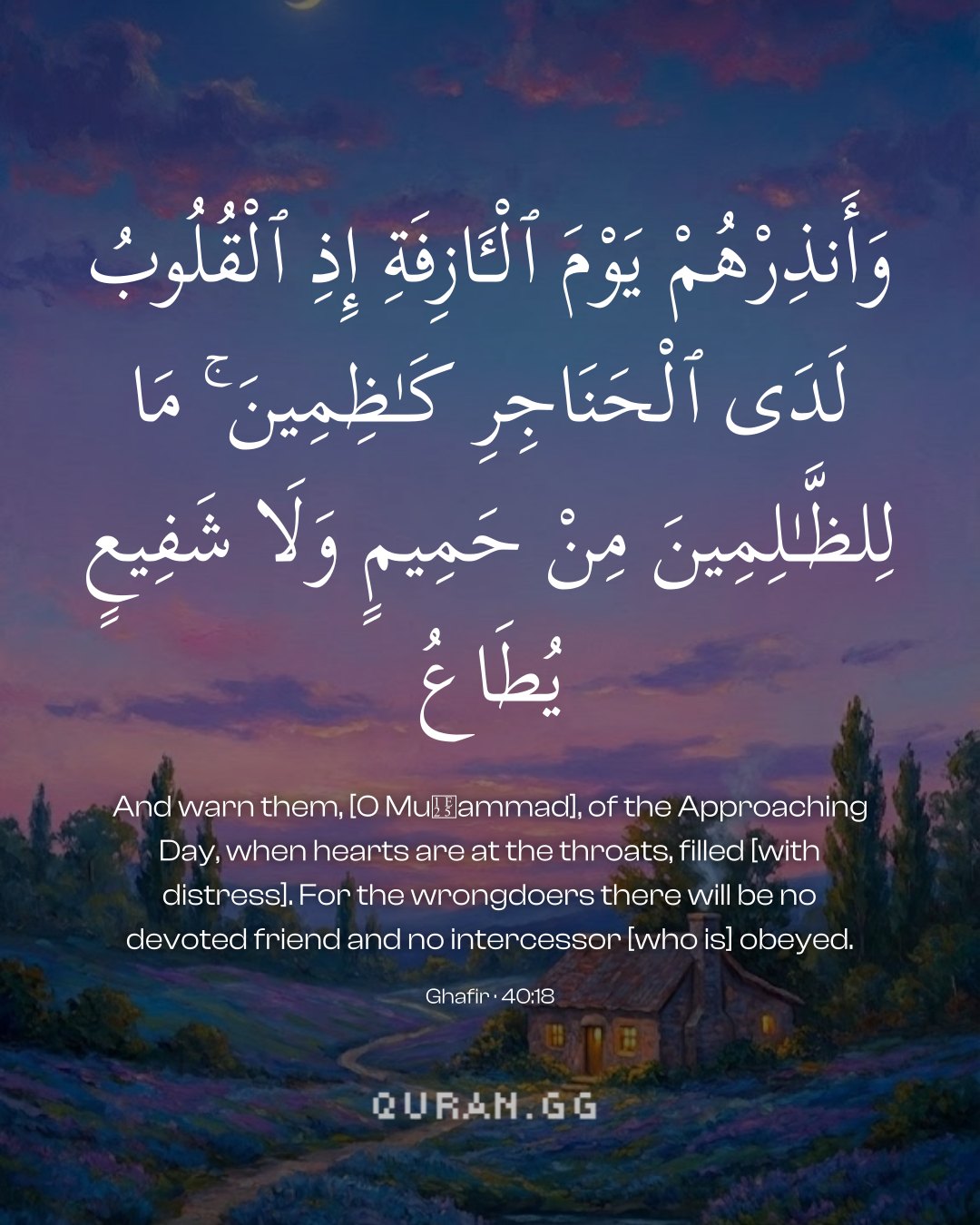
مَا لِلظَّـلِمِينَ مِنْ حَمِيمٍ وَلاَ شَفِيعٍ يُطَاعُ
(There will be no friend, nor an intercessor for the wrongdoers, who could be given heed to.) means, those who wronged themselves by associating others in worship with Allah, will have no relative to help them and no intercessor who can plead on their behalf; all means of good will be cut off from them.
يَعْلَمُ خَآئِنَةَ الاٌّعْيُنِ وَمَا تُخْفِى الصُّدُورُ
(Allah knows the fraud of the eyes, and all that the breasts conceal.) Allah tells us about His complete knowledge which encompasses all things, great and small, major and minor, so that people will take note that He knows about them and they will have the proper sense of shyness before Allah. They will pay attention to the fact that He can see them, for He knows the fraud of the eyes, even if the eyes look innocent, and He knows what the hearts conceal. Ad-Dahhak said:
خَآئِنَةَ الاٌّعْيُنِ
(the fraud of the eyes,) "A wink and a man saying that he has seen something when he has not seen it, or saying that he has not seen it when he did see it." Ibn `Abbas, may Allah be pleased with him, said, "Allah knows when the eye looks at something, whether it wants to commit an act of betrayal or not." This was also the view of Mujahid and Qatadah. Ibn `Abbas, may Allah be pleased with him, commented on the Ayah:
وَمَا تُخْفِى الصُّدُورُ
(and all that the breasts conceal.)"He knows, if you were able to, whether you would commit Zina with a woman or not." As-Suddi said:
وَمَا تُخْفِى الصُّدُورُ
(and all that the breasts conceal.) meaning, of insinuating whispers.
وَاللَّهُ يَقْضِى بِالْحَقِّ
(And Allah judges with truth, ) means, He judges with justice. Al-A`mash narrated from Sa`id bin Jubayr from Ibn `Abbas, may Allah be pleased with him, that this Ayah means: "He is able to reward those who do good with good and those who do evil with evil."
إِنَّ اللَّهَ هُوَ السَّمِيعُ الْبَصِيرُ
(Certainly, Allah! He is the All-Hearer, the All-Seer.) This is how it was interpreted by Ibn `Abbas, may Allah be pleased with him. This is like the Ayah:
لِيَجْزِىَ الَّذِينَ أَسَاءُواْ بِمَا عَمِلُواْ وَيِجْزِى الَّذِينَ أَحْسَنُواْ بِالْحُسْنَى
(that He may requite those who do evil with that which they have done, and reward those who do good, with what is best) (53:31).
وَالَّذِينَ يَدْعُونَ مِن دُونِهِ
(while those to whom they invoke besides Him,) means, the idols and false gods,
لاَ يَقْضُونَ بِشَىْءٍ
(cannot judge anything.) means, they do not possess anything and they cannot judge anything.
إِنَّ اللَّهَ هُوَ السَّمِيعُ الْبَصِيرُ
(Certainly, Allah! He is the All-Hearer, the All-Seer.) means, He hears all that His creatures say and He knows all about them, so He guides whomsoever He wills and sends astray whomsoever He wills. And He judges with perfect justice in all of that.