The Lesson taken from the Destroyed Towns
When Allah mentioned the story of the Prophets and what happened with them and their nations -- how He destroyed the disbelievers and saved the believers -- He goes on to say,
ذَلِكَ مِنْ أَنْبَآءِ الْقُرَى
(That is some of the news of the (population of ) towns) meaning, news of them
نَقُصُّهُ عَلَيْكَ مِنْهَا قَآئِمٌ
(which We relate unto you; of them, some are (still) standing,) This means still remaining.
وَحَصِيدٌ
(and some have been (already) reaped.) This means totally destroyed.
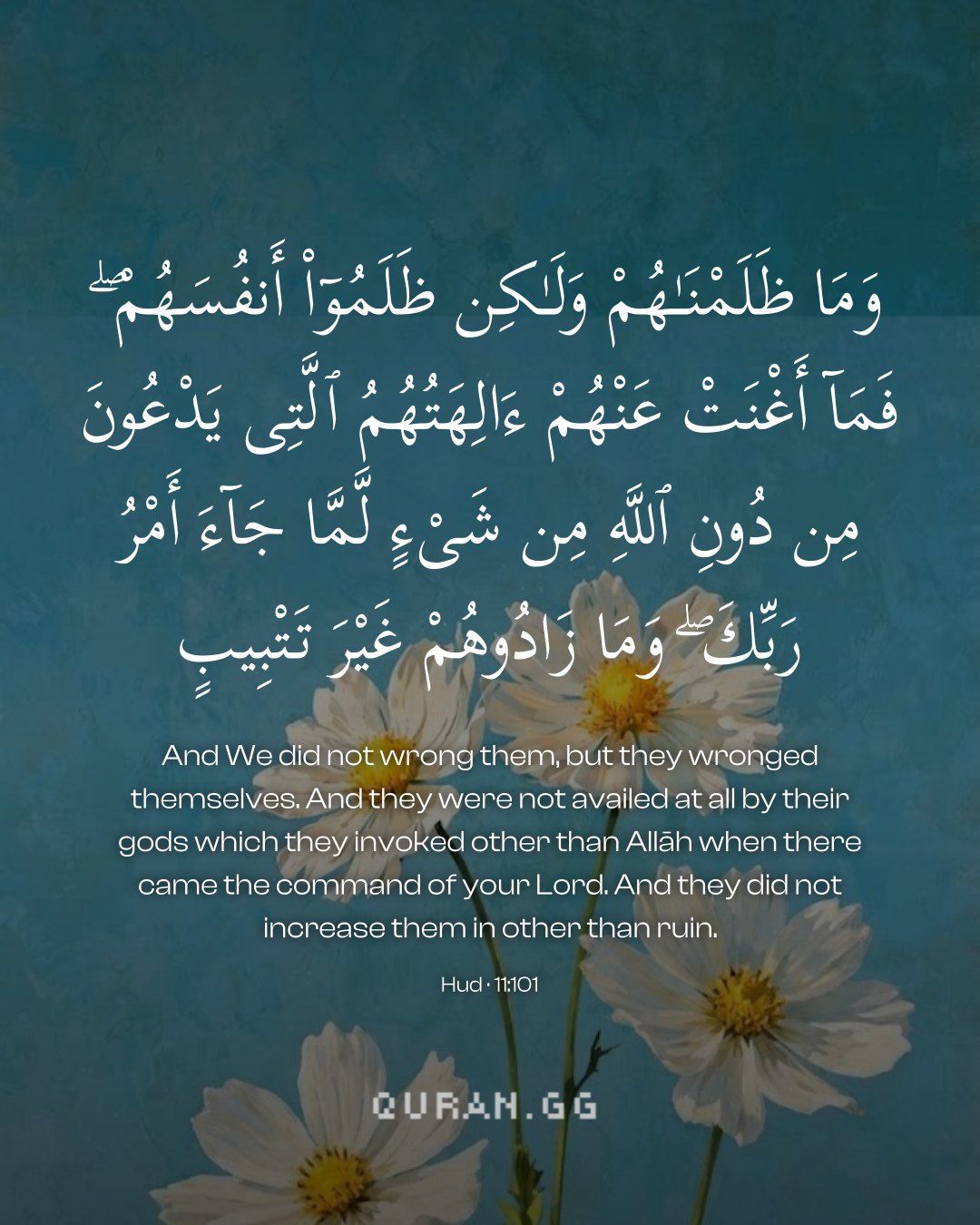
وَمَا ظَلَمْنَـهُمْ
(We wronged them not,) This means, "When We destroyed them."
وَلَـكِن ظَلَمُواْ أَنفُسَهُمْ
(but they wronged themselves.) their rejecting their Messengers and disbelieving in them.
فَمَا أَغْنَتْ عَنْهُمْ ءَالِهَتَهُمُ
(So their gods, profited them not...) This is referring to their idols that they used to worship and invoke.
مِن دُونِ اللَّهِ مِن شَىْءٍ
(other than Allah naught) the idols did not benefit them, nor did they save them when Allah's com- mand came for their destruction.
وَمَا زَادُوهُمْ غَيْرَ تَتْبِيبٍ
(nor did they add aught to them but destruction.) Mujahid, Qatadah and others said, "This means loss. Because the reason for their destruction and their ruin was that they followed those false gods. Therefore, they were losers in this life and the Hereafter."
After having given this good counsel to them, he warned them of the punishment of Allah Ta` ala. He said:
وَيَا قَوْمِ لَا يَجْرِمَنَّكُمْ شِقَاقِي أَن يُصِيبَكُم مِّثْلُ مَا أَصَابَ قَوْمَ نُوحٍ أَوْ قَوْمَ هُودٍ أَوْ قَوْمَ صَالِحٍ ۚ وَمَا قَوْمُ لُوطٍ مِّنكُم بِبَعِيدٍ
And 0 my people, let not your hostility towards me cause you to suffer what was suffered by the people of Nuh, or the people of Hud, or the people of Salih. And the people of Lut are not far from you.
The sense of the last sentence is that the overturned habitations of the people of Sayyidna Lut (علیہ السلام) were close to Madyan where they were. Then, in terms of time, the punishment that came upon them was very close. From this they could learn their lesson and leave their obstinacy.
Continue reading the tafsir of ayahs 89–111 In ancient chronicles events relating to Kings and military generals have been mentioned but events relating to prophets and their communities find no place therein. History as written by man has omitted those very things which, in the eyes of the Creator, were most worthy of mention. However, the Quran describes at great length the dawah work performed by the prophets and the reactions of their addressees to the call. Other matters have been ignored by the Quran as being of no importance. Of the areas destroyed during the age of prophethood, some are still in existence, for example, Egypt, which was the domain of Pharaoh. However, there were communities like that of Hud and Lot whose settlements along with their inhabitants were completely obliterated. Only a few signs of these are still extant in the shape of ruins or artefacts uncovered by excavations. The destruction of these settlements seems to be an act of tyranny. But viewed in the context of the reason for its happening, it will appear to be consistent with reality: it was the outcome of their evil deeds—the punishment meted out to them after their having sinned. Whenever a man indulges in arrogance and transgression, he does so on the strength of some notion. He considers some things or beings as supports and thinks that they will continue to be so in difficult times. But these supports will be such for only so long as God gives them leave. When, according to the law of God, the period of respite ends and God announces His final verdict, then man will come to know that the assumptions which, in his foolishness, he had made about his ‘supports’ were all false.
Uthmani text of the Madinah mushaf (King Fahd Complex). Translation: Saheeh International. Tafsir via Quran.com.