(Surahs Hud, Al-Waqi`ah, Al-Mursalat, `Amma Yatasa'lun An-Naba' and Idhash-Shamsu Kuwwirat At-Takwir have turned my hair gray.) In another narration he said,
«هُودٌ وَأَخَوَاتُهَا»
(Surah Hud and its sisters...)
بِسْمِ اللَّهِ الرَّحْمَـنِ الرَّحِيمِ
In the Name of Allah, the Most Gracious, the Most Merciful.
The Qur'an and its Call to (worship) Allah Alone
A discussion concerning the letters of the alphabet (which appear at the beginning of some chapters of the Qur'an) has already preceded at the beginning of Surat Al-Baqarah. That discussion is sufficient without any need for repetition here. Concerning Allah's statement,
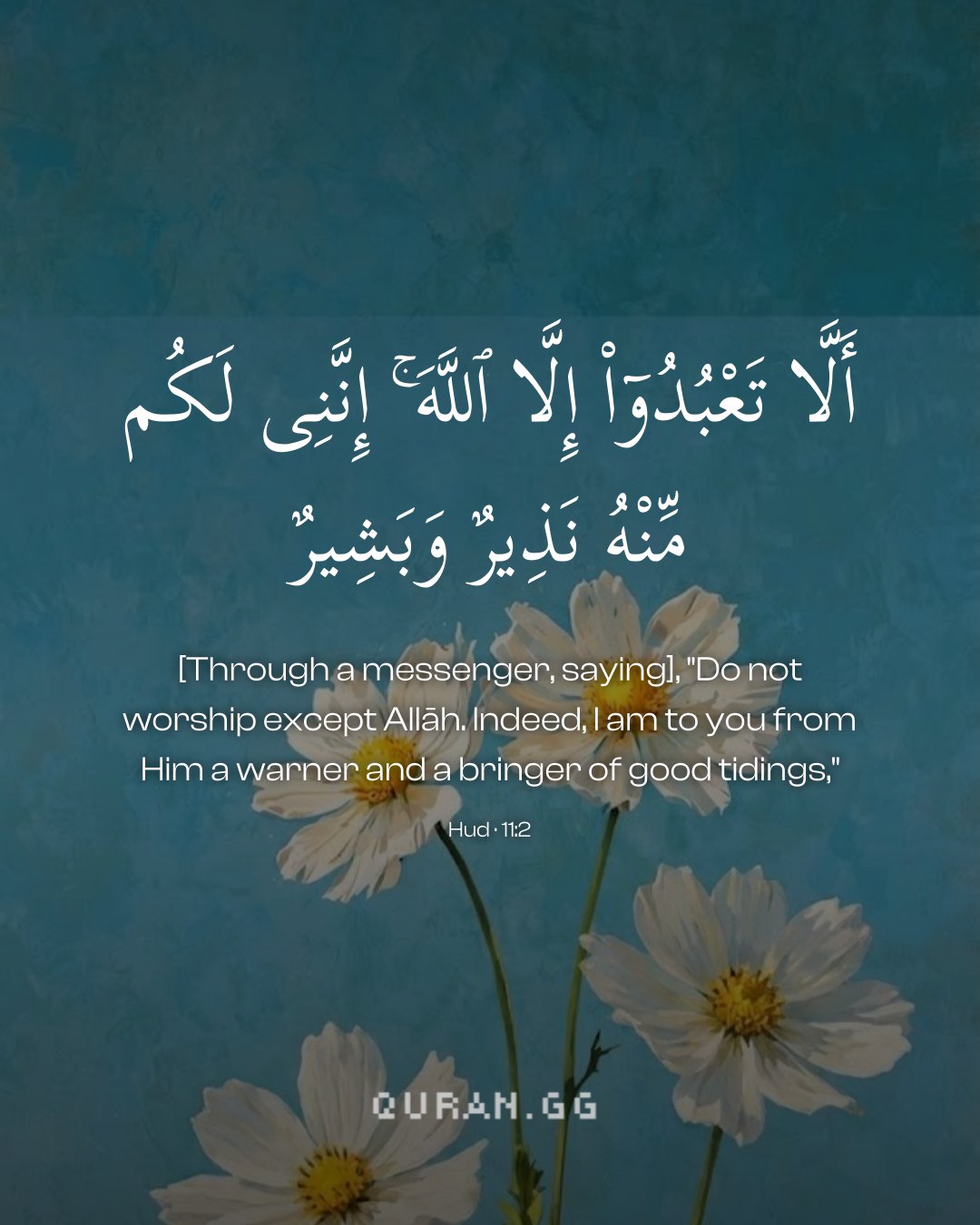
From the second verse begins the delineation of one of the most important and foremost themes, that of Tauhid, the Oneness of Allah Ta` ala. It is said: أَلَّا تَعْبُدُوا إِلَّا اللَّـهَ (that you worship none but Allah). It means that among things stated in these verses the most important and foremost is that no one else should be worshipped except the One Allah.
After that, it was said: إِنَّنِي لَكُم مِّنْهُ نَذِيرٌ وَبَشِيرٌ (Surely, I am for you a warner from Him, and a bearer of glad tidings). It means that the noble messenger of Allah, ﷺ has been commanded to tell the whole world through these verses that he was for them a carrier of warning (against disobedience) and a bearer of glad tidings (of blessings in this life and in the life to come) from Allah.
The word: نَذِیر (nadhir) is usually taken to mean a person who puts the fear of something into someone's heart. But, this word is not used to denote a fear-generating enemy or beast or others that harm. In-stead of that, nadhir is applied to a person who, out of his love and affection to someone, warns him against and saves him from some harmful things. These could be things that harm in this world and might as well could be those that bring harm in the Hereafter.
Uthmani text of the Madinah mushaf (King Fahd Complex). Translation: Saheeh International. Tafsir via Quran.com.