(And O my people! Let not my Shiqaq cause you) This means, "Do not let your hatred and enmity of me cause you to persist in your corruption and disbelief. If you continue this way, you will suffer the same vengeance and torment that overcame Nuh's people, Hud's people, Salih's people and Lut's people." Qatadah said,
وَيقَوْمِ لاَ يَجْرِمَنَّكُمْ شِقَاقِى
(And O my people! Let not my Shiqaq cause you) "He is saying, `Do not be influenced by your differing with me."' As-Suddi said, "This means your enmity of me should not lead you to continue in misguidance and disbelief, or else you will be afflicted by what afflicted them." Concerning His statement,
وَمَا قَوْمُ لُوطٍ مِّنكُم بِبَعِيدٍ
(and the people of Lut are not far off from you!) It has been said that this refers to the period of time. Qatadah said, "This means that they were only destroyed before you yesterday." It has also been said that it refers to place. Actually, the verse carries both meanings.
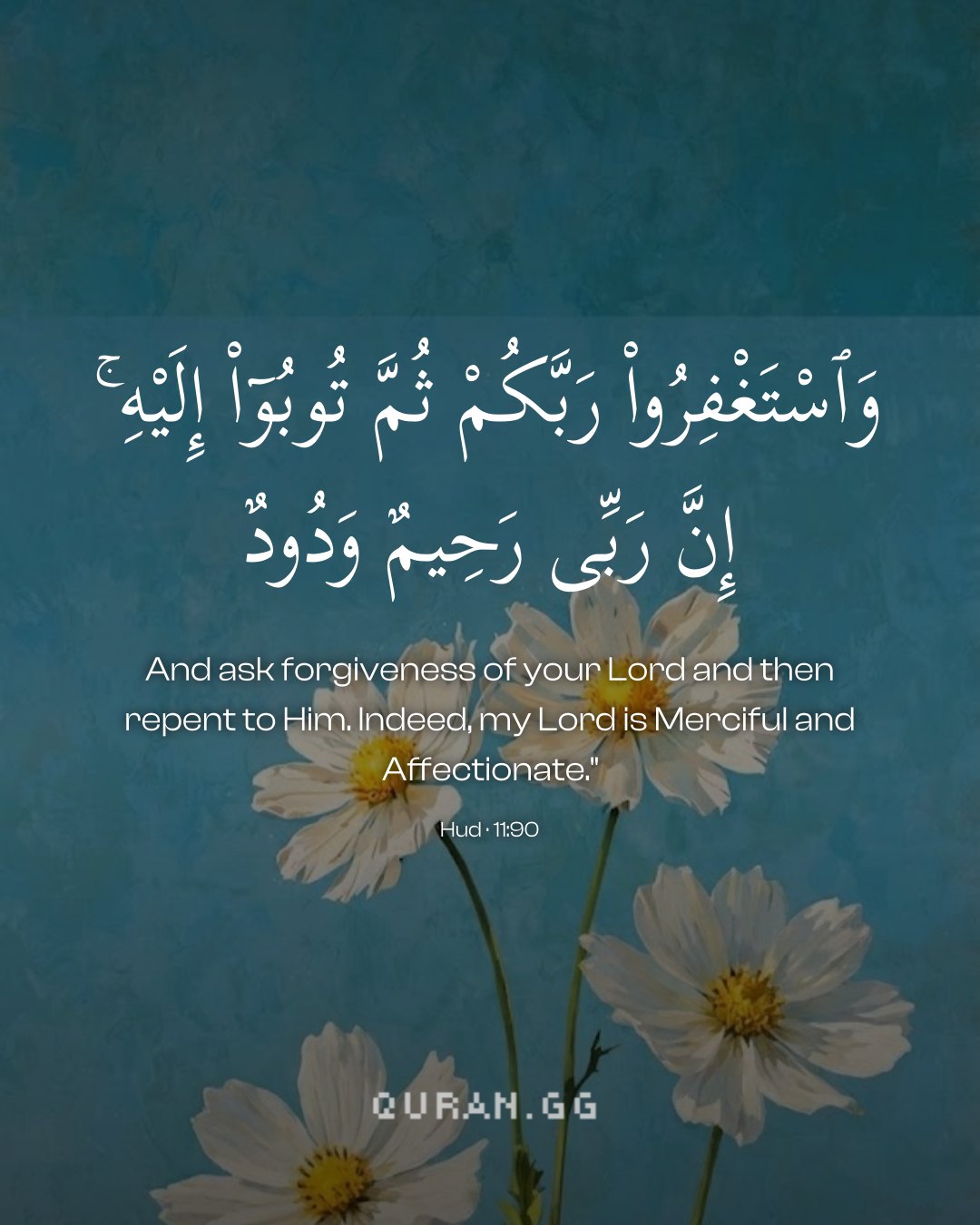
وَاسْتَغْفِرُواْ رَبَّكُمْ
(And ask forgiveness of your Lord) from the previous sins.
ثُمَّ تُوبُواْ إِلَيْهِ
(and turn unto Him in repentance.) In whatever evil actions you may encounter in the future. Concerning his statement,
إِنَّ رَبِّى رَحِيمٌ وَدُودٌ
(Verily, my Lord is Most Merciful, Most Loving.) to those who repent.
Ma'arif al-Qur'an
Mufti Muhammad ShafiOn ayahs 89–111
After having given this good counsel to them, he warned them of the punishment of Allah Ta` ala. He said:
And 0 my people, let not your hostility towards me cause you to suffer what was suffered by the people of Nuh, or the people of Hud, or the people of Salih. And the people of Lut are not far from you.
The sense of the last sentence is that the overturned habitations of the people of Sayyidna Lut (علیہ السلام) were close to Madyan where they were. Then, in terms of time, the punishment that came upon them was very close. From this they could learn their lesson and leave their obstinacy.
There are two types of acceptance of a precept—one is routine or unconscious acceptance by imitation and the other is acceptance after finding it to be right. In the first case, man accepts something because others accept it. In the second case man accepts it because, on the basis of reasoning, he found that it was right. While the former is only a formal acceptance, the latter is conscious discovery. Discovery of Truth at the level of reason is the real asset of a believer. This leads to that live, active belief which prompts him and enables him to stand in the midst of people and start representing the Truth to them, unmindful of everything else. Conscious discovery of truth is a substitute for everything else. One who receives this bounty is never in need of anything else. An unbeliever is satisfied with material achievement. But the believer is satisfied only when his reason is addressed. On receiving sustenance of this kind (conscious discovery), it becomes impossible for anyone to take a stand against it. Contradiction between talk and action is the result of formal faith, while consistency in talk and action is the result of conscious faith. In his interpretation of the word ‘shiqaq,’ meaning ‘opposition,’ Hasan al-Basri, the famous Sufi, says, ‘Should your enmity against me make you leave the path of Faith, you will be liable to receive the punishment meted out to the unbelievers.’ (Al-Qurtubi). Since the missionary appears as an ordinary man to the people, his critical approach is extremely disturbing to those who have attained a high status in society. That an ordinary man should venture to criticise them and their great ones seems unconscionable to them. That is why they develop a hatred for the preacher and become obdurate towards him. The development of such a mentality in a man amounts to his being put to a severe test, because he considers even a godly message insignificant if it is brought by an ‘ordinary’ preacher. In the process of ignoring a human being, he ignores God Himself.
Uthmani text of the Madinah mushaf (King Fahd Complex). Translation: Saheeh International. Tafsir via Quran.com.