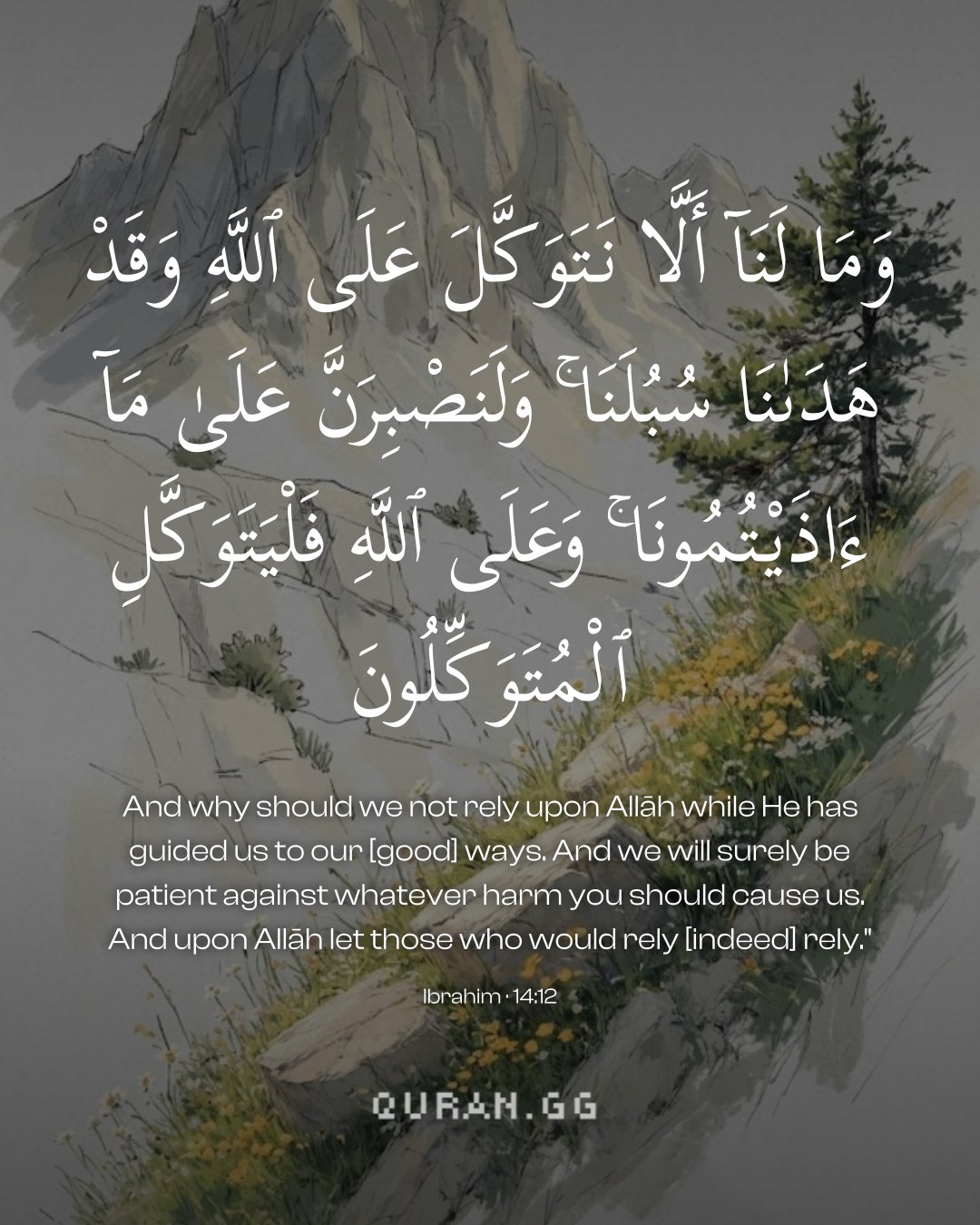
And why should we not rely upon Allāh while He has guided us to our [good] ways. And we will surely be patient against whatever harm you should cause us. And upon Allāh let those who would rely [indeed] rely."
The Argument between the Prophets and the Disbelievers
Allah narrates to us the arguments that ensued between the disbelievers and their Messengers. When their nations doubted the Message of worshipping Allah alone without partners, the Messengers said,
أَفِى اللَّهِ شَكٌّ
((What!) Can there be a doubt about Allah...) about His Lordship and having the exclusive right to be worshipped alone, being the only Creator of all creatures Verily, none besides Allah is worthy of worship, alone without partners with Him. Most nations were, and still are, affirming the existence of the Creator, but they call upon intermediaries besides Him whom they think will benefit them or bring them closer to Allah. Their Messengers said to them,
In the last verse here (8), it was said: قَالَ مُوسَىٰ إِن تَكْفُرُوا أَنتُمْ وَمَن فِي الْأَرْضِ جَمِيعًا (And Musa said, "If you are ungrateful, you and all those on earth, then, Allah is free of all needs, worthy of every praise.) " This was said by Sayyidna Musa (علیہ السلام) to his people. He is telling them that should they or, for that matter, all inhabitants of the earth become ungrateful to Allah Ta’ ala, it is not going to cause any loss to Allah Ta’ ala. As for Him, He needs no praise or gratitude for Himself. He is Independent. He is beyond that. He is intrinsically Praised and deserving of praise. If you do not praise Him, the angels do, all of them, and so does every particle of this universe.
So, whatever good there is in gratitude, that is for you alone. There-fore, when you are asked to be grateful by Allah Ta’ ala, there is no gain for Him in doing so. In fact, it is His infinite mercy reaching out to you in your interest.
Tazkirul Quran
Maulana Wahiduddin KhanOn ayahs 12–13
When the people rejected each contemporary prophet in turn, saying ‘You are a human being like us,’ the real reason was not that they considered it necessary for the prophet to be superhuman. The real reason was the difference they observed between previous prophets and the contemporary prophet. The fact is that the past prophets were also, in their time, just like the contemporary prophet. But subsequently their followers weaved a halo of magical stories around them, so that their personalities were given a dramatic colour which they did not initially possess. Now the communities had before them on the one hand prophets, supposedly capable of performing certain tricks and feats and, on the other, a prophet of realistic calibre. In this comparison the previous prophets became perfect examples. When communities viewed the matter by these standards, they found the contemporary prophet a lesser man than the charismatic prophets of the past. So they rejected him with contempt. The prophets told their addressees that they could only exercise patience in answer to their objections, i.e. they wanted guidance at a superhuman level, while God had given them (the prophets) the capacity to give guidance only at a human level. The prophets said, ‘Under these circumstances, what can we do except tolerate your persecution and entrust the whole matter to God?’
Uthmani text of the Madinah mushaf (King Fahd Complex). Translation: Saheeh International. Tafsir via Quran.com.