Surah Ibrahim Ayah 18 (14:18) — Meaning & Tafsir | Quran.GG

Surah Ibrahim, Ayah 18

14:18 · Meaning and tafsir

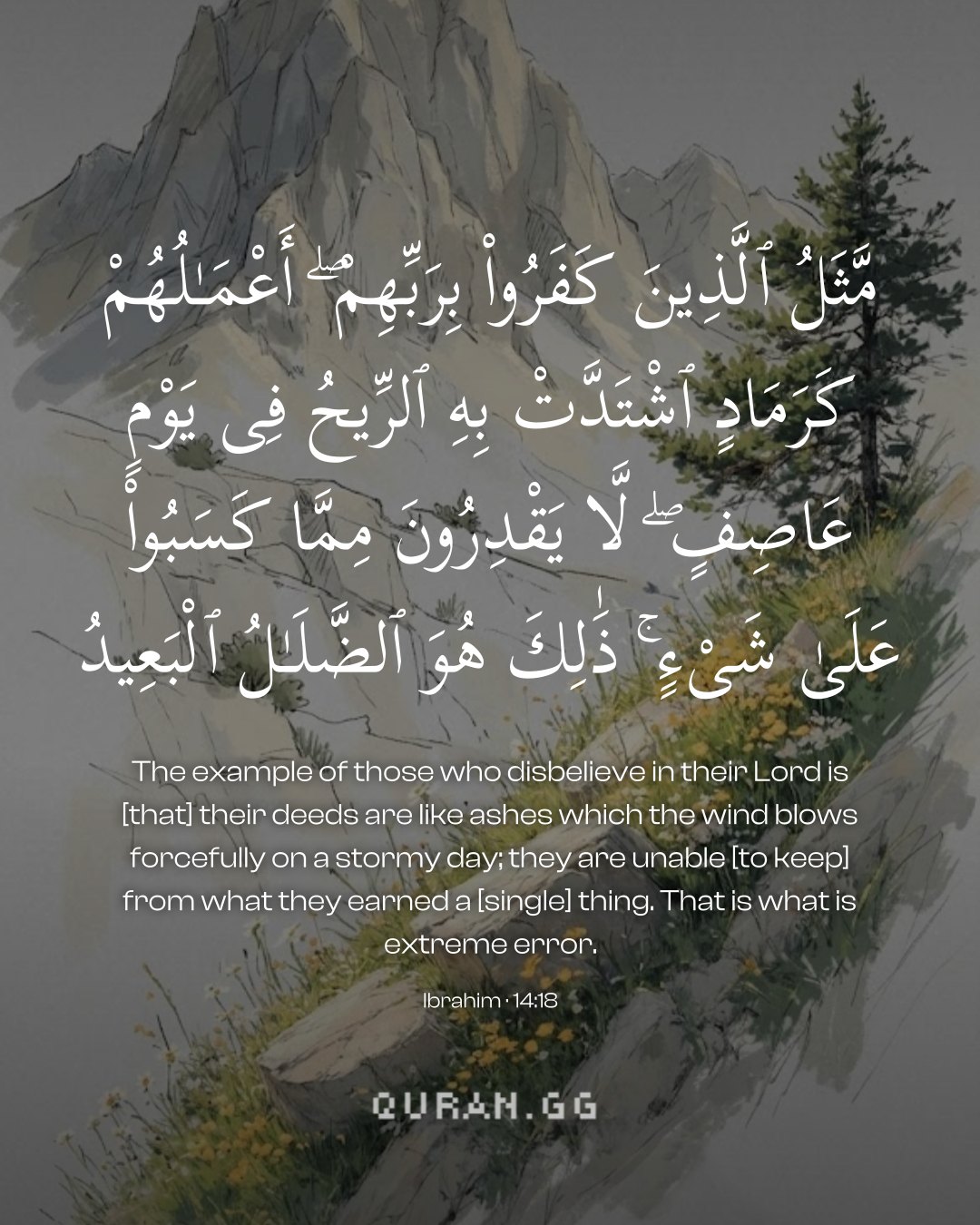
مَّثَلُ ٱلَّذِينَ كَفَرُوا۟ بِرَبِّهِمْ ۖ أَعْمَـٰلُهُمْ كَرَمَادٍ ٱشْتَدَّتْ بِهِ ٱلرِّيحُ فِى يَوْمٍ عَاصِفٍ ۖ لَّا يَقْدِرُونَ مِمَّا كَسَبُوا۟ عَلَىٰ شَىْءٍ ۚ ذَٰلِكَ هُوَ ٱلضَّلَـٰلُ ٱلْبَعِيدُ ١٨

The example of those who disbelieve in their Lord is [that] their deeds are like ashes which the wind blows forcefully on a stormy day; they are unable [to keep] from what they earned a [single] thing. That is what is extreme error.

Surah Ibrahim 14:18 in Arabic with its translation: “The example of those who disbelieve in their Lord is [that] their deeds are like ashes which the wind blows…”

Make something with this ayah

Turn it into a video for Stories, Reels or TikTok, recited by the reciter you pick, or an image on a background you choose. Free, in your browser.

Download this image

Tafsir Ibn Kathir (abridged)

A Parable for the Deeds of the Disbelievers

This is a parable that Allah has given for the deeds and actions of the disbelievers who worshipped others besides Him and rejected His Messengers, thus building their acts on groundless basis. Their actions vanished from them when they were most in need of their rewards. Allah said,

مَّثَلُ الَّذِينَ كَفَرُواْ بِرَبِّهِمْ أَعْمَالُهُمْ

(The parable of those who disbelieved in their Lord is that their works) on the Day of Judgment, when they will seek their rewards from Allah the Exalted. They used to think that they had something, but they will find nothing, except what remains of ashes when a strong wind blows on it,

فِي يَوْمٍ عَاصِفٍ

(on a stormy day;) They will not earn rewards for any of the good works they performed during this life, except what they can preserve of ashes during a day of strong wind. Allah said in other Ayat,

وَقَدِمْنَآ إِلَى مَا عَمِلُواْ مِنْ عَمَلٍ فَجَعَلْنَاهُ هَبَآءً مَّنثُوراً

(And We shall turn to whatever deeds they did, and We shall make such deeds as scattered floating particles of dust.)25:23,

مَثَلُ مَا يُنْفِقُونَ فِى هِـذِهِ الْحَيَوةِ الدُّنْيَا كَمَثَلِ رِيحٍ فِيهَا صِرٌّ أَصَابَتْ حَرْثَ قَوْمٍ ظَلَمُواْ أَنفُسَهُمْ فَأَهْلَكَتْهُ وَمَا ظَلَمَهُمُ اللَّهُ وَلَـكِنْ أَنفُسَهُمْ يَظْلِمُونَ

(The parable of what they spend in this world is that of a wind which is extremely cold; it struck the harvest of a people who did wrong against themselves and destroyed it. Allah wronged them not, but they wronged themselves.)3:117,and,

يأَيُّهَا الَّذِينَ ءَامَنُواْ لاَ تُبْطِلُواْ صَدَقَـتِكُم بِالْمَنِّ وَالاٌّذَى كَالَّذِى يُنفِقُ مَالَهُ رِئَآءَ النَّاسِ وَلاَ يُؤْمِنُ بِاللَّهِ وَالْيَوْمِ الاٌّخِرِ فَمَثَلُهُ كَمَثَلِ صَفْوَانٍ عَلَيْهِ تُرَابٌ فَأَصَابَهُ وَابِلٌ فَتَرَكَهُ صَلْدًا لاَّ يَقْدِرُونَ عَلَى شَىْءٍ مِّمَّا كَسَبُواْ وَاللَّهُ لاَ يَهْدِي الْقَوْمَ الْكَـفِرِينَ

(O you who believe! Do not render in vain your Sadaqah (charity) by reminders of your generosity or by injury, like him who spends his wealth to be seen of men, and he does not believe in Allah, nor in the Last Day. His parable is that of a smooth rock on which is a little dust; on it falls heavy rain which leaves it bare. They are not able to do anything with what they have earned. And Allah does not guide the disbelieving people.)2:264 Allah said in this Ayah,

ذلِكَ هُوَ الضَّلاَلُ الْبَعِيدُ

(That is the straying, far away from the right path) meaning, their work and deeds were not based on firm, correct grounds, and thus, they lost their rewards when they needed them the most,

ذلِكَ هُوَ الضَّلاَلُ الْبَعِيدُ

(That is the straying, far away from the right path.)

Ma'arif al-Qur'an

In the last verse here (8), it was said: قَالَ مُوسَىٰ إِن تَكْفُرُ‌وا أَنتُمْ وَمَن فِي الْأَرْ‌ضِ جَمِيعًا (And Musa said, "If you are ungrateful, you and all those on earth, then, Allah is free of all needs, worthy of every praise.) " This was said by Sayyidna Musa (علیہ السلام) to his people. He is telling them that should they or, for that matter, all inhabitants of the earth become ungrateful to Allah Ta’ ala, it is not going to cause any loss to Allah Ta’ ala. As for Him, He needs no praise or gratitude for Himself. He is Independent. He is beyond that. He is intrinsically Praised and deserving of praise. If you do not praise Him, the angels do, all of them, and so does every particle of this universe.

So, whatever good there is in gratitude, that is for you alone. There-fore, when you are asked to be grateful by Allah Ta’ ala, there is no gain for Him in doing so. In fact, it is His infinite mercy reaching out to you in your interest.

Tazkirul Quran

In the eyes of God, man’s greatest crime is his adoption of an attitude of arrogance and obstinacy when he is called upon to submit to God. For such people there shall be disgrace in this world and in the Hereafter. Their punishment will be so severe that they will find themselves constantly on the verge of death and destruction. When a man becomes tyrannical and arrogant towards others, he does it with some backing. The opponents of Islam felt their position to be impregnable because they followed the religion of their ‘great men’. In comparison the Prophet and his Companions appeared to them to be lesser mortals. It was this mentality which prompted them to consider legitimate all types of persecution of the Prophet and his Companions. It was due to their linking themselves with their ‘great men’ that they became bold enough to take all sorts of punitive action against the so-called ‘small men’.

Uthmani text of the Madinah mushaf (King Fahd Complex). Translation: Saheeh International. Tafsir via Quran.com.