Tafsir Ibn Kathir (abridged)
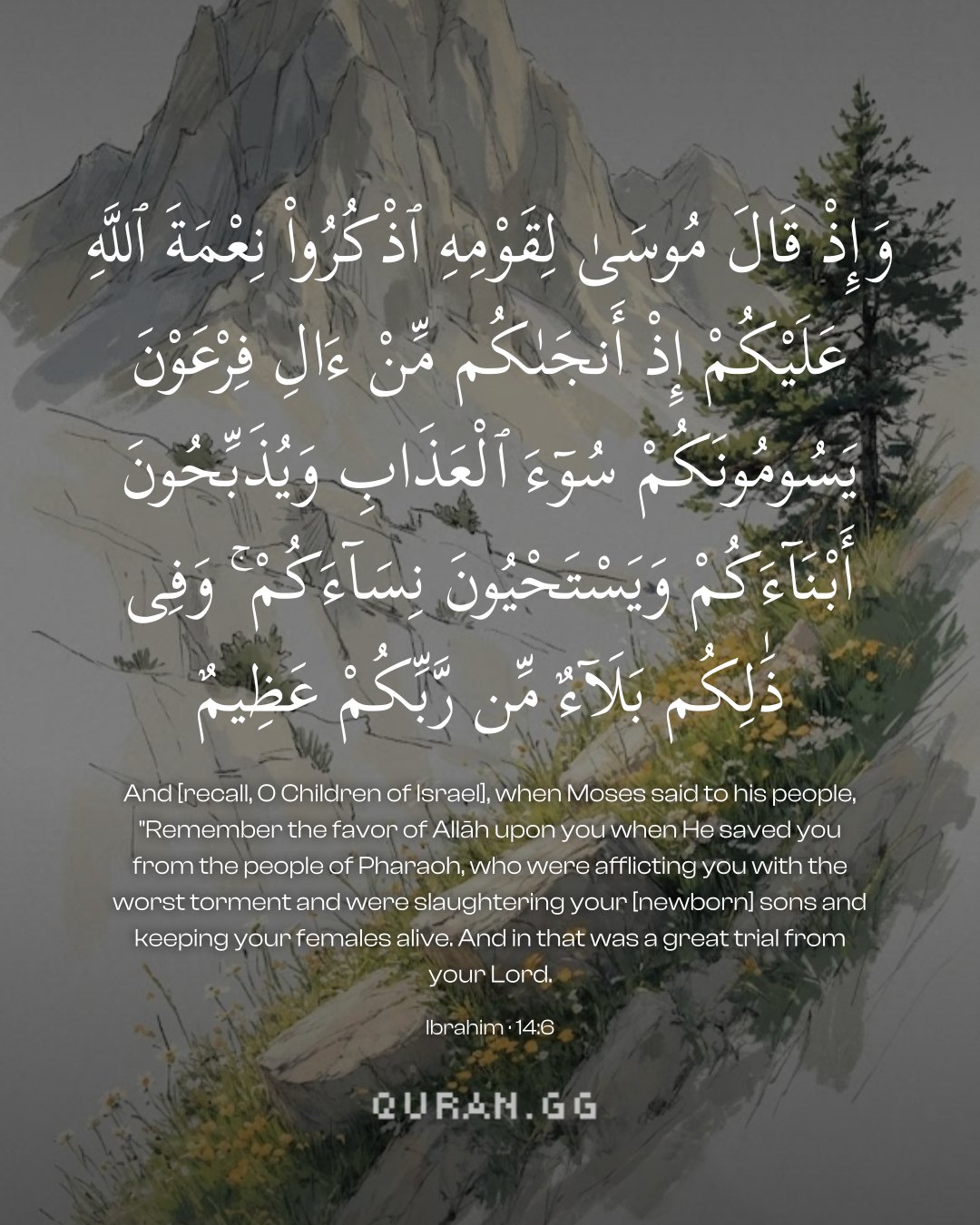
Allah states that Musa reminded his people about Allah's annals anddays and of Allah's favors and bounties that He bestowed on them,when He saved them from Fir` awn and his people and the tormentand disgrace they used to exert on them.
They used to slaughter whomever they could find among their sons and let their females live. Allah delivered them from all this torment, and this is a great bounty, indeed. This is why Allah described this affliction,
وَفِى ذَلِكُمْ بَلاَءٌ مِّن رَّبِّكُمْ عَظِيمٌ
(and in it was a tremendous trial from your Lord.) `for He granted you (O Children of Israel) a great favor for which you are unable to perfectly thank Him.' Some scholars said that this part of the Ayah means, `what Fir`awn used to do to you was a tremendous
بَلاَءً
(trial.)' Both meanings might be considered here and Allah knows best. Allah said in another Ayah ,
وَبَلَوْنَـهُمْ بِالْحَسَنَـتِ وَالسَّيِّئَاتِ لَعَلَّهُمْ يَرْجِعُونَ
(And We tried them with good and evil in order that they might turn (to Allah). ) 7:168 Allah's statement next,
وَإِذْ تَأَذَّنَ رَبُّكُمْ
(And (remember) when your Lord proclaimed) means, proclaimed and made known His promise to you. It is possible that this Ayah means, your Lord has vowed and sworn by His might, grace and exaltness. Allah said in a similar Ayah,
وَإِذْ تَأَذَّنَ رَبُّكَ لَيَبْعَثَنَّ عَلَيْهِمْ إِلَى يَوْمِ الْقِيَـمَةِ
(And (remember) when your Lord declared that He would certainly keep on sending against them (i.e. the Jews), till the Day of Resurrection.) 7:167 Allah said,
لَئِن شَكَرْتُمْ لأَزِيدَنَّكُمْ
(If you give thanks, I will give you more;) meaning, `if you appreciate My favor on you, I will give you more of it,
وَلَئِن كَفَرْتُمْ
(but if you are thankless) if you are not thankful for My favors, covering and denying, them,
إِنَّ عَذَابِى لَشَدِيدٌ
(verily, My punishment is indeed severe), by depriving you of the favor and punishing you for being unappreciative of it.' A Hadith states that,
«إِنَّ الْعَبْدَ لَيُحْرَمُ الرِّزْقَ بِالذَّنْبِ يُصِيبُه»
(A servant might be deprived of a provision (that was written for him) because of a sin that he commits. ) Allah said,
وَقَالَ مُوسَى إِن تَكْفُرُواْ أَنتُمْ وَمَن فِى الاٌّرْضِ جَمِيعًا فَإِنَّ اللَّهَ لَغَنِىٌّ حَمِيدٌ
(And Musa said: "If you disbelieve, you and all on earth together, then verily, Allah is Rich (free of all needs), Worthy of all praise.") Allah does not need the gratitude of His servants, and He is worthy of all praise even if the disbelievers disbelieve in Him,
إِن تَكْفُرُواْ فَإِنَّ اللَّهَ غَنِىٌّ عَنكُمْ
(If you disbelieve, then verily, Allah is not in need of you) 39:7 and,
فَكَفَرُواْ وَتَوَلَّواْ وَّاسْتَغْنَى اللَّهُ وَاللَّهُ غَنِىٌّ حَمِيدٌ
(So they disbelieved and turned away. But Allah was not in need (of them). And Allah is Rich (free of all needs), Worthy of all praise.) 64:6 In his Sahih, Muslim recorded that Abu Dharr said that the Messenger of Allah ﷺ said that his Lord the Exalted and Most Honored said,
«يَا عِبَادِي لَوْ أَنَّ أَوَّلَكُمْ وَآخِرَكُمْ وَإِنْسَكُمْ وَجِنَّكُمْ كَانُوا عَلَى أَتْقَى قَلْبِ رَجُلٍ وَاحِدٍ مِنْكُمْ، مَا زَادَ ذَلِكَ فِي مُلْكِي شَيْئًا، يَا عِبَادِي لَوْ أَنَّ أَوَّلَكُمْ وَآخِرَكُمْ وَإِنْسَكُمْ وَجِنَّكُمْ كَانُوا عَلَى أَفْجَرِ قَلْبِ رَجُلٍ وَاحِدٍ مِنْكُمْ، مَا نَقَصَ ذَلِكَ فِي مُلْكِي شَيْئًا، يَا عِبَادِي لَوْ أَنَّ أَوَّلَكُمْ وَآخِرَكُمْ وَإِنْسَكُمْ وَجِنَّكُمْ قَامُوا فِي صَعِيدٍ وَاحِدٍ، فَسَأَلُونِي،فَأَعْطَيْتُ كُلَّ إِنْسَانٍ مَسْأَلَتَهُ، مَا نَقَصَ ذَلِكَ مِنْ مُلْكِي شَيْئًا إِلَّا كَمَا يَنْقُصُ المِخْيَطُ إِذَا أُدْخِلَ الْبَحْر»
(O My servants. If the first and the last among you, mankind and Jinns among you, had the heart of the most pious and righteous man among you, that will not increase my kingdom in the least. O My servants! If the first and the last among you, mankind and the Jinns among you, had the heart of the most wicked man among you, that will not decrease My kingdom in the least. O My servants! If the first and the last among you, the mankind and Jinns among you, stood in one flat area and each asked me (what they wish), and I gave each one of them what they asked, that will not decrease My kingdom except by that which the needle carries (of water) when inserted in the ocean.") Verily, all praise and glory are due to Allah, the Rich free of need, the Worthy of all praise.