Muhammad bin Ishaq recorded a Hadith of Umm Salamah in his Sirah, and Ahmad bin Hanbal recorded from Ibn Mas`ud, the story of the Hijrah (migration) to Ethiopia from Makkah. The narration mentions that Ja`far bin Abi Talib recited the first part of this Surah to An-Najashi and his companions.
بِسْمِ اللَّهِ الرَّحْمَـنِ الرَّحِيمِ
In the Name of Allah, the Most Gracious, the Most Merciful.
The Story of Zakariyya and His Supplication for a Son The discussion about the separate letters has already preceded at the beginning ofSurat Al-Baqarah.
Concerning Allah's statement,
ذِكْرُ رَحْمَتِ رَبِّكَ
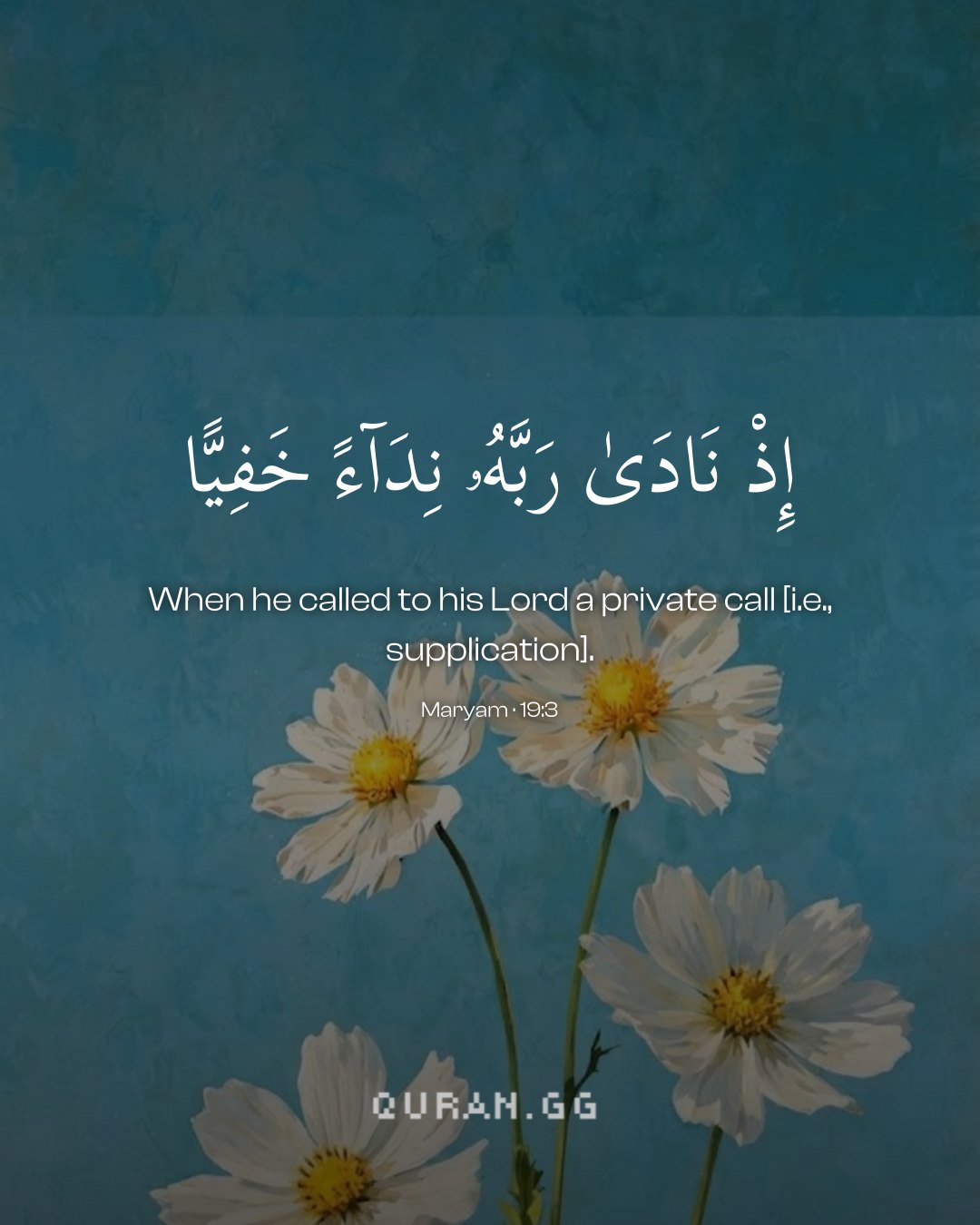
(A reminder of the mercy of your Lord) This means that this is a reminder of Allah's mercy upon His servant Zakariyya. Yahya bin Ya`mar recited it, (ذَكَّرَ رَحْمَةَ رَبكَ عبدَه زكريا) "He has reminded of your Lord's mercy to His servant Zakariyya." The word Zakariyya in the Ayah has been recited with elongation and also shortened. Both recitations are well-known. He was a great Prophet from the Prophets of the Children of Israel. In Sahih Al-Bukhari, it is recorded that the Prophet said about Zakariyya that He was a carpenter who used to eat from what he earned with his own hand through carpentry. Concerning Allah's statement,
نِدَاءً خَفِيًّا (a low voice - 19:3) tells us that it is better to beseech Allah in supplication in undertone. Sayyidna Sa'd Ibn Abi Waqqas has narrated that the Holy Prophet ﷺ once said.
ان خیر الذکر الخفی ، وخیر الرزق ما یکفی
"Surely the best way to make supplication to Allah is in
undertone and the best sustenance is that which is sufficient for one's needs (i.e. neither more nor less than required) " (Qurtubi)
Tazkirul Quran
Maulana Wahiduddin KhanOn ayahs 3–5
Zachariah, or Zakariyyah, who was the chief administrator of the Haykal (Solomon’s temple) was married to Mary’s mother’s sister. Maryam was only five years old when her father, Imran, died. After his death, Zachariah was appointed in his place as the leader of the priests. At that time, Mary, in fulfillment of the pledge made by her mother, was placed in the service of the Haykal. As Zachariah was a close relative of hers and also the chief of the Haykal, he was given the responsibility of bringing her up. Zachariah silently prayed to God and the prayer was granted in an astonishing and wonderful manner. This shows what real prayer is. True prayer is a spontaneous expression of the firm belief that all powers vest in God. Man receives every single thing only on His giving it to him, and no one can own a thing if He does not confer it on him. True prayer needs to be directed solely towards the one and only God. That is why true prayer gushes forth when one is alone—when there is nobody present except God and oneself.
Uthmani text of the Madinah mushaf (King Fahd Complex). Translation: Saheeh International. Tafsir via Quran.com.