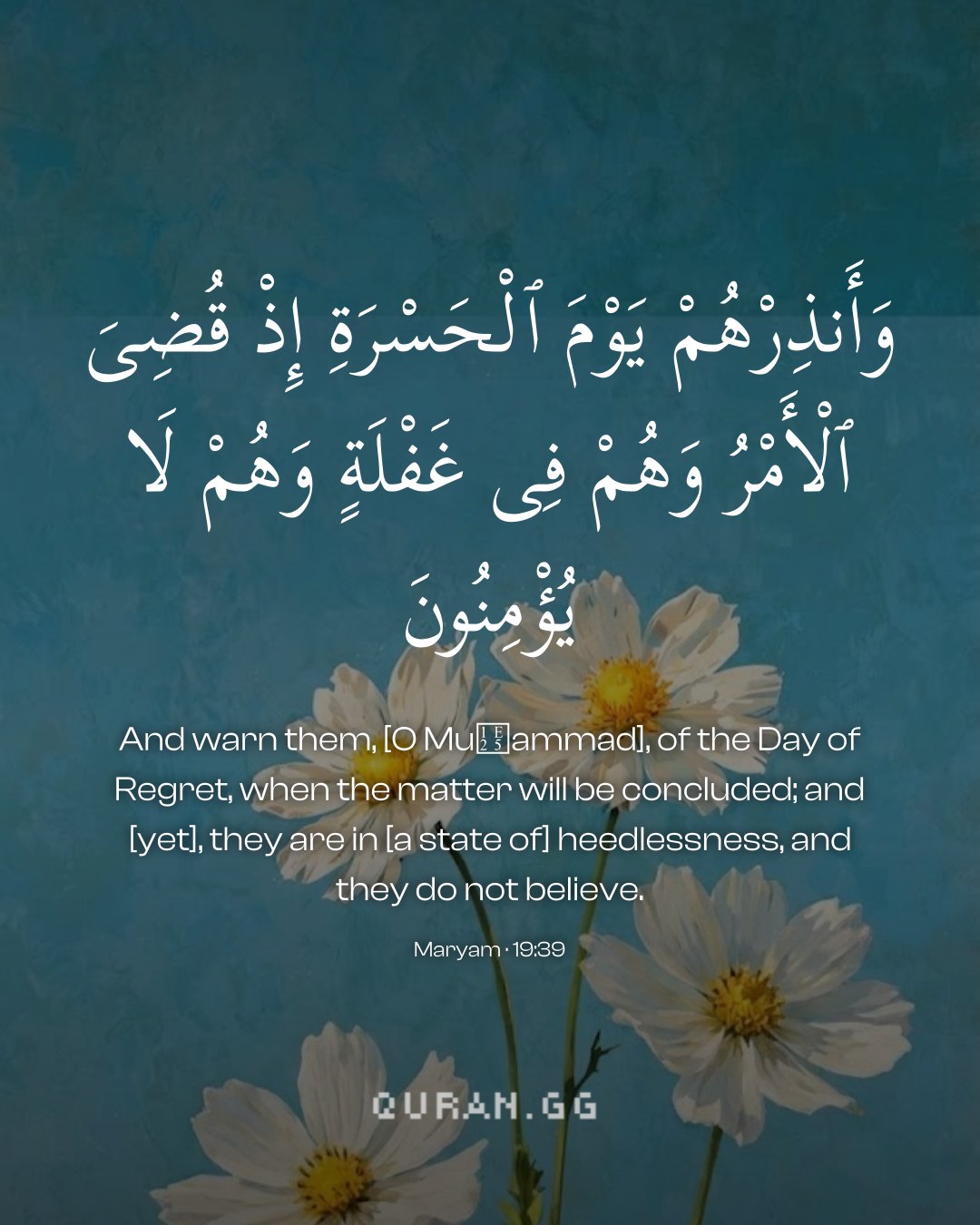
And warn them, [O Muḥammad], of the Day of Regret, when the matter will be concluded; and [yet], they are in [a state of] heedlessness, and they do not believe.
Allah, the Exalted, says informing about the disbelievers on the Day of Resurrection that they will be made to have the clearest hearing and sight. This is as Allah says,
(And if you only could see when the criminals hang their heads before their Lord (saying): "Our Lord! We have now seen and heard.") 32:12 They will say that when it will not benefit them, nor will it be of any use to them. If they had used these senses properly before seeing the torment, then it would have brought them some benefit and saved them from the Allah's punishment. This is why Allah says,
يَوْمَ الْحَسْرَةِ (the Day of Remorse) in verse 39 refers to the Day of Judgment and has been called the Day of Remorse because on that day persons consigned to Hell as punishment for their evil deeds will regret their disregard of the righteous way of life, and wish that if they had lived the life of true believers, they too would have been in Paradise instead of being punished in Hell. Even those who have been rewarded with Paradise will feel a different kind of remorse. Al-Tabarani and Abu Ya` la have quoted the following saying of the Prophet ﷺ on the authority of Sayyidna Mu'adh ؓ .
"The people of Paradise will regret only one thing, namely those moments which were spent without the remembrance of Allah."
And Al-Baghawi (رح) has narrated quoting Abu Hurairah ؓ that The Holy Prophet ﷺ said:
"Everyone will experience remorse and regret after death."
The companions of the Holy Prophet ﷺ asked him what would be that remorse and regret about? Then The Holy Prophet ﷺ explained that those who acted righteously will regret not having performed more righteous deeds which would have helped them attain a higher position in Paradise. On the other hand, the evil doers will repent their evil actions and sins. (Mazhari)
Tazkirul Quran
Maulana Wahiduddin KhanOn ayahs 38–39
The Messiah and all the other prophets called upon the people to tread the same straight path, namely, that of taking God as their Lord and worshipping Him alone. But, it has always happened that, by willful misinterpretations and false explanations, there have been deviations from the straight path. Different people have emphasized different points of the doctrine. These divergent views have led to such major differences that a single religion has been divided into several religions. The Truth is manifested in its entirety in this world too. But because here man has been given freedom of choice so that he may be put to the test, as the very purpose of his existence is trial, he may accept the Truth or he may not. Due to this temporary freedom, he falls a prey to misunderstanding and starts behaving arrogantly. He is shown the right path of God but, in spite of arguments in its favour, he does not accept it. Today his eyes and ears appear to be altogether devoid of the powers of seeing and hearing, but, in the Hereafter, when his freedom is snatched away from him, these very same eyes and very same ears of his will become so powerful that he will have no choice but to see and hear the Truth.
Uthmani text of the Madinah mushaf (King Fahd Complex). Translation: Saheeh International. Tafsir via Quran.com.