The Reply of Ibrahim's Father
Allah, the Exalted, informs of the reply of Ibrahim's father to his son, Ibrahim, in reference to what he was calling him to. He said,
أَرَاغِبٌ أَنتَ عَنْ آلِهَتِى يإِبْرَهِيمُ
(Do you revile my gods, O Ibrahim) This means, "If you do not want to worship them (the idols) and you are not pleased with them, then at least stop cursing, abusing, and reviling them. For verily, if you do not cease, I will punish you, curse you and revile you." This is the meaning of his statement;
لأَرْجُمَنَّكَ
(La'arjumannaka.) Ibn `Abbas, As-Suddi, Ibn Jurayj, Ad-Dahhak and others said this. Concerning His statement,
Continue reading the tafsir of ayahs 46–48Ma'arif al-Qur'an
Mufti Muhammad Shafi
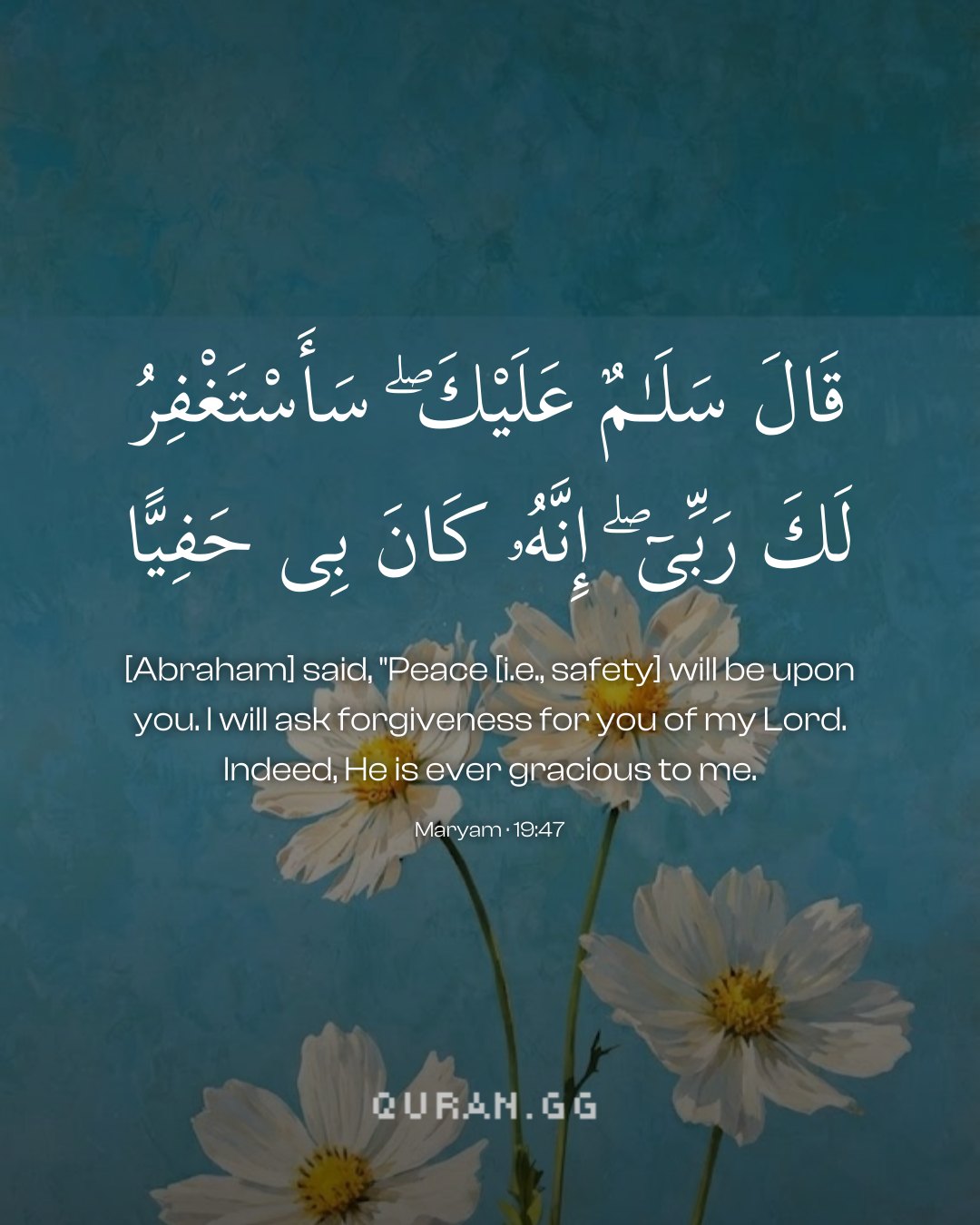
سَلَامٌ عَلَيْكَ (Peace on you) Here the word (Peace) may carry two meanings. One, that the word سَلَام is used to signify severance of relations in a polite manner so as not to cause hurt to his father. This practice has been described in the Holy Qur'an as an attribute of good and pious people. An example in point are the words.
وَإِذَا خَاطَبَهُمُ الْجَاهِلُونَ قَالُوا سَلَامًا
"When ignorant people speak to them, they reply peacefully." (25:63)
It means that when the ignorant people say foolish things to them they simply say 'Salami (peace) instead of getting involved into an argument with them. This is a way of conveying to them that though I do not agree with your views I will not harm you. The second explanation is that the word سَلَام has been used in the conventional sense. But here the problem is that The Holy Prophet ﷺ has forbidden the believers to be the first to greet an infidel with the word سَلَام on meeting him. The following saying of The Holy Prophet ﷺ has been reported in Sahih al-Bukhari and Muslim on the authority of Sayyidna Abu Hurairah ؓ .
لَا تَبدأ والیھود و النصاریٰ بالسَّلَام
"Do not be the first to greet Jews and Christians with the word سَلَام
On the other hand Sahih al-Bukhari and Muslim have also reported through Sayyidna Usamah ؓ ' that The Holy Prophet ﷺ had greeted first a group of people with the word in which infidels, polytheists and Muslims were all present.
This explains the differences which have developed among jurists on the question of propriety or otherwise of this practice. By their words and actions eminent companions (of the Holy Prophet ﷺ), their followers and leaders of religious thought have expressed different views on this issue. Qurtubi has treated this subject in great detail while explaining this verse in his book Ahkam ul-Qur’ an. Imam An-Nakha` i has ruled that when one meets an infidel, a Jew or a Christian on a religious or a worldly need, then there is no harm in taking lead in greeting him with the word سَلَام ، but one should avoid greeting first when there is no need to meet him. Thus both the sayings of the Prophet ﷺ (حَدِیث) have been reconciled.
سَأَسْتَغْفِرُ لَكَ رَبِّي (I shall seek forgiveness for you from my Lord - 19:47). Here again the problem is that to ask for forgiveness for the sins of an infidel is prohibited and unlawful by Islamic laws, the Holy Prophet ﷺ had said to his uncle Abu Talib واللہ لاستغفرنّ لک مالم انہ عنہ ، that is;
"By God I shall keep on praying to Allah for your forgiveness until I am forbidden to do so by Him."
On this the following verse was revealed:
مَا كَانَ لِلنَّبِيِّ وَالَّذِينَ آمَنُوا أَن يَسْتَغْفِرُوا لِلْمُشْرِكِينَ
"It is not for the Prophet and the believers to seek forgiveness for the Mushriks." (9:113)
After the revelation of this verse he stopped seeking forgiveness for his uncle.
The answer to this confusion is that Sayyidna Ibrahim (علیہ السلام) had promised his father to seek Divine Mercy for him before such a prayer was forbidden. The prohibition was imposed after this event. Allah Ta` ala has mentioned this event in Surah Mumtahinna where this exception is clearly indicated.
إِلَّا قَوْلَ إِبْرَاهِيمَ لِأَبِيهِ لَأَسْتَغْفِرَنَّ لَكَ
Except that Ibrahim said to his father "Certainly I shall ask pardon for you". - 60:4.
This is more clear in Surah Taubah in the verse following the verse.
مَا كَانَ لِلنَّبِيِّ وَالَّذِينَ آمَنُوا أَن يَسْتَغْفِرُوا لِلْمُشْرِكِينَ
"It is not for the Prophet and the believers to seek forgiveness for the Mushriks." - 9:114.
وَمَا كَانَ اسْتِغْفَارُ إِبْرَاهِيمَ لِأَبِيهِ إِلَّا عَن مَّوْعِدَةٍ وَعَدَهَا إِيَّاهُ فَلَمَّا تَبَيَّنَ لَهُ أَنَّهُ عَدُوٌّ لِّلَّـهِ تَبَرَّأَ مِنْهُ
"And the prayer of Ibrahim for the forgiveness of his father was not but due to a promise he had made to him. Later, when it became clear to him that he was an enemy of Allah, he withdrew himself from him." - 9:114.
This shows that Sayyidna Ibrahim's (علیہ السلام) promise to his father to invoke Allah's Mercy for him was made before the latter's firm adherence to infidelity, and his hostility to Allah became clearly evident. When the position was no longer in doubt Sayyidna Ibrahim (علیہ السلام) announced his dissociation from his father.
Abraham was born in Iraq. His father, Azar, was a polytheist. When Abraham received prophethood, he advised his father to give up polytheism and start worshipping God, or face God’s retribution. Worship of Satan does not mean actually worshipping Satan himself, but worshipping something indicated by Satan. Although it is an inherent part of human nature to feel the need to glorify some being, place it in an elevated position and then bow down and pay homage to it, the real focus of such feelings should be and is God. But, Satan, by various methods, influences people and diverts their minds from this in order to make them worship things other than God, i.e. place them on a par with those who associate others with God and offer only to others what they should offer to God.
Uthmani text of the Madinah mushaf (King Fahd Complex). Translation: Saheeh International. Tafsir via Quran.com.