They were succeeded by Wicked People and Good People
After Allah mentioned the party of blessed ones -- the Prophets and those who followed them by maintainig the limits set by Allah and His commandments, fulfilling what Allah ordered and avoiding His prohibitions -- then He mentions,
(خَلَفَ مِنْ بَعْدِهِمْ خَلْفٌ) (there has succeeded them a posterity.) This means later generations.
أَضَاعُواْ الصَّلَـوةَ
(who have lost Salah) Losing their prayers is when they do not consider the prayers obligatory. Therefore they lose, because the prayer is the pillar and foundation of the religion. It is the best of the servants' deeds. Thus, these people will occupy themselves with worldly desires and delights, and they will be pleased with the life of this world. They will be tranquil and at ease in the worldly appetites. Therefore, these people will meet with Ghaiy, which means loss on the Day of Resurrection. Al-Awza`i reported from Musa bin Sulayman, who reported from Al-Qasim bin Mukhaymirah that he said concerning Allah's statement,
فَخَلَفَ (Khalf) means bad successors, while فَخَلَفَ (Khalaf) means good successors. (Mazhari) Mujahid (رح) has reported that when the Day of Judgment would be near and the pious people would all be dead and gone, people will lose interest in prayers and indulge in all sort of vices and evil deeds.
Offering prayers outside fixed time or not with congregation (جَمَاعَت) is a default and of no avail, and is a great sin.
Most exegetes / commentators are of the view that offering prayers after its time has lapsed is a default of prayers (اضَاعُوا الصَّلٰوۃَ ). Among them are Sayyidna ` Abdullah Ibn Masud, Nakhai, Qasim, Mujahid, Ibrahim and ` Umar Ibn ` Abdul ` Aziz. While others consider that any lapse in the form and conditions of prayers is اِضَاعتِ صلٰوۃ and includes the lapse of time as well. Still others believe that offering of prayers at home and not with the congregation (جَمَاعَت) is اِضَاعتِ صلٰوۃ (Qurtubi, Bahr ul-Muhit).
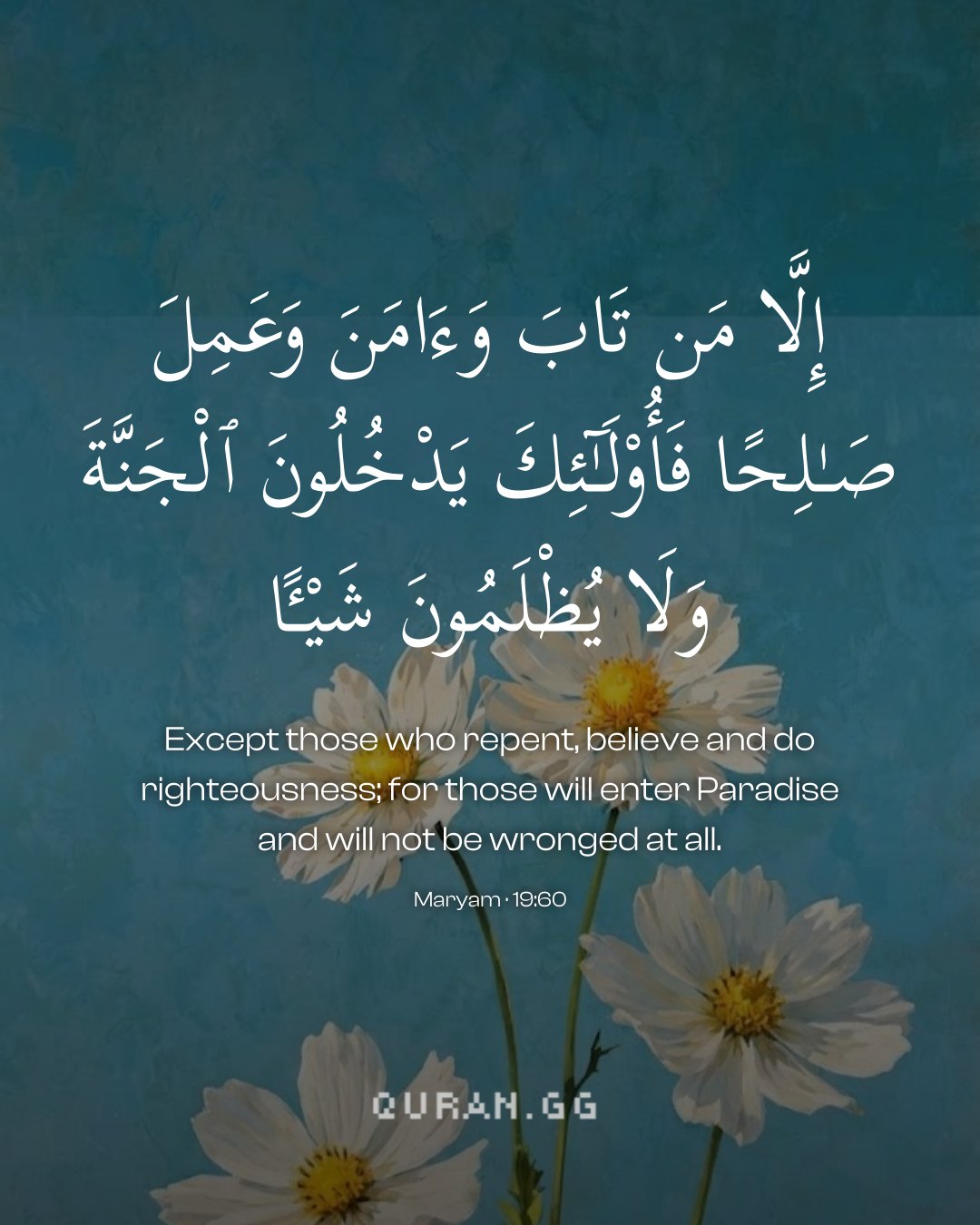
A distinctive trait of those whose characters are moulded by the preaching of the prophets, is that they are no longer slaves of their base desires but rise above them. They turn into individuals who always remember God; indeed, the essence of religion is remembrance of God, the organized expression of which is prayer (salat). If the generations that come after the prophets become negligent of God and start following their base desires, they will figure, in the eyes of God, as people who have gone astray. Being affiliated to a prophet shall be of no use to them. They shall receive what they deserve. Of them, only those shall be spared who return to the original religion, and adopt a life of faith and virtuous deeds. Those who strive for the life Hereafter, do not immediately receive the fruits of their labours and sacrifices. For this reason, they may have misgivings that this is a path of pointless endeavour. But this is a mere misunderstanding. The fact is that, just as those who devote their efforts to worldly affairs achieve corresponding results, so also will those who strive for the life of the Hereafter be requited in full measure. Nobody need harbour any doubts about this.
Uthmani text of the Madinah mushaf (King Fahd Complex). Translation: Saheeh International. Tafsir via Quran.com.