Tafsir Ibn Kathir (abridged)
The Angels do not descend, except by Allah's Command
Imam Ahmad recorded that Ibn `Abbas said that the Messenger of Allah ﷺ said to Jibril,
«مَا يَمْنَعُكَ أَنْ تَزُورَنَا أَكْثَرَ مِمَّا تَزُورُنَا؟»
(What prevents you from visiting us more than you do) Then this Ayah was revealed,
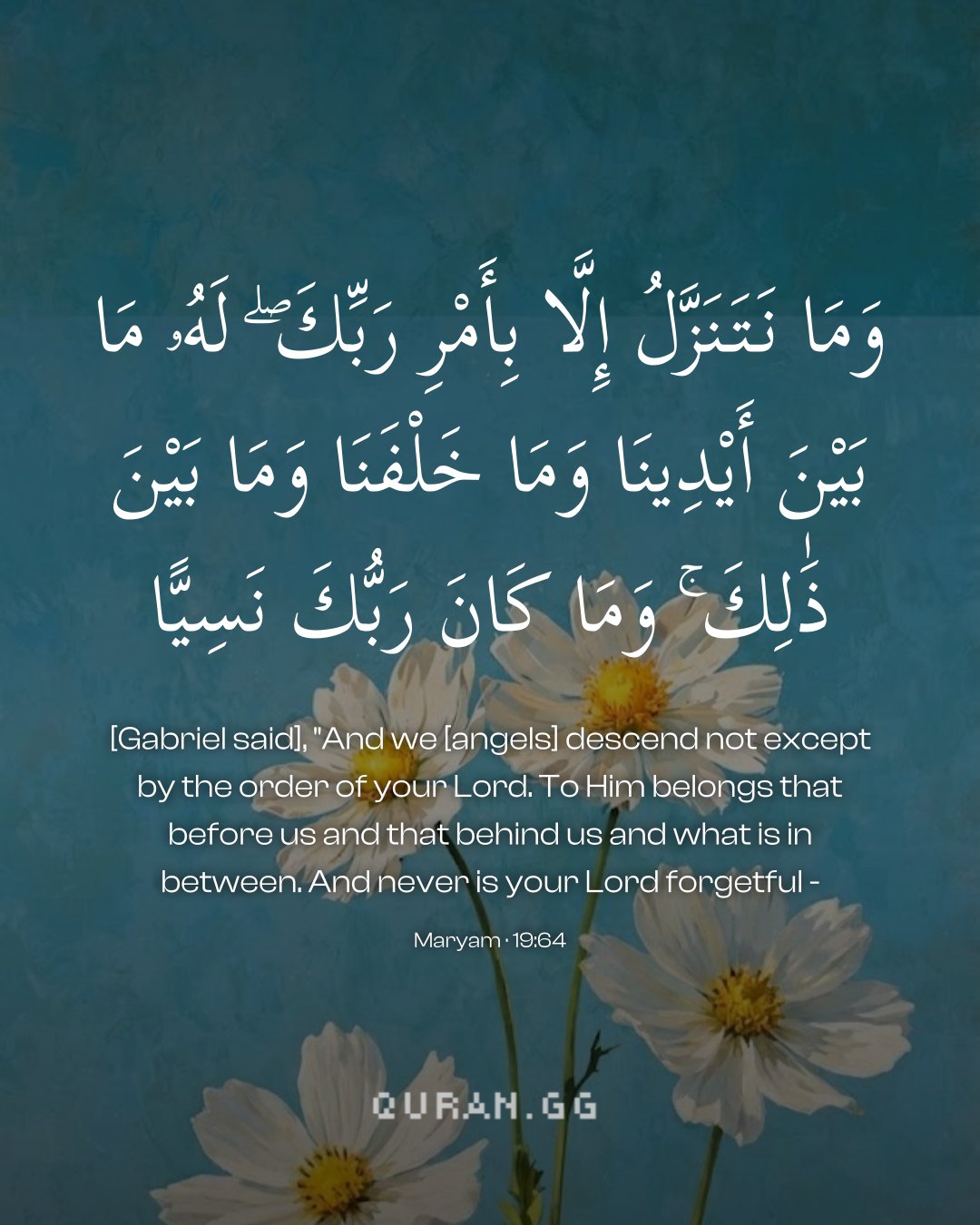
وَمَا نَتَنَزَّلُ إِلاَّ بِأَمْرِ رَبِّكَ
(And we descend not except by the command of your Lord.) Al-Bukhari was alone in recording it and he related it with the Tafsir of this Ayah. Al-`Awfi reported from Ibn `Abbas that he said, "Jibril was kept from visiting the Messenger of Allah ﷺ , so he was disturbed and grieved because of this. Then, Jibril came to him and said, `O Muhammad,
وَمَا نَتَنَزَّلُ إِلاَّ بِأَمْرِ رَبِّكَ
(And we descend not except by the command of your Lord.)"' Allah said,
لَهُ مَا بَيْنَ أَيْدِينَا وَمَا خَلْفَنَا
(To Him belongs what is before us and what is behind us,) It has been said that the meaning of "what is before us" refers to that which is in this life and "what is behind us" refers to the Hereafter.
وَمَا بَيْنَ ذلِكَ
(and what is between those two;) This means what is between two blows of the Sur. This is the opinion of Abu Al-`Aliyah, `Ikrimah and Mujahid. This was also stated by Sa`id bin Jubayr and Qatadah in one narration from them. As-Suddi and Ar-Rabi` bin Anas held this opinion as well. It has also been said,
مَا بَيْنَ أَيْدِينَا
(what is before us) means the future matters of the Hereafter.
وَمَا خَلْفَنَا
(what is behind us,) means what has taken place in this life,
وَمَا بَيْنَ ذلِكَ
(what is between those two;) means what happens between this life and the Hereafter. A statement like this explanation has been reported from Ibn `Abbas, Sa`id bin Jubayr, Ad-Dahhak, Qatadah, Ibn Jurayj and Ath-Thawri. Ibn Jarir also preferred this latter interpretation. And Allah knows best. Concerning Allah's statement,
وَمَا كَانَ رَبُّكَ نَسِيّاً
(and your Lord is never forgetful.) Mujahid said, "This means that your Lord has not forgotten you." Allah said,
رَّبُّ السَّمَـوَتِ وَالاٌّرْضِ وَمَا بَيْنَهُمَا
(Lord of the heavens and the earth, and all that is between them,) He created all of that, He is the Disposer of its affairs, He is the Legi- slator over it and He is in absolute control of it, having no one to oppose His decisions.
فَاعْبُدْهُ وَاصْطَبِرْ لِعِبَادَتِهِ هَلْ تَعْلَمُ لَهُ سَمِيّاً
(so worship Him and abide patiently in his worship. Do you know of any who is similar to Him) `Ali bin Abi Talhah related that Ibn `Abbas said that this means, "Do you know any comparison or some- thing similar to the Lord" Mujahid, Sa`id bin Jubayr, Qatadah, Ibn Jurayj and others all said the same. `Ikrimah related that Ibn `Abbas said, "There is no one named Ar-Rahman (the Most Beneficent) other than Him, Blessed and Exalted is He. Most Holy is His Name."
وَيَقُولُ الإِنْسَـنُ أَإِذَا مَا مِتُّ لَسَوْفَ أُخْرَجُ حَيّاً - أَوَلاَ يَذْكُرُ إلإِنْسَـنُ أَنَّا خَلَقْنَاهُ مِن قَبْلُ وَلَمْ يَكُ شَيْئاً - فَوَرَبِّكَ لَنَحْشُرَنَّهُمْ وَالشَّيَـطِينَ ثُمَّ لَنُحْضِرَنَّهُمْ حَوْلَ جَهَنَّمَ جِثِيّاً