Tafsir Ibn Kathir (abridged)
Admonition and Fire for the Disbelievers; Paradise for Those Who have Taqwa
Allah says,
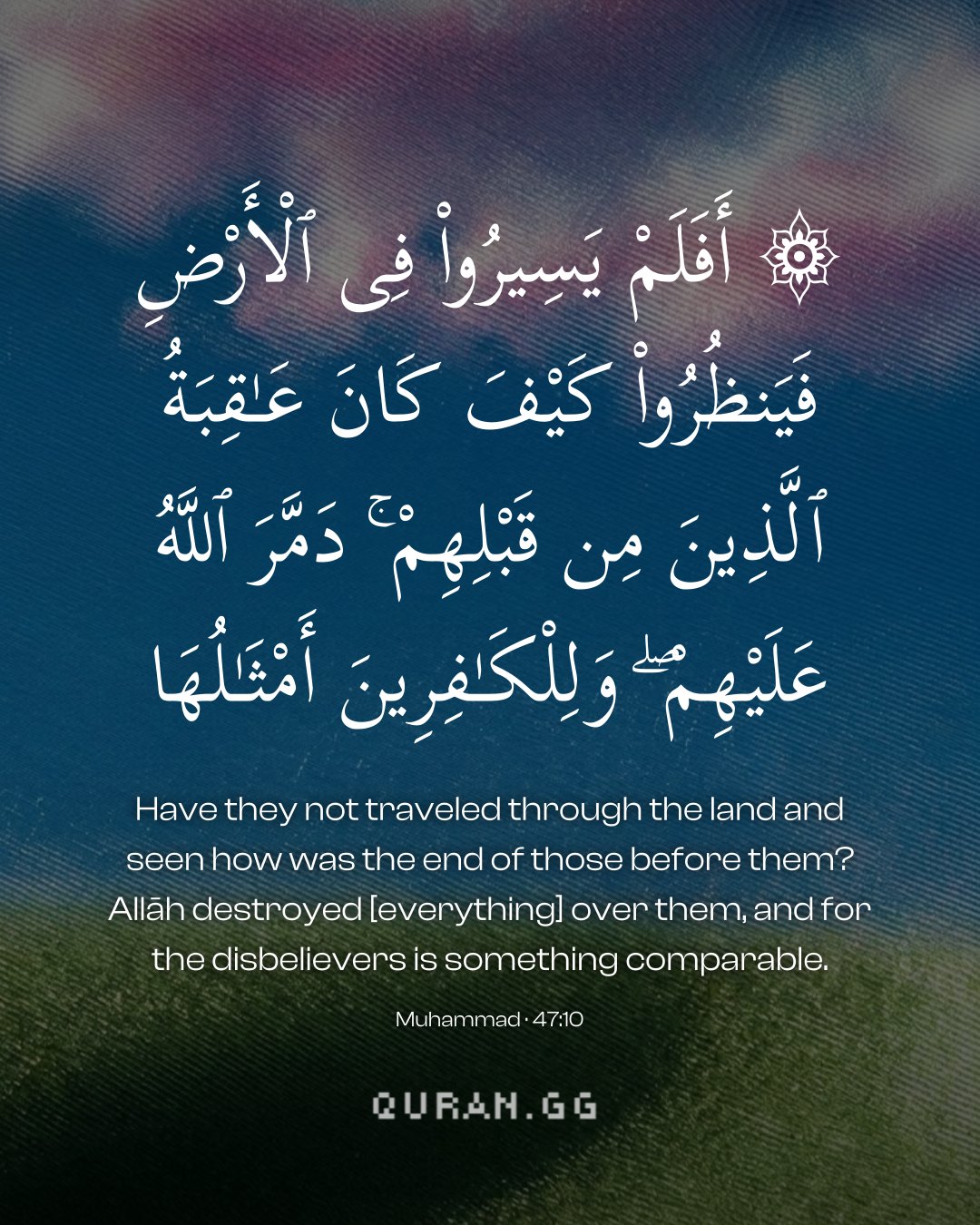
أَفَلَمْ يَسِيرُواْ
(Have they not traveled) meaning, those who associate partners with Allah and deny His Messenger .
فِى الاٌّرْضِ فَيَنظُرُواْ كَيْفَ كَانَ عَـقِبَةُ الَّذِينَ مِن قَبْلِهِمْ دَمَّرَ اللَّهُ عَلَيْهِمْ
(through the land and seen what happened in the end to those before them Allah destroyed them completely,) which means that Allah punished them because of their denial and disbelief, and saved the believers from among them. That is why He says,
وَلِلْكَـفِرِينَ أَمْثَـلُهَا
(and a similar (end awaits) the disbelievers.) Then Allah says,
ذَلِكَ بِأَنَّ اللَّهَ مَوْلَى الَّذِينَ ءَامَنُواْ وَأَنَّ الْكَـفِرِينَ لاَ مَوْلَى لَهُمْ
(That is because Allah is the Protector of all those who believe, whereas the disbelievers have no protector.) After the battle of Uhud, Abu Sufyan Sakhr bin Harb, the commander of the idolators at that time, inquired about the Prophet , Abu Bakr, and `Umar, may Allah be pleased with them. When he heard no response, he announced: "Verily, those three have died!" `Umar then responded to him: "You lie, O enemy of Allah! Allah has indeed saved those who will displease you. Indeed, those whom you mentioned are all alive!" Abu Sufyan then said: "Well, today makes up for (the defeat on) the day of Badr, and the war has its ups and downs. And indeed, you are going to find mutilation (in the bodies of your dead) that I did not command, nor did I prohibit." Then he turned around chanting: "Glory to Hubal (their greatest idol), Glory to Hubal." Allah's Messenger ﷺ said:
«أَلَا تُجِيبُوهُ؟»
(Aren't you going to respond to him) The Companions said: "What should we say, O Messenger of Allah" He said:
« قُولُوا: اللهُ أَعْلَى وَأَجَل»
(Say: "Allah is Most High and Most Glorious.") Then Abu Sufyan said: "We have Al-`Uzza (their second idol), and you have no `Uzza. (honor)." Allah's Messenger ﷺ said:
«أَلَا تُجِيبُوهُ؟»
(Aren't you all going to respond to him) They said: "What should we say, O Messenger of Allah" He said:
«قُولُوا: اللهُ مَوْلَانَا وَلَا مَوْلَى لَكُم»
(Say: "Allah is our Protector, and you have no protector.") Allah then says,
إِنَّ اللَّهَ يُدْخِلُ الَّذِينَ ءَامَنُواْ وَعَمِلُواْ الصَّـلِحَـتِ جَنَـتٍ تَجْرِى مِن تَحْتِهَا الاٌّنْهَـرُ
(Verily, Allah will admit those who believe and do righteous good deeds into Gardens through which rivers flow.) meaning, on the Day of Resurrection.
وَالَّذِينَ كَفَرُواْ يَتَمَتَّعُونَ وَيَأْكُلُونَ كَمَا تَأْكُلُ الاٌّنْعَـمُ
(Whereas those who disbelieve enjoy their life and eat as cattle eat. ) Which means that the disbelievers enjoy their worldly life and eat in it like animals, munching and gnawing (with greed). They have no concern other than that. Thus, it has been confirmed in the Sahih that the Messenger of Allah ﷺ said,
«الْمُؤْمِنُ يَأْكُلُ فِي مِعىً وَاحِدٍ، وَالْكَافِرُ يَأْكُلُ فِي سَبْعَةِ أَمْعَاء»
(A believer eats with one intestine, and a disbeliever eats with seven intestines.) Then Allah says,
وَالنَّارُ مَثْوًى لَّهُمْ
(but the Fire will be their abode.) meaning, on the Day of their Reckoning. Allah then says,
وَكَأَيِّن مِّن قَرْيَةٍ هِىَ أَشَدُّ قُوَّةً مِّن قَرْيَتِكَ الَّتِى أَخْرَجَتْكَ
(And how many a town mightier than your town that has driven you out) meaning, Makkah.
أَهْلَكْنَـهُمْ فَلاَ نَـصِرَ لَهُمْ
(We have destroyed, with none to help them!) gThis is a great threat and severe warning to the people of Makkah because they rejected Allah's Messenger ﷺ, who was the chief of the Messengers and the last of the Prophets. If Allah had destroyed the previous nations because of their denial of their Messengers, what then would those (people of Makkah) expect that Allah would do to them in the worldly life and the Hereafter And if the torment were to be lifted off some of them in this life by the blessing of the presence of the Messenger, the Prophet of Mercy, the torment will be stored for them in their next life, as Allah says,
يُضَاعَفُ لَهُمُ الْعَذَابُ مَا كَانُواْ يَسْتَطِيعُونَ السَّمْعَ وَمَا كَانُواْ يُبْصِرُونَ
(Their torment will be doubled! They could not bear to hear (the preaching), and they used not to see (the truth).) (11:20) Concerning Allah's saying,
مِّن قَرْيَتِكَ الَّتِى أَخْرَجَتْكَ
(than Your town that has driven you out) This means, `its people who have driven you (Muhammad ﷺ ) out from amongst them (the people of Makkah).' Ibn Abi Hatim recorded from Ibn `Abbas, may Allah be pleased with him, that when Allah's Messenger ﷺ left Makkah (at the time of Hijrah -- migration), and he reached the cave and hid inside it, he looked back toward Makkah and said,
«أَنْتِ أَحَبُّ بِلَادِ اللهِ إِلَى اللهِ، وَأَنْتِ أَحَبُّ بِلَادِ اللهِ إِلَيَّ، وَلَوْلَا أَنَّ الْمُشْرِكِينَ أَخْرَجُونِي لَمْ أَخْرُجْ مِنْك»
(You are the most beloved to Allah among Allah's lands, and you are also the most beloved to me among Allah's lands. Were it not that the idolators have driven me out from you, I would never have left you.) Ibn `Abbas then said, "The worst of enemies is he who transgresses against Allah in His own sacred place, who kills a person who is not trying to kill him, or who kills because of Jahiliyyah vengeance. Allah then revealed to His Prophet ,
وَكَأَيِّن مِّن قَرْيَةٍ هِىَ أَشَدُّ قُوَّةً مِّن قَرْيَتِكَ الَّتِى أَخْرَجَتْكَ أَهْلَكْنَـهُمْ فَلاَ نَـصِرَ لَهُمْ
(And how many a town mightier than your town that has driven you out have We destroyed, with none to help them!)"