Jahannam and Paradise and their Dwellers
Allah states that He will say to Jahannam on the Day of Resurrection, "Have you had your fill" Allah the Most Honored has promised Hell that it will have its fill from the Jinns and mankind. He, the Exalted and Most Honored, will decide who will be thrown into the Fire and she will keep saying, "Are there any more," or, `Are there any more whom You will provide me with' This is the apparent meaning of this Ayah which is supported by several Hadiths. Imam Ahmad recorded that Anas said that the Messenger of Allah ﷺ said,
«لَا تَزَالُ جَهَنَّمُ يُلْقَى فِيهَا وَتَقُولُ: هَلْ مِنْ مَزِيدٍ؟ حَتْى يَضَعَ رَبُّ الْعِزَّةِ قَدَمَهُ فِيهَا، فَيَنْزَوِي بَعْضُهَا إِلَى بَعْضٍ وَتَقُولُ: قَطْ قَطْ وَعِزَّتِكَ وَكَرَمِكَ. وَلَا يَزَالُ فِي الْجَنَّةِ فَضْلٌ حَتْى يُنْشِىءَ اللهُ لَهَا خَلْقًا آخَرَ فَيُسْكِنَهُمُ اللهُ تَعَالَى فِي فُضُولِ الْجَنَّة»
Continue reading the tafsir of ayahs 30–35Ma'arif al-Qur'an
Mufti Muhammad Shafi
Analysis of "Awwab" and 'Hafiz'
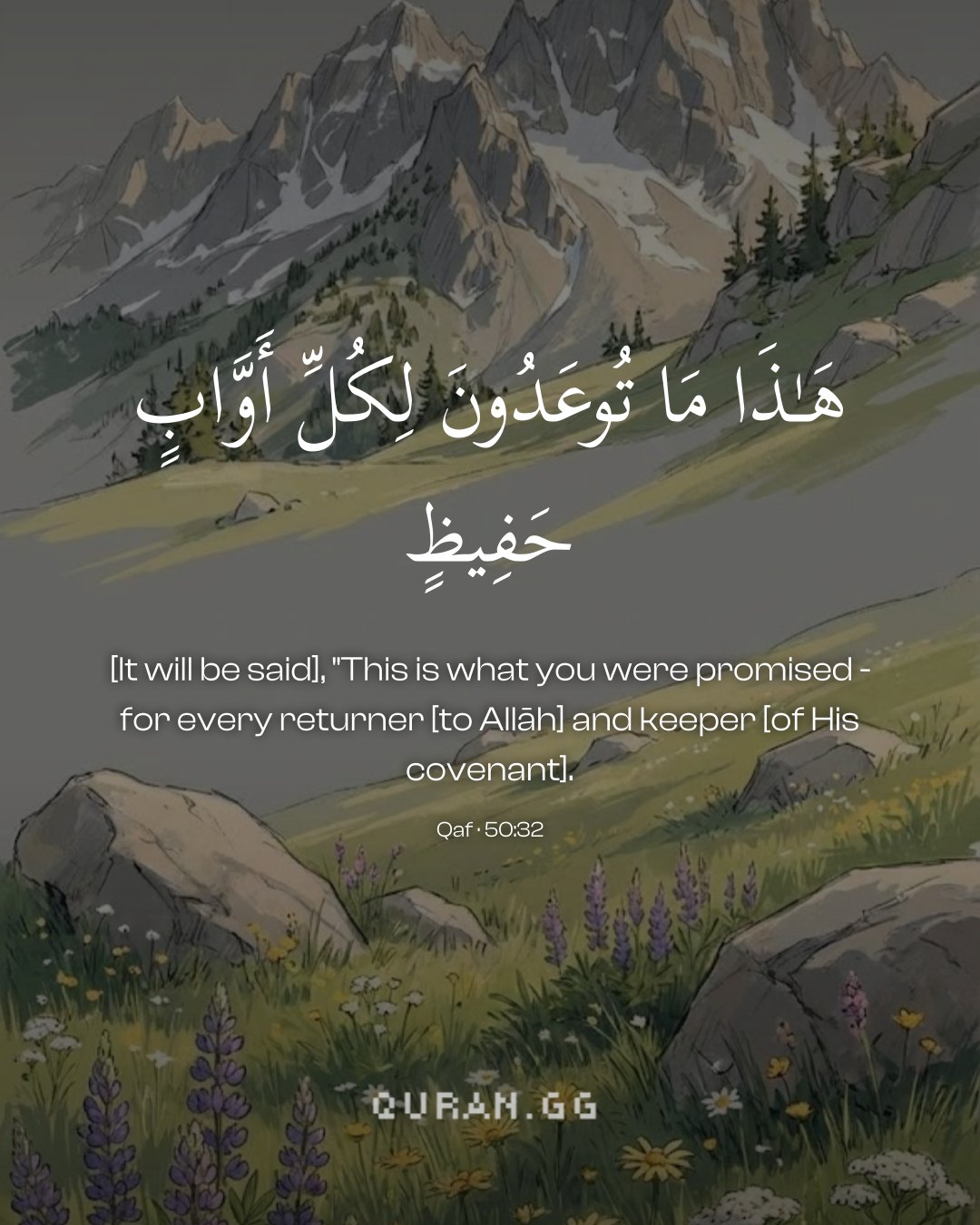
لِكُلِّ أَوَّابٍ حَفِيظٍ (" This is what you were promised for everyone oft-returning to Allah, vigilant....50:32). That is to say, Paradise has been promised to every person who is awwab and hafiz. Awwab refers to the person who turns to Allah. Here it means who turns to Him in repentance against sins. Sayyidna ` Abdullah Ibn Masud, Sha` bi and Mujahid ؓ said that Awwab refers to a person who recalls his sins in loneliness, private and secret, and seeks Allah's forgiveness. ` Ubaid Ibn ` Umair ؓ said that Awwab is one who seeks Allah's forgiveness of his sins in every sitting. And he further said that we are advised to recite the following invocation:
سُبحانَ اللہِ وَ بِحَمدِہٖ اللَّھُمَّ اِنِّی اَستغفِرُکَ مِمَّآ اَصَبتُ فِی مَجلِسِی ھٰذا
"Pure is Allah and praise be to Him. 0 Allah, I seek Your forgiveness of the evil that I might have committed in this sitting."
In a Prophetic Tradition, we are advised to recite the following supplication when dispersing. Allah will forgive all the sins that might have been committed in that session:
سُبحَانَکَ اللَّھُمَّ وَ بِحَمدِکَ لَٓا اِلٰہَ اِلَّا اَنتَ اَستغفِرُکَ وَ اَتُوبُ اِلَیکَ
"Pure are You, 0 Allah, and praise be to You. There is no god but You. I seek Your forgiveness and turn to You in penitence."
Hafiz (حَفِيظٍ ), according to Sayyidna ` Abdullah Ibn ` Abbas ؓ ، is one who remembers his sins, so that he may return to Allah in penitence and make amends. Another report from him defines اَلحَفِظُ ھُوِ الحَافِظُ لِاَمرِ اللہِ haflz as one who remembers his covenant with Allah, and does not break or betray it. Sayyidna Abu Hurairah ؓ reports from the Holy Prophet ﷺ who said: "Whoever performs four rak` at of Ishraq prayer early in the day is Awwab and Hafiz (Qurtubi).
A picture of death and Doomsday thereafter has been drawn in these verses. It shows what will happen to those who, finding themselves free in this world, became arrogant. This pictorial description is so terrible as to cause extreme unease in the minds of all living beings.
Uthmani text of the Madinah mushaf (King Fahd Complex). Translation: Saheeh International. Tafsir via Quran.com.