Warning the Disbelievers of the imminent Torment; commanding the Prophet to pray and have Patience
Allah the Exalted asks, `how many We have destroyed before these denying disbelievers'
مِّن قَرْنٍ هُمْ أَشَدُّ مِنْهُم بَطْشاً
(a generation who were stronger in power than they.) they were more numerous, mightier than they and who constructed on the earth and built on it more than they. The statement of Allah the Exalted,
فَنَقَّبُواْ فِى الْبِلَـدِ هَلْ مِن مَّحِيصٍ
(And they went about the land! Could they find any place of refuge) Ibn `Abbas commented, "They left the traces throughout the land," Qatadah said, "They traveled throughout the land seeking provisions through trade and business, more than you have." Allah's statement,
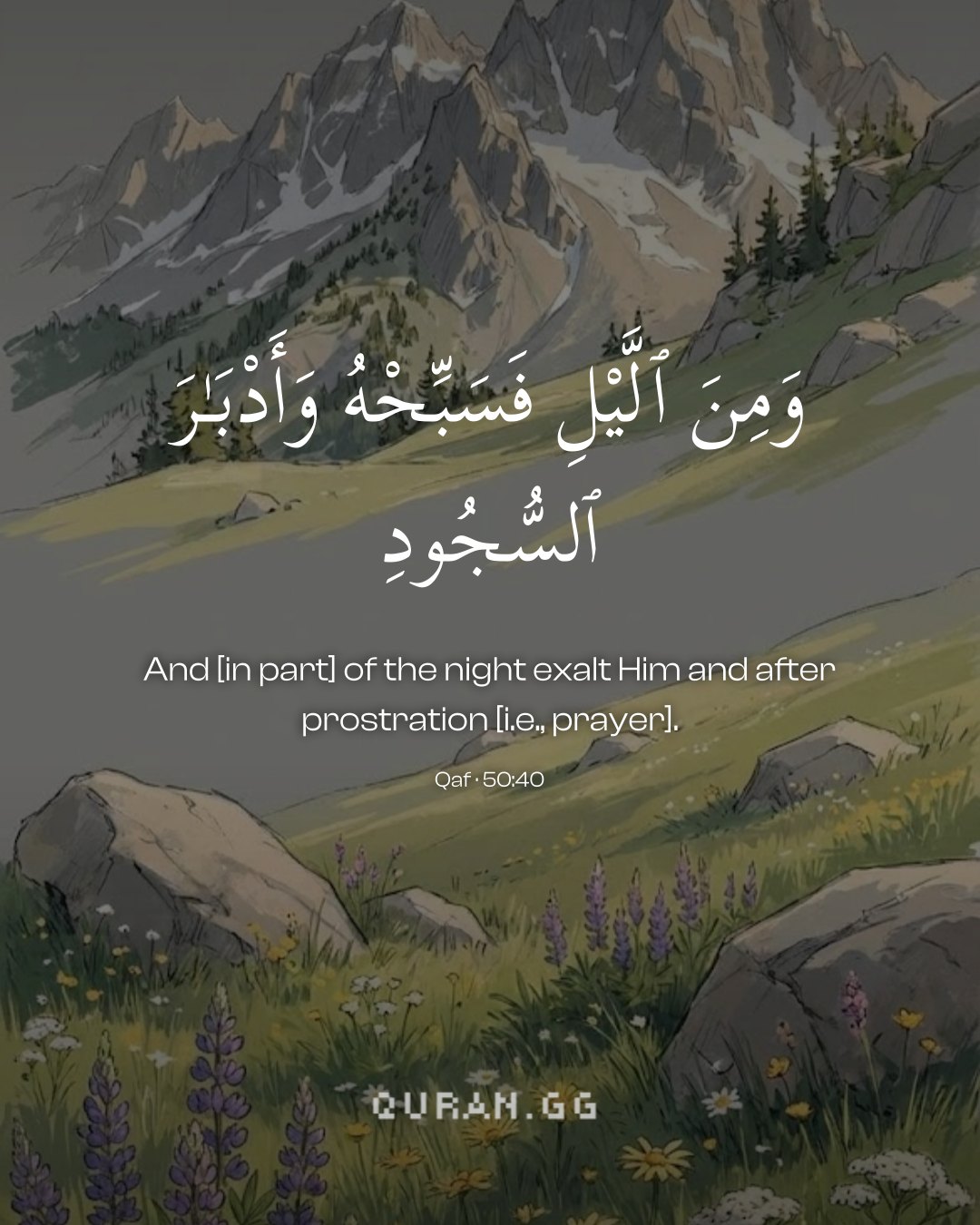
وَأَدْبَارَ السُّجُودِ (...and at the ends of prostration.... 50:40) Mujahid (رح) interprets sujud in this verse to refer to the five obligatory prayers, and the phrase "at the ends of the prostrations", according to him, refers to all those tasbihat which authentic ahadith encourage us to recite after every prayer. Sayyidna Abu Hurairah ؓ reports that the Holy Prophet ﷺ said: "Whosoever recites after every obligatory prayer 33 times subhanallah (سُبحَانَ اللہ), 33 times al-hamdulillah (اَلحَمدُ للہ) and 33 times allahu 'akbar (اللہُ اَکبَر), and once:
la ilaha illatlahu wahdahu la-sharika lahu lah-ul-mulku wa-lah-ul- hamdu wa huwa 'ala kulli shai'in qadeer.
- all his sins will be forgiven, even though they may be equal to the waves of the sea (Bukhari and Muslim). The phrase "at the ends of the prostrations" could also refer to the supererogatory prayers to be performed after the obligatory prayers as authentic Traditions testify (Mazhari).
Tazkirul Quran
Maulana Wahiduddin KhanOn ayahs 40–43
The creation of the heavens and the earth in six days, in other words in six stages, indicates that God’s method of doing things is a gradual one. When God, in spite of being the possessor of all Powers, brings things into existence gradually on a long-term basis, man should also desist from making undue haste, but rather try to reach his goals through action marked by patience. Preaching, from beginning to end, is an act of patience. In this process one has to put up with the bitterness evinced by others, and persevere in one’s task in spite of there being no favourable results in sight. This patience-trying process can be pursued only by one whose days and nights are spent in remembrance of God, who reposes all hope not in human beings but in God and who does not fall a prey to a feeling of frustration, in spite of having lost everything. In the Bible it is mentioned that God created heaven and earth in six days and rested on the seventh day. This part of the verse ‘...nor were We ever wearied’ contradicts and corrects the biblical statement. Rest is taken by one who becomes tired. God does not become tired and, as such, He does not need rest.
Uthmani text of the Madinah mushaf (King Fahd Complex). Translation: Saheeh International. Tafsir via Quran.com.