Admonition from Some Scenes of the Day of Resurrection
Allah the Exalted said,
وَاسْتَمِعْ
(And listen) `O Muhammad,'
يَوْمَ يُنَادِ الْمُنَادِ مِن مَّكَانٍ قَرِيبٍ
(on the Day when the caller will call from a near place.) to the gathering for the Day of Judgement,
يَوْمَ يَسْمَعُونَ الصَّيْحَةَ بِالْحَقِّ
(The Day when they will hear As-Sayhah in truth,) in reference to the blowing in the Trumpet which will bring forth the truth that most of them discounted and denied,
ذَلِكَ يَوْمُ الْخُرُوجِ
(that will be the Day of coming out.) from the graves,
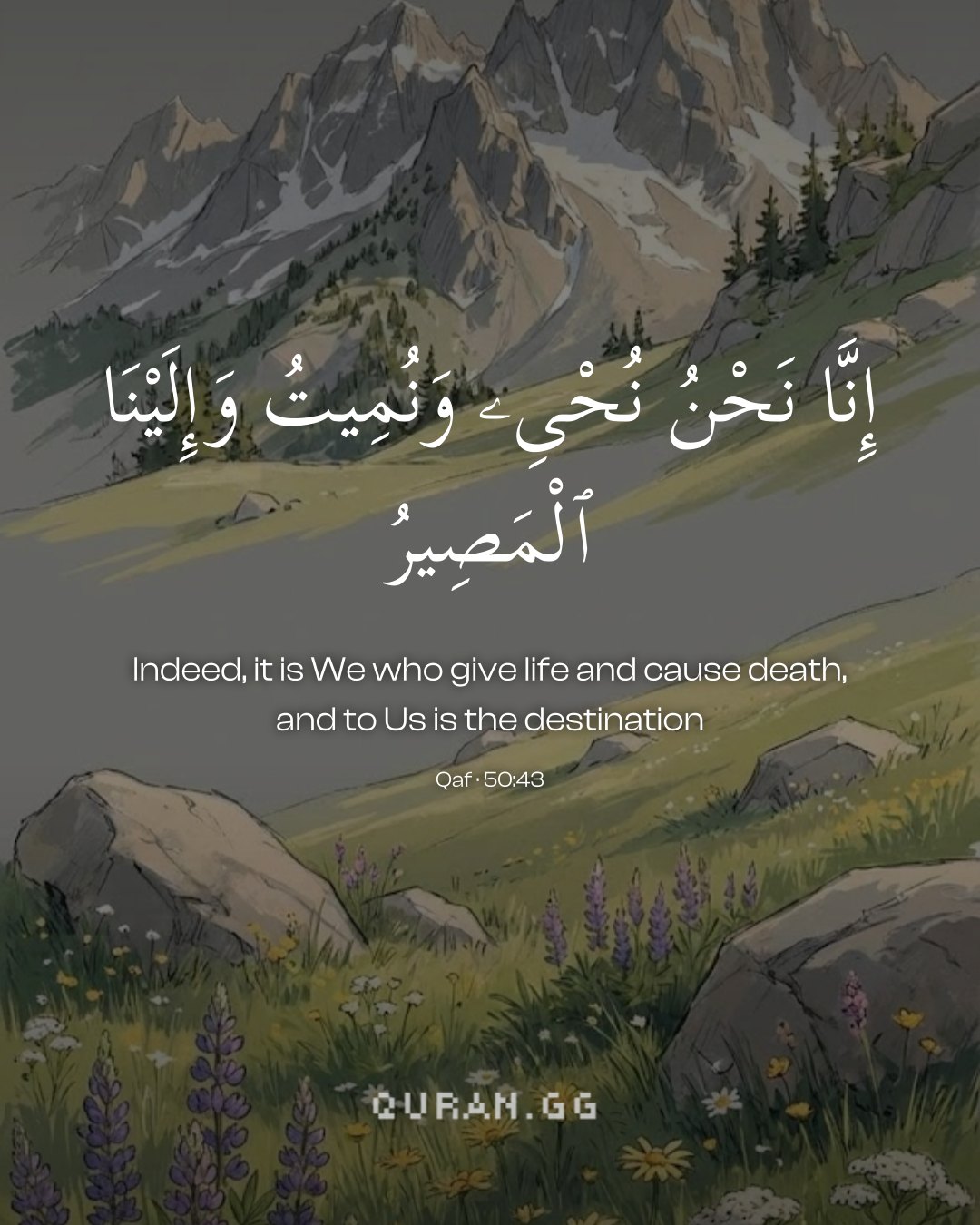
(Verily, it is We Who give life and cause death; and to Us is the final return.) Allah is He Who starts creation and then brings it back to life, and the latter is easier for Him; to Him is the final return of all creations. At this time, He will recompense each according to his or her deeds, good for good and evil for evil. Allah the Exalted said,
يَوْمَ يُنَادِ الْمُنَادِ مِن مَّكَانٍ قَرِيبٍ (...the Day when the caller will call from a near place - 50:41). Sayyidna Ibn ` Asakir ؓ reports from Zaid Ibn Jabir Shafi` i that the "caller" referred to here is the angel Israfil (علیہ السلام) who will stand on the Dome of the Rock (Sakhrah) and will address all the dead people of the entire world : "0 you rotten bones! 0 you decomposed skins! 0 you scattered hair! Listen, Allah commands you to reassemble to render account of your actions (Mazhari)." This scene depicts how, after the second blowing of the trumpet, the world will be resurrected. The phrase "a near place" refers to the fact that the voice of the angel will reach everybody who rises from death anywhere on the surface of the earth, and will feel as though the angel had called him from a nearby place. 'Ikrimah ؓ says that the voice will be heard in such a way as if someone is speaking to us in our ears. Other scholars have said that "a near place" refers to the Dome of the Rock, because that is the centre of the earth, and is equidistant, being separated by equal distances from all sides of the globe. (Qurtubi)
Tazkirul Quran
Maulana Wahiduddin KhanOn ayahs 40–43
The creation of the heavens and the earth in six days, in other words in six stages, indicates that God’s method of doing things is a gradual one. When God, in spite of being the possessor of all Powers, brings things into existence gradually on a long-term basis, man should also desist from making undue haste, but rather try to reach his goals through action marked by patience. Preaching, from beginning to end, is an act of patience. In this process one has to put up with the bitterness evinced by others, and persevere in one’s task in spite of there being no favourable results in sight. This patience-trying process can be pursued only by one whose days and nights are spent in remembrance of God, who reposes all hope not in human beings but in God and who does not fall a prey to a feeling of frustration, in spite of having lost everything. In the Bible it is mentioned that God created heaven and earth in six days and rested on the seventh day. This part of the verse ‘...nor were We ever wearied’ contradicts and corrects the biblical statement. Rest is taken by one who becomes tired. God does not become tired and, as such, He does not need rest.
Uthmani text of the Madinah mushaf (King Fahd Complex). Translation: Saheeh International. Tafsir via Quran.com.