Surah Taha Ayah 112 (20:112) — Meaning & Tafsir | Quran.GG

Surah Taha, Ayah 112

20:112 · Meaning and tafsir

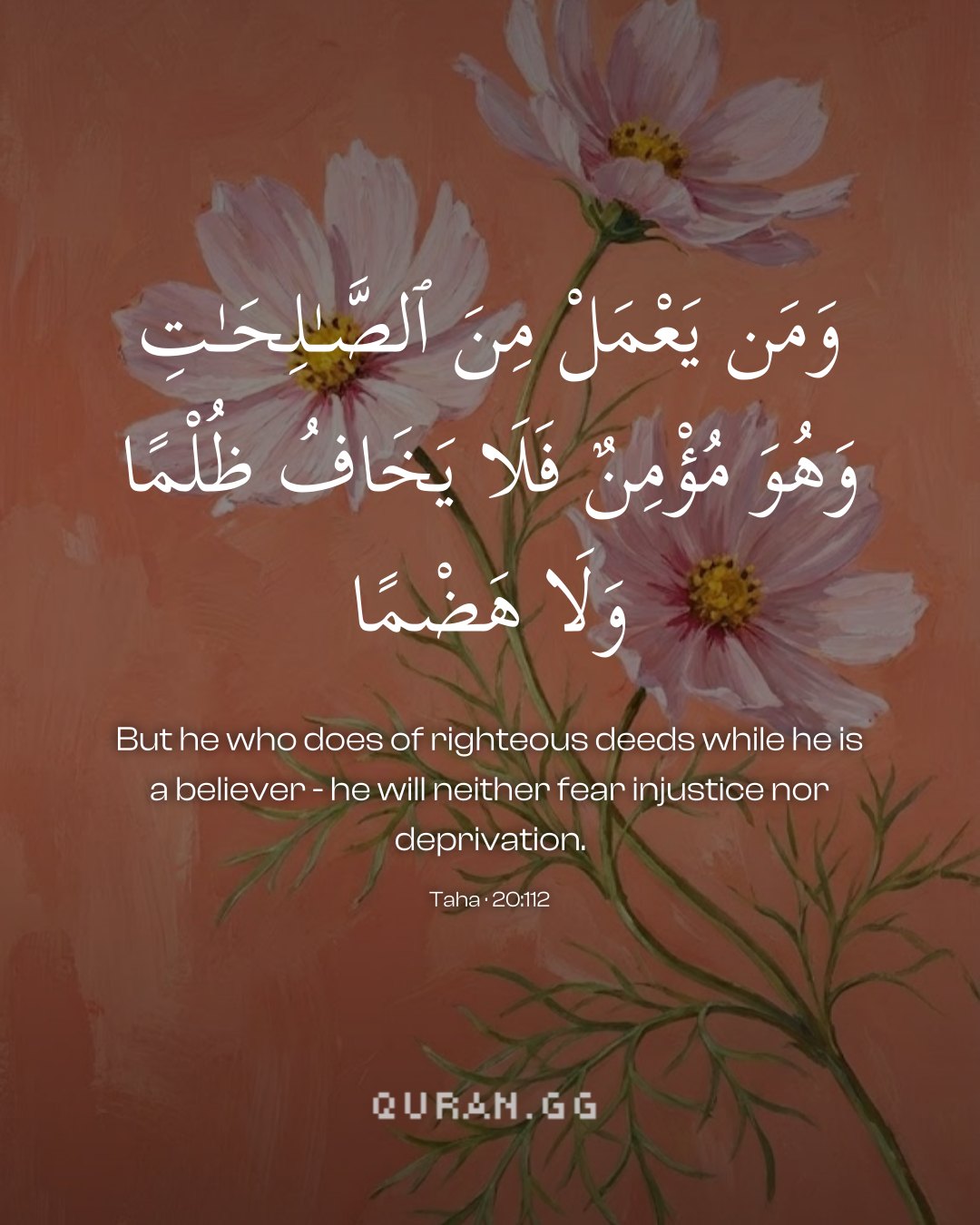
وَمَن يَعْمَلْ مِنَ ٱلصَّـٰلِحَـٰتِ وَهُوَ مُؤْمِنٌ فَلَا يَخَافُ ظُلْمًا وَلَا هَضْمًا ١١٢

But he who does of righteous deeds while he is a believer - he will neither fear injustice nor deprivation.

Surah Taha 20:112 in Arabic with its translation: “But he who does of righteous deeds while he is a believer - he will neither fear injustice nor deprivation.”

Make something with this ayah

Turn it into a video for Stories, Reels or TikTok, recited by the reciter you pick, or an image on a background you choose. Free, in your browser.

Download this image

Tafsir Ibn Kathir (abridged)

The Intercession and the Recompense

Allah, the Exalted, says,

يَوْمَئِذٍ

(On that day) the Day of Resurrection,

لاَّ تَنفَعُ الشَّفَاعَةُ

(no intercession shall avail.) meaning with Him (Allah).

إِلاَّ مَنْ أَذِنَ لَهُ الرَّحْمَـنُ وَرَضِىَ لَهُ قَوْلاً

(except the one for whom the Most Gracious has given permission and whose word is acceptable to Him.) This is similar to His statement,

مَن ذَا الَّذِى يَشْفَعُ عِندَهُ إِلاَّ بِإِذْنِهِ

(Who is he that can intercede with Him except with His permission) 2:255 It is also similar to His statement,

وَكَمْ مِّن مَّلَكٍ فِى السَّمَـوَتِ لاَ تُغْنِى شَفَـعَتُهُمْ شَيْئاً إِلاَّ مِن بَعْدِ أَن يَأْذَنَ اللَّهُ لِمَن يَشَآءُ وَيَرْضَى

Continue reading the tafsir of ayahs 109–112

Ma'arif al-Qur'an

يُنفَخُ فِي الصُّورِ‌ (رضی The Day when the Horn الصُّورِ‌ [ Sur ] will be blown - 20:102) According to Sayyidna Ibn ` Umar اللہ تعالیٰ عنہما ، a Bedouin الصُّورِ‌ asked the Holy Prophet ﷺ about صُور (the Horn) to which he replied that it is something like a horn which will be blown, meaning thereby that when the angel will blow into it all those who had lain dead for centuries will return to life. Only Allah knows the true nature of the Sur (the Horn).

Tazkirul Quran

It is baseless to believe that recommendation in itself is effective. God, being fully aware of the condition of His subjects, needs no reports from others. Nor is He weak: He is not, therefore, amenable to pressures. However, under certain special circumstances, God Himself may be pleased to honour a request. On the Day of Judgement, real importance will be attached to what the individual has brought with him in terms of his piety, his good deeds and his personal virtues. One who has founded his life on untruth is bound to meet with failure in the Hereafter. There, only those will be successful who recognised their Lord—who remained invisible in this world—and who shaped their lives in accordance with His will and pleasure.

Uthmani text of the Madinah mushaf (King Fahd Complex). Translation: Saheeh International. Tafsir via Quran.com.